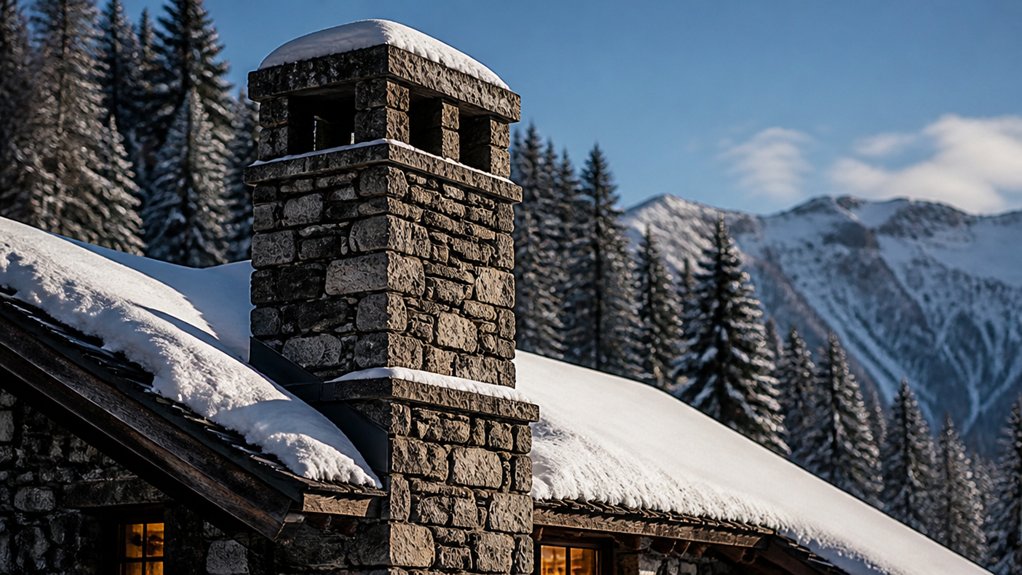
When we build a stone chimney in snow country, we plan for more than its weight. Frost heave, repeated freeze–thaw cycles, drifting snow, wind, and roof movement all put stress on the masonry. We start with a well-drained foundation and a footing below the local frost depth, then select stone and mortar suited to the exposure. Dense, durable stone generally absorbs less water, while more porous stone needs careful detailing and protection from prolonged moisture. The right choice also depends on how the stone is cut and laid.
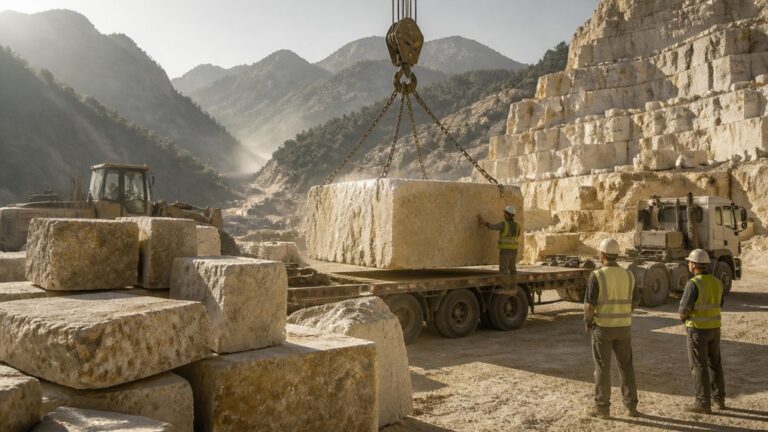
Keeping water out is essential: properly formed caps, flashing, and joints help prevent moisture from entering and freezing inside the masonry. We also account for snow loads and roof movement when planning the chimney’s connection to the structure. Permits, inspections, local codes, and review by a licensed structural engineer may be required; requirements vary by state and county. As stone and marble masons based in Casper, Wyoming, we take projects from quarry to completion, including sourcing and cutting stone, building, and finishing interiors across the Mountain West.
Prepare a Stable, Well-Drained Foundation
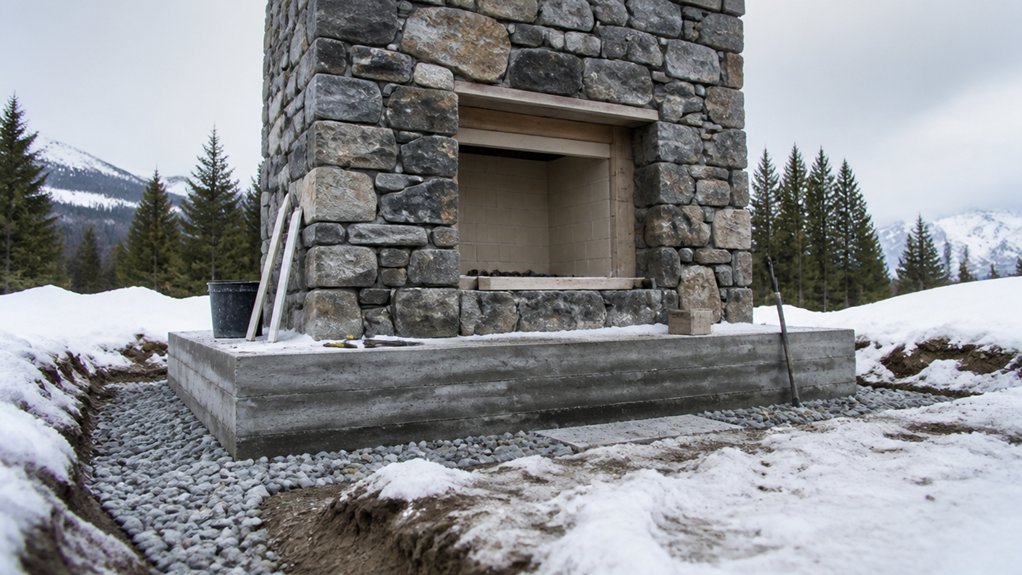
Before we lay a single stone, we prepare a footing that can support the chimney without settling or shifting. We check the design load, site conditions and applicable local codes before excavation. Requirements vary by state and county, so permits, inspections and a structural engineer’s guidance may be necessary.
We remove organic material and loose soil, then compact the subgrade to create a firm, level base. The footing must be sized and reinforced to match the plans and code; surface soil alone isn’t a reliable support for masonry. We also plan drainage to carry water away from the footing and grade the surrounding ground to prevent pooling. In Wyoming and other cold Mountain West locations, the footing generally needs to extend below the local frost line to reduce frost heave. We verify that it’s level before masonry begins. Proper drainage and frost protection help limit movement caused by freeze-thaw cycles and snowmelt.
Choose Stone and Mortar for Freeze–Thaw
We choose stone and mortar as a system, because water absorption, stone strength and mortar compatibility all affect how masonry holds up to repeated freezing and thawing. In the Mountain West, snow, wind, strong UV exposure and elevation-related weather swings make good material selection and installation especially important.
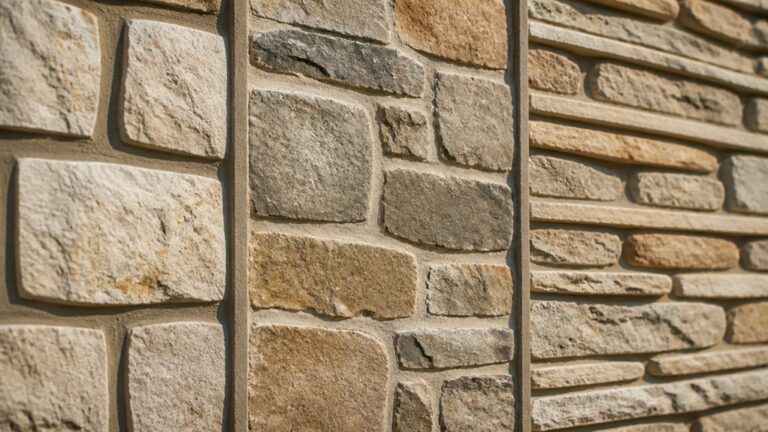
Look for dense, sound stone with low water absorption. Compare supplier data, and check each unit for cracks, soft layers and excessive porosity. Granite and some dense quartzites generally absorb little water, while more porous stones may need careful detailing and maintenance. Stone varies by quarry and bed, so confirm the properties of the specific material rather than relying on its name alone.
Choose dense, sound stone with verified absorption data; properties can vary by quarry and bed.
Use mortar rated for exterior masonry and repeated freeze–thaw exposure. Match its strength and composition to the stone: a mortar that’s too strong can transfer stress into softer units, while an unsuitable mortar may not protect the assembly as intended. Follow the manufacturer’s mixing, placement and curing instructions, and don’t lay masonry when temperatures or forecasts fall outside the product’s specified limits. Proper joints, drainage and water-shedding details also help limit moisture exposure.
We source, cut, build and finish stone from quarry to completion. For projects in Wyoming and the surrounding region, we also account for site conditions and applicable local codes; permits, inspections or input from a licensed structural engineer may be required, depending on the project and jurisdiction.
Build the Chimney to Handle Snow and Movement
We build chimneys to handle snow loads and seasonal ground movement by starting with the site, soil conditions, and structural plan. The footing must extend below the local frost depth and be sized for soil bearing capacity, chimney weight, and any roof snow load transferred to it. In Wyoming and the surrounding Mountain West, freeze-thaw cycles and wind-driven snow make proper drainage, sound masonry, and secure connections especially important.
Stone type affects how the chimney performs. Dense, durable stone generally resists weathering well, while more porous stone can absorb moisture and may need added protection and maintenance. We select and cut stone for the project, then build and finish the work with attention to secure bonding, plumb courses, and any reinforcement required by the plans. We also maintain code-compliant clearance from adjacent framing so roof or floor movement doesn’t press against the masonry. Ties, bracing, and expansion joints must follow engineered details.
Before construction, we recommend having a qualified structural professional verify the footing and reinforcement requirements. Permits, inspections, and local building codes may apply, and requirements vary by state and county.
Cap and Flash the Chimney to Keep Water Out
We install chimney caps and flashing to protect the masonry, roof and interior from water. In Wyoming and across the Mountain West, snow, wind, strong UV exposure and repeated freeze-thaw cycles can quickly expose weak details. A sound footing and well-bonded masonry help a chimney withstand movement, but careful water management at the crown, flue and roofline is just as important.
Choose a durable, corrosion-resistant cap sized for the flue. It should shed rain and snow without restricting exhaust, and its drip edge should extend beyond the stone crown. Slope the crown outward so water drains away from the flue. Stone selection matters: dense stone generally absorbs less water, while more porous stone may need added protection and closer maintenance. Any crown material must be detailed to limit water entry and tolerate local weather.
At the roof, we weave step flashing into each shingle course and cover it with counterflashing set into the mortar joints. Keep flashing laps oriented downhill so runoff can’t reach the chimney or roof deck. Use compatible metals to reduce corrosion, and apply sealant only at joints designed to receive it; sealant isn’t a substitute for properly fitted flashing.
Inspect the cap, crown and flashing regularly, especially after severe weather. Look for loose metal, cracked mortar, standing water and signs of corrosion. Repairs may require a qualified roofer or mason, and permits, inspections or code requirements vary by state and county.
Inspect and Maintain Your Stone Chimney in Winter
Before winter, we inspect the stonework, crown, cap and flashing for cracks, open joints, corrosion and gaps that can let water in. In the Mountain West, water trapped in masonry can freeze, expand and widen small defects. Wind, UV exposure and heavy or drifting snow can add to the wear.
During winter, check that mortar joints remain sound and that the cap drains freely. Keep roof drainage paths open and clear snow from around the chimney base when it’s safe to do so. Don’t strike or chip ice against the masonry; impact can damage stone, mortar and flashing. If the roof shape or drifting snow could place an unusual load on the chimney, ask a qualified professional to assess it.
Watch for a leaning chimney, new cracks, falling material or smoke leaking into the home. Stop using the fireplace if you notice these signs, and arrange an inspection by a qualified chimney professional. We’re Bluestone Masonry & Construction, stone and marble masons based in Casper, Wyoming. Founded in 2013, we work across Wyoming, Montana, Colorado, Idaho, Utah, Nebraska and South Dakota, taking projects from quarry to completion—from sourcing and cutting stone to construction and interior finishing. We can assess masonry concerns and recommend repairs suited to the stone and local conditions. Permit and inspection requirements vary by state and county; structural concerns may require a licensed engineer.
Frequently Asked Questions
How Long Does a Stone Chimney Typically Last?
A well-built stone chimney can last 50–100 years or longer, but its lifespan depends on the stone, mortar, foundation, workmanship, and exposure to weather. In the Mountain West, freeze-thaw cycles, snow, wind, and strong UV can wear down masonry over time. We recommend regular inspections, especially if you see cracks, damp spots, spalling stone, or loose mortar. Addressing those signs early can help prevent more extensive repairs.
Can an Existing Chimney Be Rebuilt Using Reclaimed Stone?
Yes. We can rebuild an existing chimney with reclaimed stone when the stones are sound, suitable for the exposure, and compatible with the new mortar and masonry. We first assess the chimney’s foundation, stone condition, mortar, flue liner, and structural support. Damaged or weathered stones may not be safe to reuse, and reclaimed stone should be cleaned without harming its surface.
In Wyoming and the surrounding Mountain West, the design and installation must account for freeze-thaw cycles, snow and wind loads, strong UV exposure, and conditions at altitude. Proper flashing, drainage, mortar selection, and a sound flue liner are essential to a durable rebuild. Permits, inspections, and code requirements vary by state and county; a licensed professional or structural engineer may be needed.
As stone and marble masons based in Casper, Wyoming, we take projects from quarry to completion, including sourcing and cutting stone, construction, and interior finishing. We recommend having an experienced mason evaluate the chimney before work begins.
Do Stone Chimneys Require a Building Permit?
Yes. We generally recommend checking with your local building department before constructing, rebuilding, or substantially altering a stone chimney. Permit, inspection, and code requirements vary by state and county, and may depend on the chimney’s height, structural design, fireplace or appliance, and connection to the home. A structural engineer or other licensed professional may also be required.
Reclaimed stone does not remove those requirements. Its size, condition, and suitability for structural use should be assessed before installation, and the chimney must be designed for local snow, wind, and freeze-thaw conditions. We’re the Bluestone Masonry & Construction team, stone and marble masons based in Casper, Wyoming, and we can help plan the stonework and coordinate with the appropriate local professionals.
How Much Does It Cost to Build a Stone Chimney?
A stone chimney’s cost depends on its height, design, foundation, stone selection, access, labor and local code requirements. We plan the chimney’s structure, flue and connection to the home together, since changes late in construction can add work. In the Mountain West, the design also needs to account for freeze-thaw cycles, snow loads, wind and strong UV exposure. We can take the work from quarry to completion, sourcing and cutting stone, building the chimney and finishing the surrounding interior. Permits, inspections and review by a licensed structural engineer may be required; requirements vary by state and county.
Can a Stone Chimney Be Built Around a Wood Stove?
Yes, we can build a stone chimney around a wood stove, but the stonework must enclose a properly designed chimney system—not serve as the flue itself. We’re the Bluestone Masonry & Construction team, stone and marble masons based in Casper, Wyoming, and we build projects from quarry to completion.
The stove needs a listed, correctly sized flue liner and approved connections, with clearances from combustible framing and finishes maintained throughout. Stone type and installation matter: dense stone can add substantial weight, while porous stone may absorb moisture and be more vulnerable to freeze-thaw damage. In the Mountain West, the chimney also needs to be detailed for snow, wind, UV exposure, and local conditions at altitude.
Before work begins, have a qualified chimney professional confirm the stove and flue specifications. A structural engineer may be needed to verify support for the masonry. Permits, inspections, and code requirements vary by state and county, so check with your local building department.