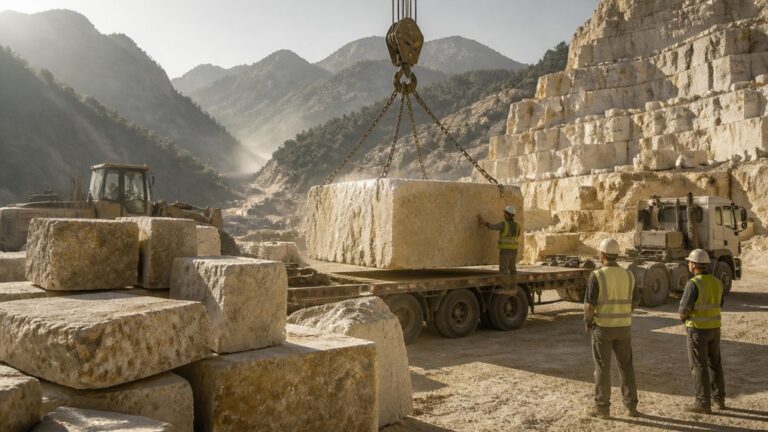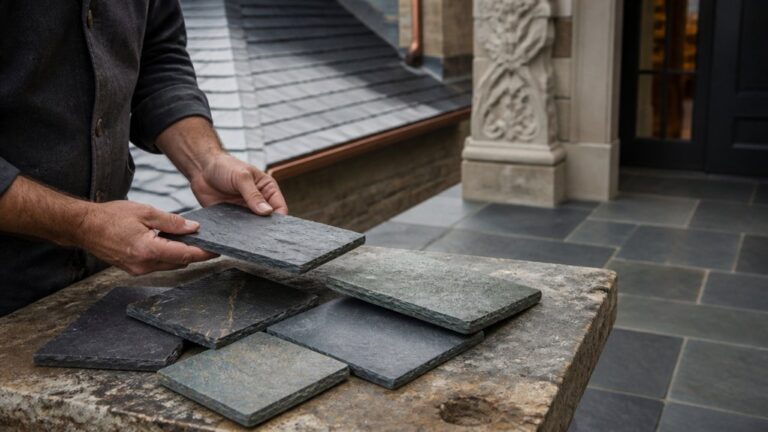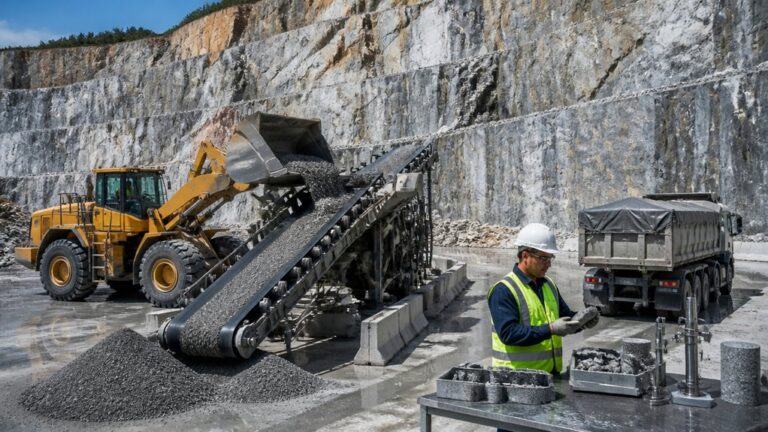
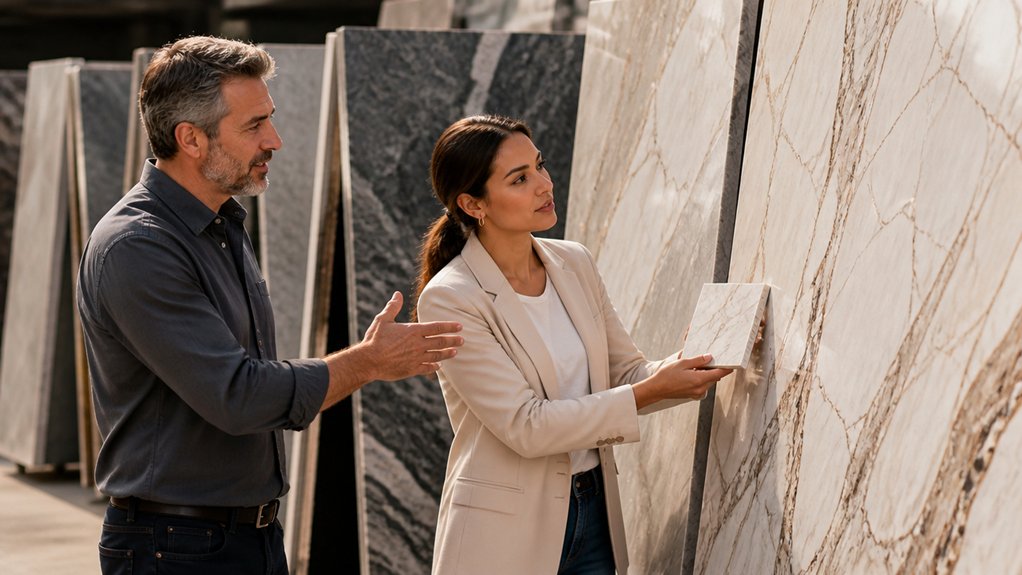
A successful stone yard visit starts with complete drawings, verified measurements, and a clear materials list. We recommend inspecting full slabs in natural light and, when possible, under lighting similar to your finished space. Compare the stone with your cabinet and flooring samples, and look closely at the color, veining, fissures, and any repairs. Granite, marble, quartzite, and other stones vary in hardness, porosity, and maintenance needs, so ask how the specific slab should be sealed, cleaned, and cared for.
Before choosing, confirm slab availability, pricing factors, seam locations, edge details, and how the stone will be supported and installed. For exterior work in the Mountain West, also consider freeze-thaw exposure, snow loads, wind, altitude, and strong UV; the right stone and installation details depend on the application and site. We take projects from quarry to completion, sourcing and cutting stone, building, and finishing interiors across Wyoming, Montana, Colorado, Idaho, Utah, Nebraska, and South Dakota. A written checklist helps you compare options, but careful planning with your fabricator and installer is what helps the finished stone look right and perform as intended. Depending on the project, permits, inspections, local codes, or a licensed professional such as a structural engineer may be required; requirements vary by state and county.
Prepare for Your Stone Yard Visit
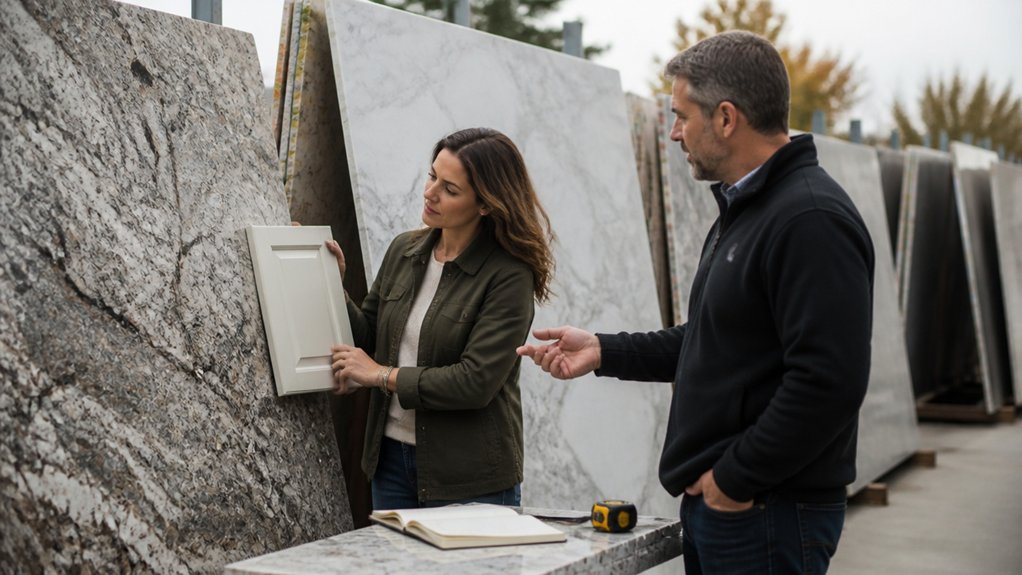
Before visiting a stone yard, we recommend gathering your project drawings, accurate measurements, and a clear list of material requirements. Measure every surface, including edges, cutouts, seams, and overhangs. Confirm the stone thickness, finish, intended use, and installation details with your fabricator before choosing slabs. These details matter: for example, some stones are more porous and need sealing, while others may be more prone to chipping or staining. For exterior work in the Mountain West, also consider freeze-thaw exposure, snow load, strong UV, and wind.
Ask the yard whether you need an appointment, safety gear, or advance notice to view or handle slabs. Bring a written checklist and your drawings so staff can help assess the material and identify potential fabrication or installation issues. If you plan to use measuring tools, check their calibration first. Ask permission before taking samples, label them with the stone name and location, and return any borrowed pieces promptly. We take projects from quarry to completion, so we can help coordinate stone selection, cutting, construction, and interior finishing across Wyoming and the surrounding region.
Compare Stone Colors, Patterns, and Slabs
To see how stone will look in your finished project, compare full slabs at the yard rather than relying on small samples. We recommend viewing each slab in natural light and under the type of indoor lighting planned for the space. Compare its background color and veining with your cabinets, flooring, and fixtures. Some stones have consistent patterns; others vary significantly from slab to slab.
Compare full stone slabs in natural and indoor light to see how their colors and veining work with your space.
- Photograph each candidate slab beside your material samples, in the same light, for a useful side-by-side comparison.
- Inspect the full surface for changes in color, veining, movement, and pattern direction. This helps you plan how the stone will look across counters, walls, or other connected surfaces.
- Ask your fabricator how seams, cut placement, and edge details will affect the visible pattern. Veining may not line up across a seam, and cut direction can change how the pattern reads.
If your project needs several pieces, compare the specific slabs together to check that their colors and patterns work as a group. Confirm which slabs are reserved for your project before ordering. As we take projects from quarry to completion, we can help coordinate stone selection, cutting, building, and interior finishing.
Check Stone Durability and Care Needs
We check each stone’s durability and care requirements against how you plan to use it. For counters, ask about scratch resistance, heat tolerance, porosity, and sensitivity to acids or staining. Granite is generally hard and heat resistant, but its mineral content and finish affect performance. Marble can etch when exposed to acidic foods, while softer stones may scratch or chip more easily. A sealer can reduce staining on porous stone, but it won’t prevent etching or make the surface maintenance-free.
For floors, consider hardness, slip resistance, and how the finish will handle foot traffic, grit, and tracked-in snow. A polished surface can be slippery when wet; a honed or textured finish may provide better traction, though it can need different cleaning. In our Mountain West climate, exterior stone also needs to suit freeze-thaw cycles and exposure to snow, wind, and strong UV. Proper stone selection, drainage, installation, and joint detailing all matter.
We don’t judge durability by appearance alone. We review technical information and inspect samples for chips, fissures, and weak areas. Before installation, confirm whether the stone needs sealing, how often it may need resealing, and which cleaners can damage its surface. We match those care requirements to your household’s routines and maintenance capacity so the stone works for the room and its daily demands.
Ask About Stone Pricing, Availability, and Fabrication
We’re Bluestone Masonry & Construction, stone and marble masons based in Casper, Wyoming. Since 2013, we’ve taken projects from quarry to completion across Wyoming, Montana, Colorado, Idaho, Utah, Nebraska, and South Dakota—sourcing and cutting stone, building, and finishing interiors.
Before choosing a stone, ask the yard for current pricing, stock, and lead times. Costs vary with the stone type, slab size, thickness, finish, lot, and supplier. Granite, quartzite, and marble also differ in how they cut, wear, and respond to weather. For exterior work in the Mountain West, consider freeze-thaw exposure, snow load, wind, and strong UV. The stone’s suitability depends on the application, detailing, and installation—not just its appearance.
Request a written estimate that separates material, fabrication, delivery, and installation. Confirm whether the exact slab or lot is reserved, how long the quoted price is valid, and what happens if the material is delayed or unavailable.
Before approving an order, ask:
- How does pricing differ for full slabs, remnants, thicknesses, and finishes?
- Is the selected stone in stock, and can we inspect or reserve the exact slab or lot?
- What’s the schedule for templating, cutting, edge work, delivery, and installation?
Also clarify deposit terms, change fees, and how delays are handled. For exterior stone or structural work, ask whether permits, inspections, local building codes, or a licensed professional such as a structural engineer are required. Requirements vary by state and county. Clear terms help us coordinate the work and reduce surprises.
Match Stone to Your Room and Budget
We match stone to the room, how it will be used, and your overall budget.
For kitchen counters, compare hardness, porosity, and resistance to acids, heat, and staining. Granite generally handles heat and daily wear well, while marble can etch when exposed to acidic foods and may need more attentive care.
In bathrooms, consider moisture resistance and ask whether the stone needs sealing and how often it should be maintained.
We inspect the full slab because veining and color can vary across its surface.
Before you commit, compare the stone with your cabinets and flooring in the room’s natural and artificial light.
If your first choice is over budget, we can discuss alternatives with a similar appearance or performance.
The total cost depends on the stone, fabrication, edge details, delivery, and installation—not just the slab.
For exterior stonework in the Mountain West, we also consider freeze-thaw exposure, snow loads, UV, and wind.
The right material and installation details depend on the application and local conditions; permits, inspections, local codes, and licensed professionals such as structural engineers may be required, with requirements varying by state and county.
From quarry to completion, we help you choose stone you can maintain comfortably and build it to suit the project.
Frequently Asked Questions
Can I Bring Children or Pets to the Stone Yard?
Children or pets may be allowed in a stone yard, but policies vary. Call ahead before bringing them, and ask about age limits, pet rules, required protective gear, and areas visitors can enter. Stone yards may have forklifts, saws, uneven surfaces, and heavy stone in active handling areas. Keep children and pets supervised and within approved visitor areas at all times.
Are Photography and Video Allowed Inside the Showroom?
Photography and video rules vary by showroom. Please ask our staff before taking photos or recording, especially near stone displays, cutting equipment, or other visitors. Follow all posted restrictions, and don’t share images without permission when requested.
Can I Reserve a Slab While I Finalize My Decision?
Yes. We can often ask the stone yard to hold a slab while you finalize your selection, but the terms vary by supplier. Confirm how long the hold lasts, whether a deposit is required, and what happens if you change your mind. Before paying, ask whether the deposit is refundable and whether the specific slab will remain reserved for your project. This is especially useful when matching veining or color across multiple slabs.
What Should I Wear When Visiting a Stone Yard?
Wear sturdy, closed-toe shoes with slip-resistant soles. Stone yards can have uneven, dusty surfaces, and you may encounter wet or slick areas. Choose durable clothes you don’t mind getting dirty, and bring a light layer for changing temperatures indoors and outdoors. If you’re inspecting stone for a project, ask about its intended use and suitability for local freeze-thaw conditions.
Do Stone Yards Offer Samples to Take Home?
Yes, many stone yards let you take samples home, though availability depends on the stone, sample size, and supplier. We recommend asking about take-home options, any fees, and how long you can keep the samples before you visit.
Check samples in the rooms or outdoor areas where the stone will be installed. Natural stone can look different under indoor lighting, direct sun, and shade, and colors may vary from one piece to another. For exterior work in Wyoming and the Mountain West, also consider how the stone’s color and finish will look in strong UV and how its surface handles snow and freeze-thaw conditions. A sample helps with selection, but it may not show the full variation of a larger installation.