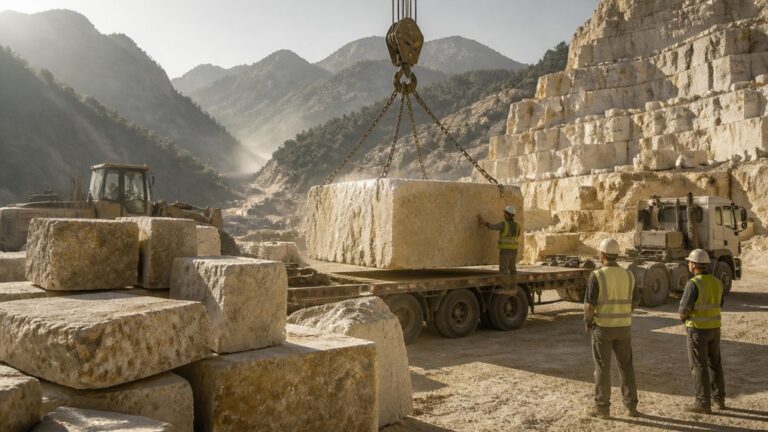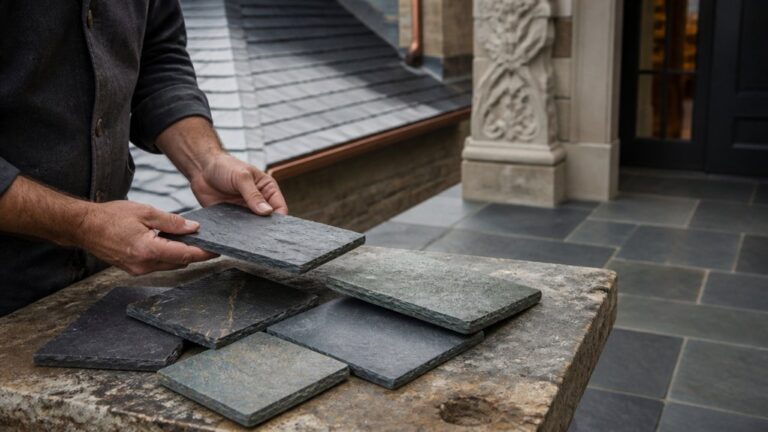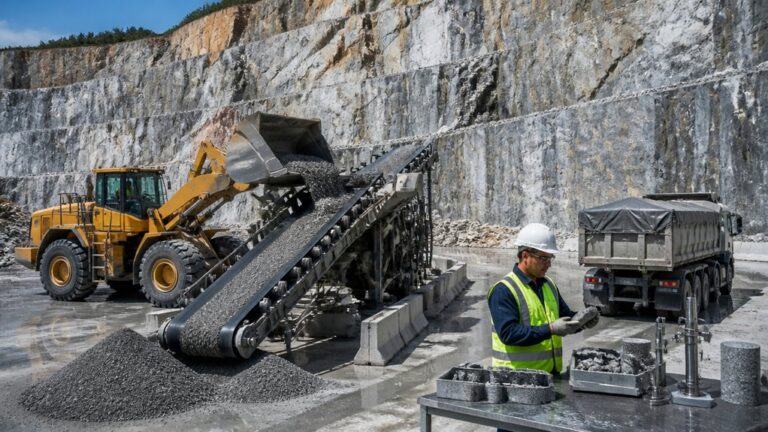
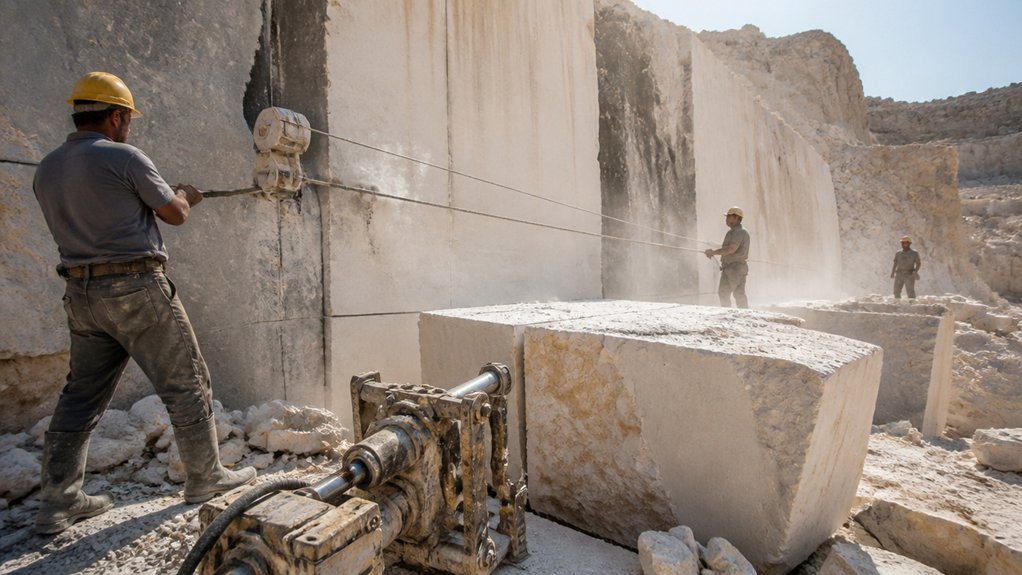
When we take a project from quarry to completion, we start by matching the stone to its use, appearance and exposure. At the quarry, workers map natural joints and bedding, remove overburden, and extract blocks with controlled blasting or precision saws. The method depends on the stone: granite is hard and dense, while limestone and sandstone can be more sensitive to bedding and splitting. We then cut and finish the stone to suit the project, checking for flaws that could affect strength, appearance or installation.
In the Mountain West, the right choice also has to account for freeze-thaw cycles, snow, wind, altitude and strong UV exposure. Stone selection, drainage, anchoring and joint details all matter, especially on exterior walls and paving. We source, cut, build and finish stonework across Wyoming and the surrounding region, coordinating with architects, builders and licensed professionals when needed. Permit, inspection and code requirements vary by state and county.
How Quarry Workers Choose Stone for Building
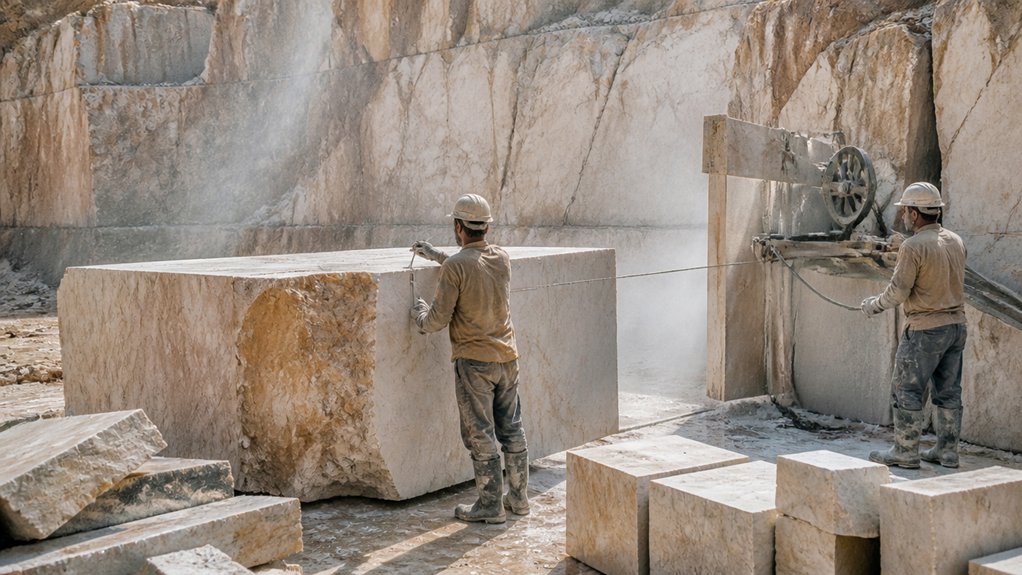
Before we cut a block, we check whether the stone suits the building’s structure, exposure, and finish. We look for cracks, weak seams, mineral deposits, and other flaws, then assess strength, density, porosity, and weathering resistance. These properties affect how stone performs: dense, low-porosity stone generally absorbs less water, while more porous stone may need careful detailing and maintenance to limit moisture damage.
In Wyoming and the surrounding Mountain West, freeze-thaw cycles make water management especially important. Snow, wind, strong UV exposure at altitude, and roof snow loads also influence stone selection and installation. We consider how the stone will be used, how it will be supported and anchored, and whether the design provides suitable drainage and movement joints. Structural applications may require review by a licensed structural engineer; permits, inspections, and code requirements vary by state and county.
We also compare color and pattern across the available material so the finished work looks consistent. Before approving a stone, we confirm its dimensions, finish, maintenance needs, and suitability for the site. As stone and marble masons based in Casper, Wyoming, we take projects from quarry to completion—sourcing and cutting stone, building, and finishing interiors across Wyoming, Montana, Colorado, Idaho, Utah, Nebraska, and South Dakota.
How Workers Extract Stone From the Earth
Once a quarry deposit is approved, we remove the overburden—the soil and fractured rock covering usable stone—to expose the working face. Before choosing an extraction method, we map the stone’s joints and bedding planes. These natural features affect block size, strength, and how the material will behave when cut and installed.
For sound, accessible rock, we drill a pattern of holes and use controlled charges to loosen the stone. Where vibration needs to be limited, diamond-wire saws, channeling machines, or hydraulic wedges can separate blocks more precisely. Each method has trade-offs: blasting can be efficient, while sawing and wedging offer greater control but may take more time and equipment.
We clear the loosened material with excavators and loaders, then inspect it for fractures and other defects. That inspection helps us select stone suited to its intended use, whether we’re sourcing material for exterior masonry, interior finishes, or custom stonework. As the Bluestone Masonry & Construction team, based in Casper, Wyoming, we take projects from quarry to completion across Wyoming, Montana, Colorado, Idaho, Utah, Nebraska, and South Dakota. Our work includes sourcing and cutting stone, building, and finishing interiors.
How Quarry Blocks Are Split Into Slabs
We split quarry blocks along natural bedding and fracture planes whenever the stone allows. Before choosing a method, we assess the block’s grain, existing flaws, intended slab thickness, and final use. Granite, limestone, sandstone, and marble each split differently, so the approach must suit the material. A controlled split can preserve more usable stone; excessive shock or uneven pressure can create cracks and reduce yield.
For a typical controlled split, we:
- Mark the split line across the block’s face, following the stone’s natural structure where possible.
- Drill evenly spaced holes along the line, with spacing and depth suited to the stone and block size.
- Insert wedges or splitter blades, then apply steady, even force to open the stone gradually.
- Inspect the separated slab for cracks, soundness, and usable thickness before cutting or finishing it.
We keep the block fully supported during splitting and increase pressure gradually. Inconsistent support or loading can cause an uncontrolled break. Once split, the slab’s intended application matters: exterior stone in Wyoming and the surrounding Mountain West must be selected and installed with freeze-thaw cycles, snow loads, wind, altitude, and strong UV exposure in mind. Proper drainage, suitable anchoring, and compatible mortar or setting materials are also important.
As a stone and marble masonry team based in Casper, Wyoming, we take projects from quarry to completion, including sourcing and cutting stone, construction, and interior finishing. We work across Wyoming, Montana, Colorado, Idaho, Utah, Nebraska, and South Dakota. For structural stonework, permits, inspections, local building codes, and input from licensed professionals such as structural engineers may be required; requirements vary by state and county.
How Stone Is Cut to Building Sizes
After a stone block is split into slabs, we cut each piece to the dimensions its building application requires. We start with the project drawings and account for joints, supports, connection details, and specified tolerances. The right equipment depends on the stone, slab thickness, and required accuracy: a bridge saw works well for many straight cuts, while gang saws and CNC cutters suit other sizes and shapes.
We secure the slab on a stable bed and control the blade feed to reduce chipping. Granite is generally hard and abrasive, while marble can be more prone to scratching or edge damage; softer or naturally layered stones may need extra care to avoid breakage along weak planes. After cutting, we check each piece for dimensions, thickness, and squareness, then shape corners and edge profiles to match the installation details.
Accurate sizing matters on a Mountain West project. Tight tolerances can help joints fit as intended, but the design must also allow for movement, drainage, and the materials used to set and support the stone. Exterior stone needs to withstand freeze-thaw cycles, snow, wind, and strong UV exposure. We coordinate sizing with the builder or design team so the cut pieces work with the structure and installation plan. Permits, inspections, local codes, and review by a licensed professional such as a structural engineer may be required; requirements vary by state and county.
How Stone Finishes Suit Different Building Uses
How to choose a stone finish for different building uses
We choose a stone finish by looking at the surface’s exposure, traffic, and design role. The stone itself matters, too: granite generally handles abrasion and weather well, while softer stones such as marble can scratch or etch more readily. In Wyoming and across the Mountain West, we also account for freeze-thaw cycles, snow, wind, strong UV exposure, and installation at altitude.
- Exterior walls: Split-face and bush-hammered finishes add texture and reduce glare. Check the stone’s porosity and water absorption, and detail flashing, drainage, and joints to limit water entry before freezing. Wind exposure and the wall’s structural support also affect installation.
- Floors: Honed finishes offer a lower-sheen surface; flamed finishes create a rougher texture that can improve traction. For entrances and wet areas, consider how the stone performs when wet, how easily it can be cleaned, and whether snow and deicing salts will be tracked inside.
- Counters: Polished stone gives a smooth, reflective surface, but it can show scratches, fingerprints, and etching. Marble needs particular care around acids; granite is generally more resistant to scratching, though performance varies by stone. Ask about sealing and follow the care guidance for the specific material.
- Feature cladding: Sawn faces provide a more consistent appearance, while split faces vary in texture and depth. Review sample panels for color and joint alignment, and confirm that the cladding system, anchors, and substrate are suited to the stone’s weight and local wind conditions.
We take projects from quarry to completion, sourcing and cutting stone, building, and finishing interiors. Before approving a finish, compare full-size samples under the project’s lighting and discuss maintenance and installation details with your mason. Permits, inspections, local codes, and input from licensed professionals such as structural engineers may be required; requirements vary by state and county.
How Workers Check and Prepare Stone for Delivery
Before delivery, we inspect each stone for cracks, chips, dimensional accuracy and finish defects, checking it against the project specifications. We look closely at edges, corners and cut surfaces, since damage there can affect fit and durability during installation. For exterior stone in the Mountain West, sound material and proper preparation matter: freeze-thaw cycles, snow, wind and strong UV exposure can expose weaknesses over time.
We mark pieces that need recutting, repair or rejection, then clean, label and secure approved stone for transport. Clear labels help the installation crew place each piece correctly, and careful packing reduces the risk of chips and breakage on the road. As a team that takes projects from quarry to completion, we coordinate these checks with the cutting and installation requirements so the stone arrives ready for the next stage.
Inspecting Stone Quality
Once a stone block is cut, we inspect it before it moves into fabrication or installation. As stone and marble masons serving Wyoming and the surrounding Mountain West, we look for defects that could affect strength, fit, appearance, or performance in a freeze-thaw climate.
- Check for cracks and weak seams. We examine the faces and edges, then tap the stone in several places. A clear ring can be a useful clue, while a dull note may point to a flaw—but tapping isn’t a substitute for closer inspection. Veining, natural seams, and internal structure vary by stone type.
- Verify dimensions and edges. We measure each piece against the project drawings and tolerances, noting chips, uneven cuts, and irregular edges. Accurate dimensions matter for tight joints, stable bearing, and proper drainage outdoors.
- Consider hardness and moisture. Softer or more porous stones may scratch, absorb water, or require more careful sealing than dense stone. Moisture can be especially damaging when it freezes, so we check that exterior stone and its setting details can shed water and dry properly.
- Compare color and finish. We review color variation against the approved sample and document defects consistently. Natural stone varies from piece to piece, and outdoor UV exposure can change how some finishes and colors appear over time.
We record findings clearly and grade stone honestly, with traceable sourcing. Our work takes projects from quarry to completion—from sourcing and cutting stone to building and finishing interiors. For exterior work, we also account for snow, wind, UV exposure, and freeze-thaw cycles. Structural requirements, permits, inspections, and local codes vary by state and county; some projects may require review by a licensed professional, such as a structural engineer.
Preparing Stone for Delivery
Before we release stone for delivery, we verify each piece against the order: dimensions, finish, stone type, and identification. We remove dust and mark the destination, then check that every label is legible and matches the packing list.
We inspect edges and surfaces before wrapping. If we find a chip, crack, or other defect, we document and report it rather than hiding it. Stone behaves differently by type: marble can scratch or chip at exposed edges, while some natural stone may have veins or fissures that need careful support. We choose padding and supports to suit each piece’s weight, shape, and condition.
For transport through the Mountain West, we protect stone from abrasion, shifting, and moisture. Freeze-thaw exposure can worsen water-related damage, so we keep pieces dry and use packaging suited to the route and weather. We secure each piece without loading pressure onto corners or unsupported areas. Before release, we check the load’s balance, restraints, and delivery documents. These steps help protect the stone from our shop to the job site.
Frequently Asked Questions
What Environmental Impacts Can Stone Quarrying Have?
Stone quarrying can remove habitat and vegetation, create dust, noise and vibration, and increase erosion or polluted runoff. We reduce these risks by planning extraction carefully, controlling water and sediment, and restoring disturbed land to help stabilize soil and rebuild habitat. As masons who take projects from quarry to completion, we also consider how stone is cut, transported and used. Quarry and construction requirements vary by state and county, so permits, inspections and licensed professionals may be required.
How Are Abandoned Quarries Restored?
We restore abandoned quarries by first assessing slope stability, drainage, and possible contamination. Then we can regrade unsafe areas, manage runoff, replace suitable topsoil, and plant native species selected for local conditions. In Wyoming and across the Mountain West, freeze-thaw cycles, snowmelt, wind, and strong UV exposure all affect how a restored site performs, so drainage and erosion control need to be planned for the long term.
Some safe, stable quarry pits can be repurposed as wetlands or recreation areas. The right approach depends on the stone, site conditions, intended use, and environmental requirements. Permits, inspections, and input from licensed professionals such as geotechnical or structural engineers may be required; rules vary by state and county. We recommend ongoing monitoring to catch erosion, drainage problems, or slope movement early.
What Safety Risks Do Quarry Workers Face?
Quarry work exposes crews to excessive noise, moving and cutting machinery, falling rock, unstable slopes, airborne dust, and vehicle collisions. We take these hazards seriously from quarry to completion: use the required hearing, respiratory, and eye protection; follow equipment lockout procedures; keep clear of operating machinery and unstable faces; inspect tools and equipment; and obey site traffic controls, warning signs, and safe-distance rules. Follow the quarry’s safety plan and report changing ground conditions or damaged equipment promptly.
How Long Can Quarried Stone Last in a Building?
Quarried stone can last for centuries or longer when the stone suits its exposure and the work is properly designed and installed. The time it spent in the quarry does not determine how long it will last in a building.
We select stone based on its strength, porosity, layering, and intended use. Granite is generally dense and resistant to wear; limestone and sandstone can be more porous and may weather faster, depending on their composition and finish. Slate can perform well as a facing or paving material, but its layers and installation need to be suited to the application.
In Wyoming and the Mountain West, freeze-thaw cycles, snow, wind, strong UV exposure, and elevation can all affect stonework. We pay close attention to water management: sound flashing, drainage, properly detailed joints, and installation methods that limit water from entering and freezing behind the stone. Routine checks for loose pieces, open joints, and drainage problems help catch deterioration early.
As the Bluestone Masonry & Construction team, we take projects from quarry to completion, including sourcing and cutting stone, building, and finishing interiors. We are stone and marble masons based in Casper, Wyoming, founded in 2013, and serve Wyoming, Montana, Colorado, Idaho, Utah, Nebraska, and South Dakota. Project requirements vary by location; permits, inspections, local building codes, and licensed professionals such as structural engineers may be required.
How Does Natural Stone Compare With Manufactured Building Materials?
Natural stone offers a distinct appearance, long service life, and relatively low maintenance when it is selected and installed for the right conditions. Granite and dense quartzite generally resist abrasion and weather well; softer stones such as limestone and marble need more care and may be more vulnerable to staining or surface wear. Manufactured materials can offer consistent sizes and finishes and may be quicker to install, but durability, repair options, and maintenance depend on the product.
In the Mountain West, compare materials for freeze-thaw exposure, snow and water drainage, wind, and strong UV—not just appearance and initial cost. Proper substrate preparation, flashing, mortar selection, joints, and installation details matter for both natural and manufactured products. We’re the Bluestone Masonry & Construction team, stone and marble masons based in Casper, Wyoming. Since 2013, we’ve taken projects from quarry to completion, sourcing and cutting stone, building, and finishing interiors across Wyoming, Montana, Colorado, Idaho, Utah, Nebraska, and South Dakota. Project costs depend on material, fabrication, site access, structural requirements, and installation complexity. Permits, inspections, local codes, and licensed professionals such as structural engineers may be required; requirements vary by state and county.