When we specify natural stone, we look beyond the material itself. Quarry capacity, cutting requirements, transport routes, quality checks and local regulations all affect delivery schedules and costs. Weather, equipment failures and labor shortages can disrupt even well-planned orders. We reduce risk by coordinating with suppliers early, confirming stone selection and finish, tracking material from quarry to job site, and planning backup options where practical.
Stone choice also affects how a project performs in the Mountain West. Freeze-thaw cycles, snow loads, high-altitude UV exposure and strong winds make sound detailing and installation essential. We consider the stone’s durability and absorption, along with the setting method, drainage, flashing and joint design. As stone and marble masons based in Casper, Wyoming, we take projects from quarry to completion—sourcing and cutting stone, building, and finishing interiors across Wyoming, Montana, Colorado, Idaho, Utah, Nebraska and South Dakota. Permits, inspections, local building codes and licensed professionals, including structural engineers, may be required; requirements vary by state and county.
How Does Natural Stone Reach a Building Site?
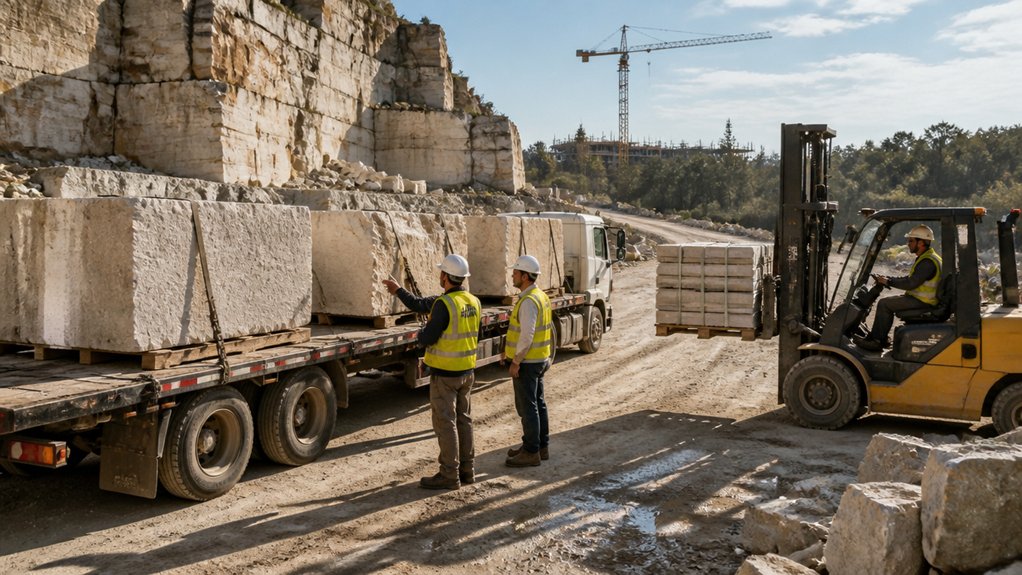
How natural stone reaches a building site
At Bluestone Masonry & Construction, we take stone projects from quarry to completion: sourcing and cutting the material, building with it, and finishing stone and marble interiors. Based in Casper, Wyoming, we’ve worked across Wyoming, Montana, Colorado, Idaho, Utah, Nebraska, and South Dakota since 2013.
The process starts with the project requirements. We confirm the stone’s source, dimensions, finish, and intended use, then consider how it will perform in the Mountain West. Granite is generally hard-wearing and handles freeze-thaw exposure well when properly selected and installed. Limestone and marble can be more sensitive to moisture, salts, and acids, so their finish and location matter. For exterior work, we also account for snow, wind, UV exposure, drainage, and the building’s structural requirements.
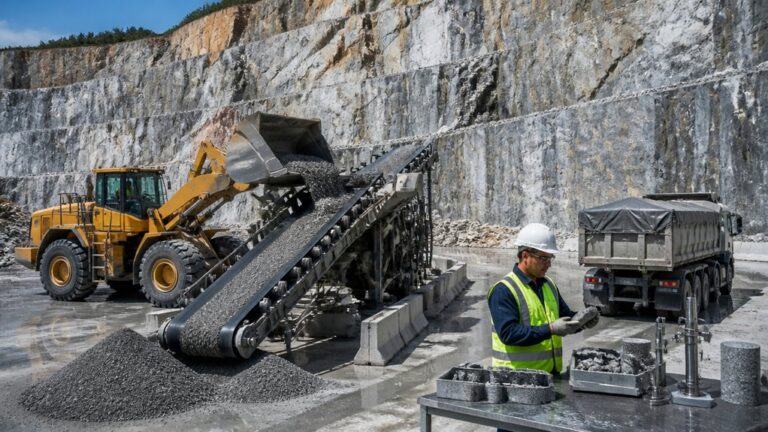
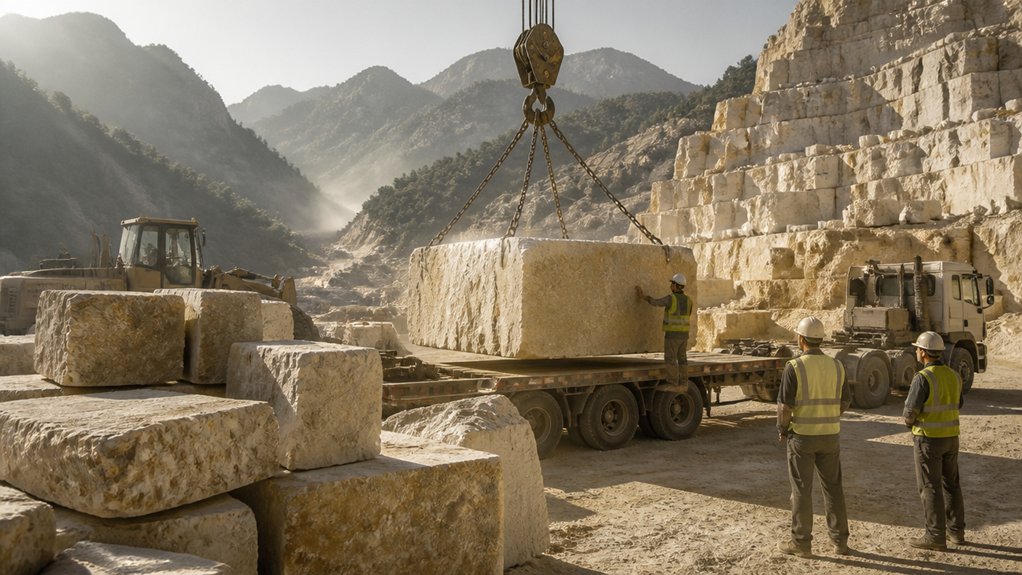
At the quarry, crews extract rough blocks. The stone is then cut and finished to the specified sizes and surface texture. We check pieces for cracks, color variation, and other natural features, and confirm that the finished units suit the installation. Natural stone varies from piece to piece, so reviewing samples and setting expectations for variation before fabrication helps avoid surprises.
Stone is heavy and can chip or crack if it shifts in transit. Before shipment, pieces are secured in crates or racks suited to their size, shape, and finish. We check quantities, labels, packing, and delivery records so the material can be identified and handled correctly at the site.
On arrival, we inspect the stone for damage, sort it by location or installation sequence, and stage it on a stable surface where it’s protected from weather and site traffic. Proper storage matters in a cold climate: standing water can freeze in cracks, and snow or wind can damage exposed materials or packaging. Before installation, the crew confirms that the substrate, support, drainage, and setting materials are appropriate for the stone and site conditions.
Permits, inspections, local building codes, and input from licensed professionals such as structural engineers may be required, especially for structural stone or heavy cladding. Requirements vary by state and county, so we verify them for the project location.
What Disrupts Natural Stone Supply Chains?
Even with careful quarrying, fabrication, and delivery planning, a stone order can be delayed at any point in the supply chain. Severe weather, equipment failures, labor shortages, or power outages can reduce quarry output or stop processing. In the Mountain West, snow, high winds, and winter road conditions can also affect transport schedules.
Stone selection adds another consideration. A supplier may not be able to meet the required color, thickness, finish, or durability, particularly for less common stones or custom-cut pieces. Switching sources can mean rechecking samples, confirming dimensions, and allowing time for new quality-control checks. That matters when a project depends on a consistent stone match or specialized finish.
Geopolitical changes can affect sourcing and supplier continuity, too. We recommend confirming production milestones, checking that backup suppliers can meet the project specifications, and building realistic schedule buffers before setting installation dates. As stone masons based in Casper, Wyoming, we coordinate work from quarry to completion, including sourcing, cutting, building, and interior finishing.
How Do Transport and Rules Affect Stone Availability?
Transport and import rules can affect which stone is available and when it reaches a job. From our base in Casper, Wyoming, we coordinate stone sourcing, cutting, construction and interior finishing across Wyoming, Montana, Colorado, Idaho, Utah, Nebraska and South Dakota. We plan delivery around the full route—not just the time a shipment spends on the road.
Port capacity, container availability, inland hauling and seasonal weather can all add delays. In the Mountain West, snow, high winds and changing road conditions can disrupt deliveries, especially at higher elevations. We confirm delivery windows before crews mobilize and allow time for each handoff. Stone weight, slab or pallet dimensions, unloading access and on-site storage also matter. Protect stone from standing water and repeated freeze-thaw exposure before installation.
Import rules can change availability, too. Tariffs, sanctions, product standards and customs paperwork vary by origin and destination. We ask suppliers to confirm current requirements and provide complete documentation before shipment. If a route or rule changes, we can review alternate sources, stone formats or delivery plans to reduce the risk of a shortage. For projects that require permits or inspections, requirements vary by state and county, so we coordinate with the project team and appropriate licensed professionals.
How Does Traceability Clarify Stone Sourcing?
How traceability clarifies stone sourcing
At Bluestone Masonry & Construction, we take projects from quarry to completion, sourcing and cutting stone, building with it, and finishing interiors. We’re stone and marble masons based in Casper, Wyoming, and we work across Wyoming, Montana, Colorado, Idaho, Utah, Nebraska, and South Dakota. Traceability helps us connect a finished slab or masonry unit to its quarry, processor, and shipment so we can check whether the material suits the project.
When reviewing stone records, we:
- Check origin disclosures for the quarry location, extraction details, and named suppliers.
- Match invoices, shipping records, and processing documents to the specific stone batch.
- Compare documented practices with the project’s sourcing requirements and flag missing or inconsistent records before approving the material.
Traceability can clarify where stone came from, but it doesn’t prove every claim on its own. We use the records to verify provenance, spot gaps, and make decisions based on evidence. We also assess the stone itself: its strength, porosity, finish, and suitability for local conditions. In the Mountain West, freeze-thaw cycles, snow, wind, high-altitude UV exposure, and installation details can all affect performance. A sound sourcing record is one part of choosing and installing stone that will work for the project.
How Can Builders Strengthen Stone Supply Chains?
We strengthen stone supply chains by managing each project from quarry to completion. As stone and marble masons based in Casper, Wyoming, we source and cut stone, build with it, and finish interiors across Wyoming, Montana, Colorado, Idaho, Utah, Nebraska, and South Dakota.
Before selecting a quarry or supplier, we define the stone type, finish, dimensions, quality tolerances, lead times, and documentation the project requires. We check how the material is quarried and handled, and confirm that it suits its intended use. For exterior work in the Mountain West, freeze-thaw resistance, snow loads, wind exposure, altitude, and strong UV can all affect stone selection, detailing, and maintenance. Some stones absorb more water or weather differently, so we account for those properties when planning cuts, joints, drainage, and installation.
We reduce supply risk by qualifying alternate sources where practical, confirming delivery schedules early, and coordinating promptly when drawings or quantities change. Optical sorting can help improve grading consistency and reduce waste when it fits the material and project. We also consider reclaimed stone and reuse of offcuts, while planning for responsible recovery at the end of a project when feasible.
For structural or code-regulated work, permits, inspections, local building codes, and licensed professionals such as structural engineers may be required. Requirements vary by state and county, so we confirm them with the project team before work begins.
Frequently Asked Questions
Which Natural Stone Types Are Best Suited to Different Construction Applications?
We match stone to the job, the exposure and the way it will be installed. Granite is a strong choice for paving, countertops and other high-traffic surfaces because it resists wear well. Outdoors, the stone’s finish, drainage and installation details matter: freeze-thaw cycles, snow and wind can damage poorly supported or waterlogged paving. For countertops, we seal granite as needed and recommend routine cleaning with a stone-safe product.
Marble suits interior walls, floors and vanities where its veining and finish are priorities. It is softer and more prone to scratching, etching and staining than granite, so it needs careful use and regular maintenance. We consider the intended use before selecting a finish, especially for floors that may get wet or gritty.
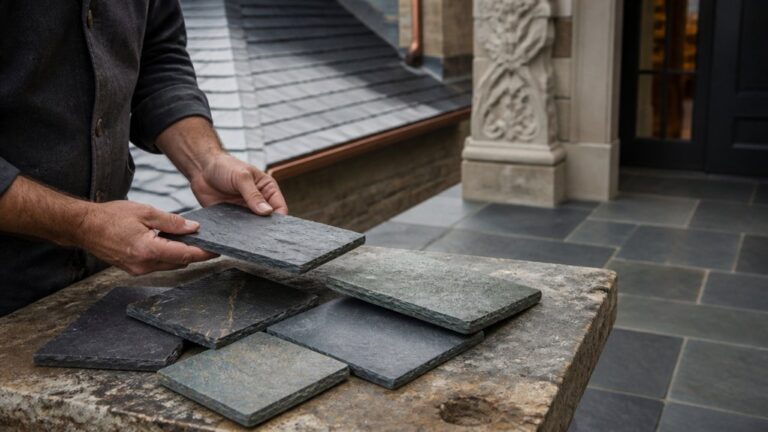
Limestone can work well for cladding, but its porosity and performance vary by type. We check the stone’s suitability for exterior exposure and detail the assembly to shed water and accommodate movement. Slate is often used for roofing because it can perform well in harsh weather, but the roof structure, slate thickness, fastening and snow load must all be considered. At Mountain West elevations, UV, wind and repeated freeze-thaw cycles also affect material selection and installation.
As stone and marble masons based in Casper, Wyoming, we take projects from quarry to completion—sourcing and cutting stone, building, and finishing interiors. Since 2013, our Bluestone Masonry & Construction team has worked across Wyoming, Montana, Colorado, Idaho, Utah, Nebraska and South Dakota. Exterior stonework and roofing may require permits, inspections and compliance with local codes; requirements vary by state and county, and a licensed professional such as a structural engineer may be needed.
How Should Natural Stone Be Cleaned and Maintained?
We recommend cleaning natural stone with a pH-neutral cleaner and a soft brush or cloth. Avoid acids, abrasive pads, and harsh chemicals, which can etch marble and limestone, dull polished finishes, or damage grout. Match the cleaning method to the stone and finish: for example, unsealed or honed stone may need different care than polished, sealed stone.
Wipe spills promptly, especially acidic liquids on marble or limestone, and check grout regularly for cracks or gaps. Reseal porous stone when its condition calls for it; sealer can help limit staining, but it does not make stone waterproof or eliminate maintenance. Outdoors in Wyoming and the surrounding Mountain West, keep stone and joints clear of standing water and use products suited to freeze-thaw conditions. Avoid deicing salts unless the stone and installation manufacturer confirms they are safe for your surface.
What Factors Determine the Cost of Natural Stone?
We price natural stone by considering the material, fabrication, and installation. Rare varieties and stones that must travel farther can cost more. Thicker slabs, intricate cuts, and custom finishes also add fabrication and handling time.
Installation conditions matter just as much. Heavy stone may need structural review, and difficult access, complex layouts, or extensive site preparation can increase labor. In Wyoming and the surrounding Mountain West, freeze-thaw cycles, snow loads, strong UV exposure, and wind can affect the stone and installation details we recommend. Permits, inspections, local codes, or review by a licensed structural engineer may be required; requirements vary by state and county.
As stone and marble masons based in Casper, Wyoming, we take projects from quarry to completion, including sourcing, cutting, building, and interior finishing. We serve Wyoming, Montana, Colorado, Idaho, Utah, Nebraska, and South Dakota. Availability, fuel costs, and exchange rates can also change material and transport costs.
How Can Buyers Assess the Quality of Natural Stone?
We assess natural stone by inspecting samples for consistent color, soundness, and finish, then checking test data against the project’s requirements. Look for cracks, weak seams, uneven thickness, and surface defects that could affect cutting, installation, or long-term performance. Compare samples and production batches in consistent lighting; stone can look different outdoors than it does in a showroom.
Stone types behave differently. Granite is generally hard-wearing, while marble is more prone to scratching and etching. For exterior work in the Mountain West, we also consider water absorption and freeze-thaw performance, along with exposure to snow, wind, and strong UV at altitude. The right choice depends on the stone’s intended use, its finish, and how it will be detailed and maintained.
Before purchasing, we review quarry certifications, test reports, and supplier documentation for traceability and performance information. We also confirm that the stone’s thickness, finish, and installation method suit the project. We take projects from quarry to completion, sourcing and cutting stone, building, and finishing interiors across Wyoming, Montana, Colorado, Idaho, Utah, Nebraska, and South Dakota. Depending on the project, permits, inspections, local codes, and licensed professionals such as structural engineers may be required; requirements vary by state and county.
Can Natural Stone Be Recycled or Reused After Demolition?
Yes. We can often reuse natural stone after demolition, but the right option depends on its condition, type, size, and original installation.
Intact slabs, tiles, and blocks may be salvaged for new work. We inspect for cracks, delamination, staining, mortar residue, and damage from freeze-thaw cycles. Stone that will carry loads or serve as exterior paving needs particular attention to its strength, thickness, and surface condition. Granite and some dense limestones may withstand demanding outdoor use; softer or more porous stones can be harder to clean and may be less suitable for exposed Mountain West conditions.
Before reusing stone, confirm that the pieces fit the new design and can be installed with suitable support, drainage, and movement joints. Snow, wind, UV exposure, and temperature swings can affect both the stone and the setting materials. Salvaged stone may also need careful cleaning, recutting, or a new finish, which can affect the project cost.
Stone that cannot be reused intact may be crushed for aggregate, provided it is free of unsuitable coatings or contamination and accepted by the intended recycler. We can help assess the material and plan a practical route from salvage to installation. Permits, inspections, local building codes, or review by a licensed structural engineer may apply, and requirements vary by state and county.