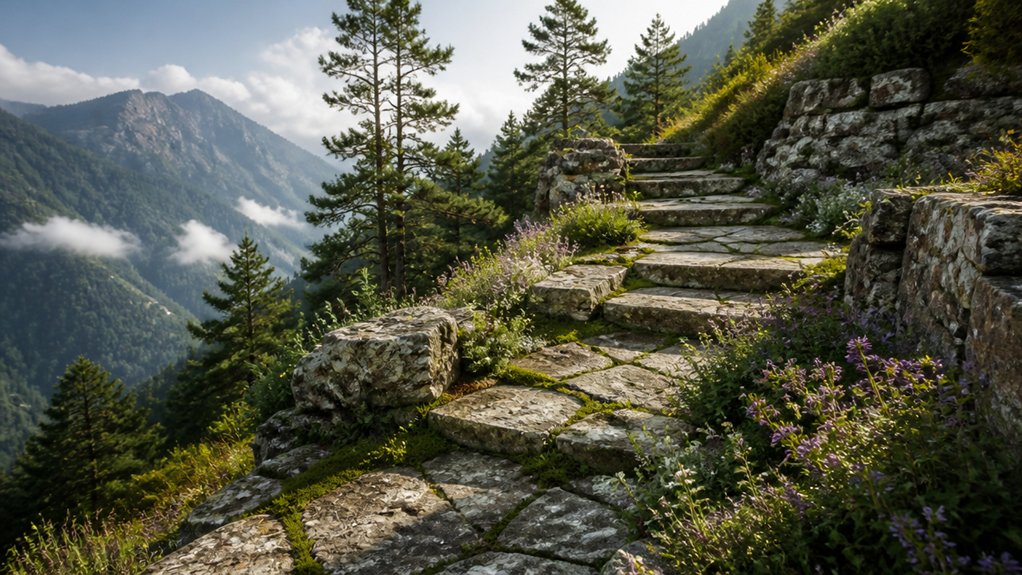
On a sloping mountain lot, we route a flagstone path along the natural contours rather than straight uphill. Gentle turns make the climb easier and help limit erosion, but the path still needs a consistent walking surface and well-planned transitions where the grade changes or steps begin. Before excavation, we mark the route with stakes and string and check it from several points on the slope.
Stone choice affects footing and maintenance. We favor durable, naturally textured flagstone with a surface that remains reasonably slip-resistant when wet or covered with snow. Sandstone can be easy to shape, but some varieties absorb more water and may weather faster through repeated freeze-thaw cycles. Denser stones, such as certain granites, generally resist moisture better, though their finish and texture still matter for traction. We assess the stone’s suitability for the site rather than relying on appearance alone.
A stable path starts with a properly prepared base and drainage that carries runoff away without directing it toward buildings, steps or neighboring property. In the Mountain West, freeze-thaw, snow, wind and strong UV exposure all influence material selection and installation. We set stones securely, account for water movement, and avoid details that can trap moisture and encourage shifting or frost damage. Periodic maintenance includes clearing debris, checking joints and resetting any stones that move.
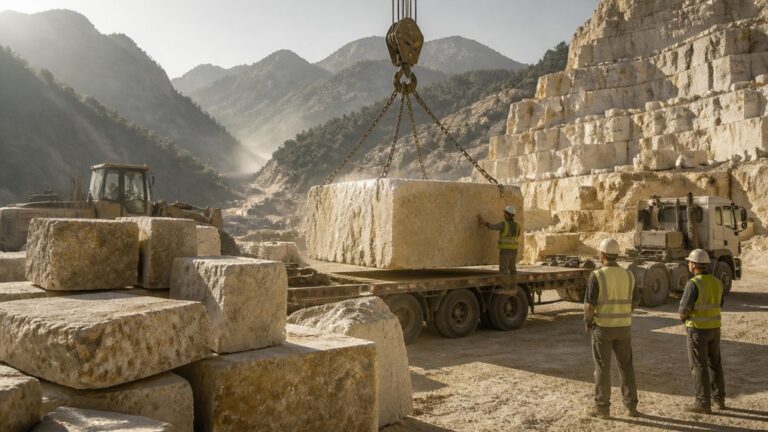
As the Bluestone Masonry & Construction team, stone and marble masons based in Casper, Wyoming, we take projects from quarry to completion: sourcing and cutting stone, building, and finishing interiors. For paths that include retaining walls or substantial steps, permits, inspections, local codes or a licensed professional such as a structural engineer may be required. Requirements vary by state and county across Wyoming, Montana, Colorado, Idaho, Utah, Nebraska and South Dakota.
Plan a Flagstone Path Around the Slope
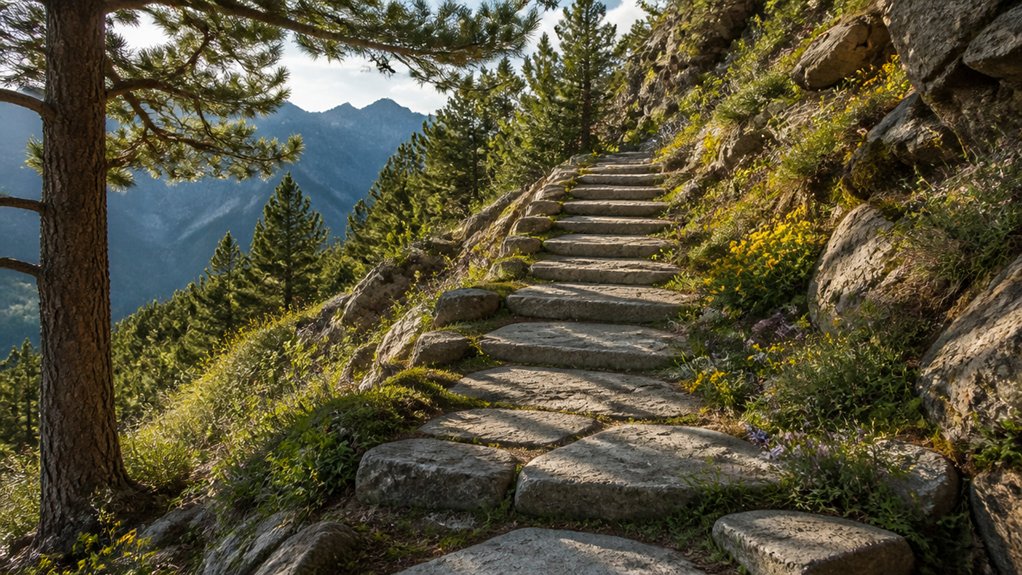
Start by laying out a route that follows the slope’s contours instead of running straight uphill. We mark it with stakes and string, then check each turn for usable width, drainage, and access. Keep the route away from unstable ground, exposed roots, and runoff channels; water trapped beneath stone can freeze, shift the base, and loosen the path.
Plan broad, gentle turns so the stones fit without awkward cuts. Bluestone provides a durable walking surface, while local stone can blend more closely with the surrounding rock and soil. Stone types vary in texture, thickness, and resistance to weathering, so we review samples on site and choose a finish with enough grip for snow and ice. We also consider UV exposure, windblown debris, and how the stone will look alongside nearby plantings.
Set the finished path height to meet existing landings cleanly, and plan the base and drainage for local freeze-thaw conditions. Edging on both sides helps contain the base and hold the route in place. We adjust the alignment before excavation begins, when changes are easier to make. As stone and marble masons based in Casper, Wyoming, we take projects from quarry to completion, including stone sourcing, cutting, installation, and finishing. Permit, inspection, and code requirements vary by state and county, so confirm local requirements before work begins.
Choose Flagstone for Grip and Durability
For a mountain walkway, choose flagstone that stays stable underfoot through wet weather and freeze-thaw cycles. We recommend starting with a cleft surface, which has a naturally rough texture. Avoid polished or smoothly sawn finishes outdoors; snowmelt and rain can make them slippery.
Test samples with the soles of your boots, including after wetting the stone. Dense stones such as quartzite generally resist wear well, while softer varieties may flake or abrade more quickly. Stone performance also depends on its quality and how it’s installed. In the Mountain West, select material suited to local freeze-thaw conditions, and account for snow removal, wind-driven moisture, and strong sun exposure.
> Test stone under wet conditions, and choose a durable variety suited to local freeze-thaw cycles and mountain weather.
Choose thickness and shape for the path’s use and base conditions. Broad, stable pieces are easier to walk on than narrow or irregular stones, but even durable flagstone can shift or crack if its foundation drains poorly or moves during frost. We set flagstone over a properly prepared base, with drainage and joint details suited to the site. Consistent natural texture is a more dependable source of grip than a coating that may wear away.
As stone and marble masons based in Casper, Wyoming, we take projects from quarry to completion: sourcing and cutting stone, building, and finishing interiors. We’ve served Wyoming, Montana, Colorado, Idaho, Utah, Nebraska, and South Dakota since 2013. Local permits, inspections, and building-code requirements vary by state and county; larger or more complex projects may also require licensed professionals such as a structural engineer.
Prepare a Stable, Well-Drained Base
We build flagstone paths to stay level through freeze-thaw cycles by preparing a firm base that drains well. First, we remove organic soil and excavate to stable, undisturbed ground. The required depth depends on local frost conditions, the soil, and the finished grade, so we check site requirements before setting the excavation depth.
On a mountain slope, we cut a stable bench into firm ground rather than building up loose fill. We compact crushed angular aggregate in thin lifts with a plate compactor; rounded gravel can shift under foot traffic and stone loads. We also shape the base to direct water toward a safe outlet—not toward a foundation or an unstable slope edge. Where seepage persists, a cross-slope grade or perforated drain may help, provided the water has a suitable discharge point.
A consistent, compact subgrade helps limit settlement and movement. We select the base and setting approach to suit the stone, site drainage, and local conditions. Requirements for permits, inspections, and drainage work vary by state and county, so we confirm applicable codes and involve licensed professionals when needed.
Lay Flagstones and Build Safe Steps
With the compacted base ready, we set each flagstone on a thin, even bedding layer and adjust it until it sits firmly without rocking. Stone thickness and surface texture vary, so we check each piece as we go rather than relying on a uniform setting depth. We keep joints consistent, tap stones into place with a rubber mallet, and shape the surface to shed water without creating abrupt edges that can catch a boot.
- Build safe steps: We use broad, uniform treads and stable risers, anchoring each step securely into the slope. On Mountain West sites, we account for runoff and freeze-thaw cycles so water doesn’t collect beneath the stones and loosen the steps.
- Check alignment: We sight along the path, correct any wobble, and test every stone underfoot. A firm, even surface matters in snow and ice, when footing is already less reliable.
- Finish joints: We pack gaps with suitable aggregate to limit erosion while preserving firm footing. The right material depends on the stone, joint width, drainage needs, and exposure to wind and weather.
We work carefully across the grade. Precise placement and effective drainage help create a durable, comfortable route through Wyoming’s changing seasons.
Control Runoff and Maintain the Path
After we set the stones, we direct runoff away from the path before it can wash out the joints or undermine the base. A slight cross-slope helps water drain off the tread; we guide it toward stable, vegetated ground rather than an exposed or unstable slope. Where hillside flow collects above the path, a shallow swale can intercept it. If water needs to pass beneath the path, a lined drain or discreet cross-drain can carry it through without eroding the base.
In the Mountain West, drainage needs to account for snowmelt and freeze-thaw cycles. Water trapped in joints or beneath stones can freeze, loosen the setting material and cause stones to rock. After heavy rain or spring melt, we check the joints and edges, replace washed-out grit and reset any loose stones promptly. We also clear leaves and sediment seasonally and trim plants before roots disturb the paving.
Frequently Asked Questions
Do I Need a Permit to Build a Flagstone Path on a Mountain Lot?
A flagstone path on a mountain lot may require a permit, especially if it involves grading, retaining walls, changes to drainage, or work near a protected area. Requirements vary by state and county, and steep slopes can trigger additional review. Before we begin, we recommend checking with your local building department about permits, inspections, and applicable codes. This helps avoid drainage problems and costly corrections, particularly where freeze-thaw cycles can shift poorly prepared stonework.
Can I Install Flagstone Pathways Myself, or Should I Hire a Contractor?
You can install a flagstone pathway yourself if you’re comfortable with excavation, grading, and setting stone on a stable base. For a durable result, remove organic material, prepare and compact the base, and pitch the path so water drains away from buildings. Choose stone suited to the site: some flagstone splits into relatively even pieces, while irregular or brittle stone takes more cutting and fitting. In the Mountain West, a well-drained base and secure setting matter because freeze-thaw cycles, snow, wind, and strong UV exposure can loosen stones or wear down joints.
Hire a contractor for steep or unstable slopes, complex drainage, heavy stonework, or a path that must meet specific accessibility or code requirements. We’re the Bluestone Masonry & Construction team, stone and marble masons based in Casper, Wyoming, and we handle projects from quarry to completion—from sourcing and cutting stone to building and finishing. Permit and inspection requirements vary by state and county; check local codes and consult licensed professionals, such as a structural engineer, when the site or design calls for it.
What Is the Typical Cost of a Flagstone Path on a Sloping Lot?
We price a flagstone path on a sloping lot based on the stone, slope, access, and amount of site preparation—not a single per-square-foot rate. Steeper grades may require more excavation, a carefully compacted base, drainage work, or retaining edges to keep the path stable through freeze-thaw cycles. Stone choice also matters: local flagstone can reduce hauling, while denser, more uniform pieces are often easier to fit and maintain. We plan joints and surface texture with snow, ice, and runoff in mind, then finish the path for reliable footing. Permits or inspections may apply, and local requirements vary by state and county. We can assess the site and explain the cost drivers before work begins.
Which Plants Complement Flagstone Pathways on Mountain Properties?
For mountain flagstone paths, we recommend low-growing plants such as creeping thyme and sedum between stones, with native ferns or alpine grasses along the edges where conditions suit them. Choose species adapted to your elevation, sun exposure, wind, and available water; avoid planting where roots could lift stones or crowd the path. In the Mountain West, account for freeze-thaw cycles and snow removal: keep joints well drained, and use plants that can handle winter exposure without requiring frequent watering. We source and cut stone and build paths to suit the site, from quarry to completion.
How Can I Make a Flagstone Path Accessible for People With Mobility Challenges?
For a flagstone path that works well for people with mobility challenges, we recommend a firm, stable, slip-resistant surface with gentle slopes, clear width, and level areas to rest. Choose stone with a naturally textured finish; smooth, polished surfaces can become slippery when wet or icy. Set each stone flush and keep joints tight and even so wheels, canes, and walkers do not catch.
In Wyoming and the surrounding Mountain West, plan for freeze-thaw cycles, snow, strong UV, and wind. A well-drained, compacted base helps limit frost movement, while properly graded joints and edges direct water away from the path. Keep the route clear of snow and debris, repair loose stones or joints promptly, and avoid deicing products that may damage the stone. We source, cut, build, and finish stone projects from quarry to completion, and can help select materials and details suited to your site. Local codes and permit requirements vary by state and county, so confirm applicable accessibility and construction requirements before work begins.