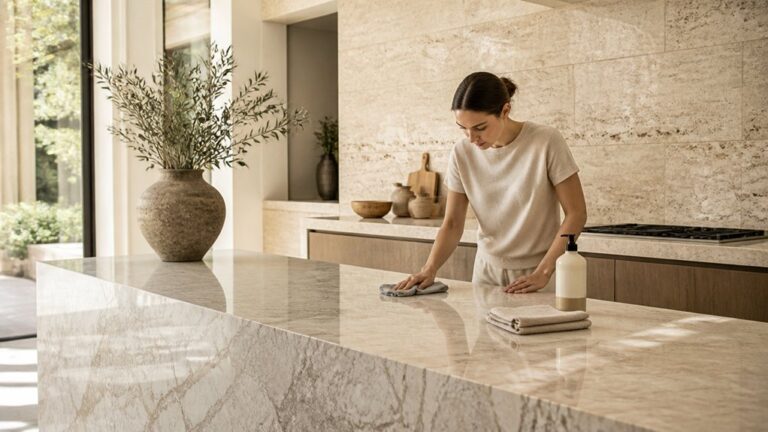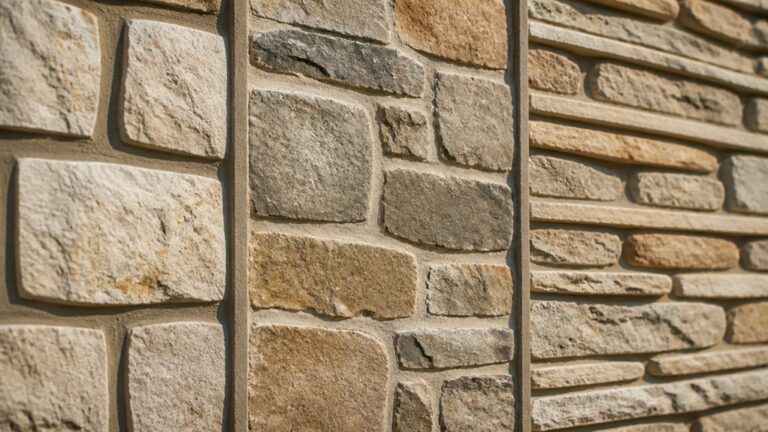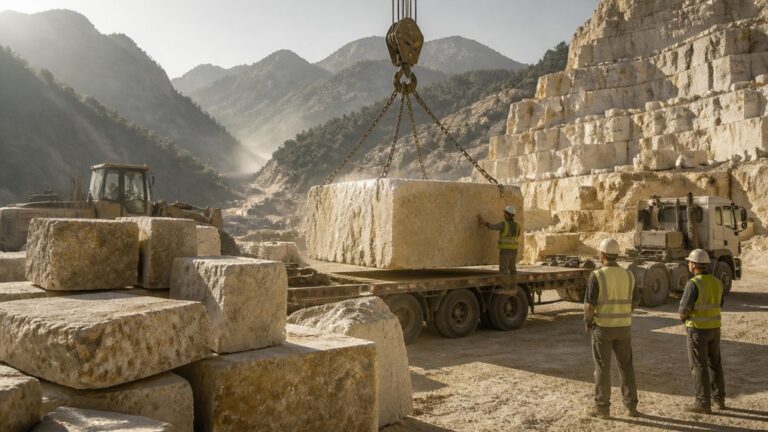

Book matched marble uses two adjacent slabs cut from the same block and placed so their veining reflects across the joint. We use this layout to create a focal point on a feature wall, shower, or vanity. The effect depends on the stone: some marble has strong, sweeping veins that form a clear pattern, while other slabs have subtler or less predictable markings. Natural stone is never a perfect mirror match.
Before ordering, we review the full slabs, agree on the pattern and seam location, and plan how the stone will be supported and protected from moisture. As the Bluestone Masonry & Construction team, based in Casper, Wyoming, we take projects from quarry to completion—from sourcing and cutting stone to building and finishing interiors across Wyoming, Montana, Colorado, Idaho, Utah, Nebraska, and South Dakota. Start by understanding how book-matching works and what to check before installation.
What Is Book-Matched Marble?

What’s book-matched marble?
Book matched marble uses two adjacent slabs cut from the same block. We flip one slab so the veining forms a mirror image across the seam. The result can create a balanced pattern on a feature wall, shower surround, or vanity.
Because the slabs come from neighboring cuts, their color and mineral patterns are more likely to coordinate than those of unrelated pieces. They’ll not always match perfectly, though: natural variation is part of marble, and veining can shift in color, density, and direction.
Before ordering, we recommend reviewing the full slabs together and confirming the layout with your fabricator. Plan for seams, outlets, plumbing, edge details, slab thickness, and how the pieces will be supported. Marble is heavy, so the wall or substrate must be suitable for the load; a structural engineer may be needed where conditions require one. In showers and other wet areas, the installation also needs appropriate waterproofing.
We source, cut, build, and finish stone projects from quarry to completion. In the Mountain West, installation planning should also account for the building’s exposure and conditions, including temperature swings and seasonal movement. Permits, inspections, and code requirements vary by state and county, so confirm them with the local building department and licensed professionals as needed.
How Does Marble Create a Mirrored Pattern?
We create a mirrored marble pattern, often called book matching, by placing two adjacent slabs so their veining reflects across the seam. The effect works best when the slabs come from the same block, but natural variation means the veins and colors won’t match perfectly.
Before cutting, we lay out the slabs and check how the pattern will read across the finished surface. We then plan the cut, orientation, and seam location, and handle the pieces carefully during fabrication and installation. Even a small shift can interrupt the visual flow. Marble is softer than many granites and can scratch or etch, so it needs careful handling and a suitable sealer; sealing helps resist staining but doesn’t prevent etching.
As Bluestone Masonry & Construction, we take projects from quarry to completion, including stone selection, cutting, installation, and finishing. In the Mountain West, we also account for the installation conditions: outdoor marble can be vulnerable to moisture and freeze-thaw, while strong UV and wind can affect exposed finishes and sealers. For exterior or structural work, the stone, support, drainage, and anchoring must suit the site and local requirements. Permits, inspections, building codes, and licensed professionals may be required; requirements vary by state and county.
Where Does Book matched Marble Work Best?
Where book matched marble works best
We recommend book matched marble where a broad, uninterrupted surface lets the mirrored veining read clearly. A living room feature wall, fireplace surround, or bathroom vanity wall can make the pattern a focal point. Before choosing the layout, we check the slab’s veining, the room’s sightlines, and how natural and artificial light will fall across the surface.
In a shower, book matched marble is usually better suited to a dry or low-splash wall than to an area exposed to frequent water and cleaning. Marble can absorb moisture and may etch or stain, so the stone, finish, sealer, and maintenance plan all matter. We also confirm that the substrate is stable and that vertical slabs have appropriate support and anchoring.
Large panels require careful handling and precise installation. In the Mountain West, the indoor location still matters: high-altitude sunlight can bring strong UV exposure through windows, while dry conditions can affect how stone and surrounding materials respond. For exterior installations, we also account for freeze-thaw cycles, wind, snow loads, drainage, and the stone’s suitability for the exposure.
We take projects from quarry to completion, including sourcing and cutting stone, building, and finishing interiors. Before committing, we review the room’s scale, installation requirements, maintenance, and cost factors, such as slab selection, fabrication, access, and labor. Reserve the pattern for a prominent area and use simpler finishes elsewhere. Depending on the project, permits, inspections, local codes, and input from licensed professionals such as a structural engineer may be required; requirements vary by state and county.
How Do You Choose Matching Marble Slabs?
We choose book matched marble by starting with slabs cut consecutively from the same block. That gives us the best chance of finding veins that continue naturally across the mirror-image layout, though the pattern won’t be perfectly identical on both sides.
We review full-size slab images or inspect the slabs side by side. Small samples can’t show the full pattern or reveal how veins shift across a slab. We check the intended book match axis and compare vein direction, spacing, color, and movement. The goal is a balanced reflection, not a forced match.
We also check thickness, surface finish, and texture so the slabs can be fabricated and installed consistently. Before cutting, we lay out the pieces and confirm how the pattern will meet at seams, corners, and edges. Marble is sensitive to acids and can scratch or stain, so the finished surface and its maintenance needs should suit the room. For projects in the Mountain West, we also consider exposure to UV, wind, and freeze-thaw conditions when marble is used outdoors. We approve the slab layout before purchase and carry the plan through fabrication and installation, from quarry to completion.
What Should You Plan for Installation?
Installation starts with a verified layout and a sound, properly prepared substrate. Before cutting, we confirm the slab sequence, vein direction, and joint locations. We dry-fit panels to check the pattern, especially for book matched marble, where even a small change in orientation can disrupt the match.
> Verify the layout, slab sequence, and vein direction before cutting to ensure the pattern and joints align.
We check that walls and floors are flat, the structure can support the stone’s weight, and waterproofing is appropriate for the location. Large, heavy pieces also require a clear handling route and a safe plan for moving them into place. For exterior work in the Mountain West, we account for freeze-thaw cycles, snow and wind exposure, and strong UV. Stone, setting materials, drainage, and detailing all need to suit those conditions.
We coordinate installation with plumbing, cabinetry, and other trades, and allow adhesives and grout to cure before the surface is used. We select setting materials for the stone and application, maintain consistent joints, and discuss sealing based on the stone’s porosity and finish. Sealing can help limit staining, but it doesn’t make marble stain-proof; regular care and prompt cleanup still matter.
Throughout the project, we protect finished surfaces from scratches, stains, and construction debris. We recommend using a qualified stone installer and bringing in licensed professionals, such as a structural engineer, when the project requires them. Permits, inspections, and applicable building codes vary by state and county, so confirm local requirements before work begins.
Frequently Asked Questions
How Much Does a Book Matched Marble Feature Wall Typically Cost?
The cost of a book matched marble feature wall depends on the marble’s grade and availability, slab dimensions, vein alignment, cutting and finishing, and the complexity of installation. We assess the stone and wall conditions before estimating, including substrate support, access, and how the slabs will be handled and secured. Ask us for an itemized estimate so you can compare material, fabrication, and installation costs.
Does Book Matched Marble Require Special Cleaning Products?
No. We recommend cleaning book matched marble with a pH-neutral cleaner made for natural stone, a soft cloth, and clean water. Avoid vinegar, lemon juice, other acidic cleaners, and abrasive pads; they can etch or scratch the surface. Marble is porous, so wipe spills promptly and have the surface sealed as needed. Sealant helps resist staining, but it does not make marble stain-proof.
How Often Should Marble Be Sealed?
Seal marble every 6–12 months as a general guide, adjusting the schedule for the stone’s porosity and how heavily it is used. To check whether it needs sealing, place a few drops of water on a clean, dry area. If the marble darkens, it is absorbing moisture and may need resealing. Clean and dry the surface before applying a sealer, and follow the product instructions. Book matched marble needs the same care as other marble; protect the veining and seams from spills, and wipe up acidic liquids promptly to help prevent etching.
Can Scratches or Chips in Book-Matched Marble Be Repaired?
Yes. We repair scratches and chips in book matched marble, but the right method depends on the stone’s finish, veining, and the damage.
For light surface scratches, we may hone and refinish the affected area. Deeper scratches can require more extensive work, and matching the surrounding sheen is important so the repair does not stand out. For chips, we can fill the damaged spot with a suitable resin or stone filler, then color-match and finish it to blend with the marble. Because book matched slabs have mirrored veining, a repair may remain visible; we’ll assess the pattern and explain what finish to expect before work begins.
To help prevent further damage, use a pH-neutral stone cleaner, wipe up spills promptly, and avoid abrasive pads and harsh cleaners. Protect exposed edges from impacts, especially in busy areas. If the marble is outdoors or in an unheated space, freeze-thaw cycles and moisture can worsen existing damage, so the stone and installation should be assessed for the conditions. We’re the Bluestone Masonry & Construction team, based in Casper, Wyoming, and we handle stone work from quarry to completion across the Mountain West.
Is Book-Matched Marble Suitable for Homes With Children or Pets?
Yes. Book matched marble can work in a home with children or pets, but it needs thoughtful placement and regular care. Marble is relatively soft and can etch when exposed to acidic liquids, so spills, pet accidents, and food stains should be cleaned promptly. Use a suitable stone sealer, while remembering that sealing helps resist staining but does not prevent etching or scratches.
For floors, choose a finish that provides appropriate traction, especially near entries where snow and water can be tracked in. Place rugs in high-traffic areas and use mats to catch grit that could scratch the surface. Keep pets’ claws trimmed, and avoid harsh or acidic cleaners. For countertops and other surfaces, consider whether the household can manage the upkeep; a more stain- and scratch-resistant stone may be a better fit for heavily used areas.
We can help you select the marble, finish, and installation details that suit your home and how you use it. In the Mountain West, entryways also need to handle snow, moisture, and abrasive grit, so proper substrate preparation and detailing matter.