In the Rocky Mountains, we usually make the most progress on masonry projects from late spring through early fall, but elevation and site conditions can shift the workable season by weeks. Spring runoff can leave access roads soft and delay deliveries; summer offers longer workdays, though contractor schedules may be tighter. At higher elevations, early snow and freeze-thaw cycles can shorten the season and affect when stone can be installed safely. Before setting a start date, we assess drainage, access, exposure, and the site’s elevation so we can plan material delivery and construction around local conditions. We’re the Bluestone Masonry & Construction team, based in Casper, Wyoming, and we take projects from quarry to completion—from sourcing and cutting stone to building and finishing interiors across the Mountain West.
When Should You Build in the Rockies?
When should you build in the Rockies?
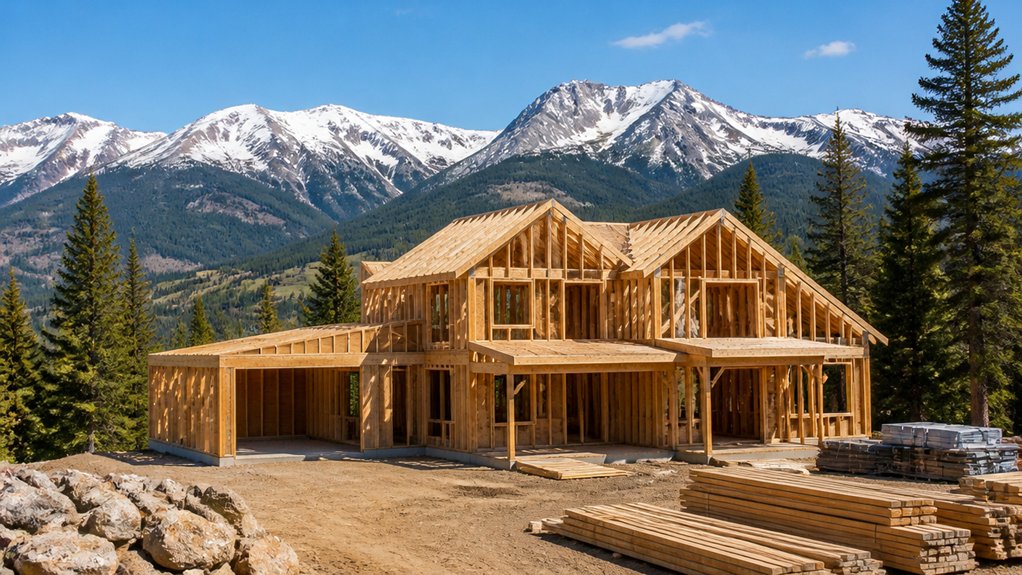
For most sites, we recommend scheduling major construction from late spring through early fall, when longer days and milder temperatures make it easier to keep work moving. The right window depends on elevation, access, exposure, and the type of work. Snow can linger at higher elevations, while wind, intense UV, and sudden temperature changes can affect both crews and materials.
Plan major construction for late spring through early fall, adjusting for elevation, site access, exposure, and changing mountain weather.
Plan stonework around the weather as well as the overall build schedule. Freeze-thaw cycles make proper drainage, suitable mortar, and careful installation especially important. Concrete and mortar need appropriate conditions to cure; cold weather can slow curing and affect performance. Before scheduling crews or deliveries, confirm that roads are accessible and the site is ready.
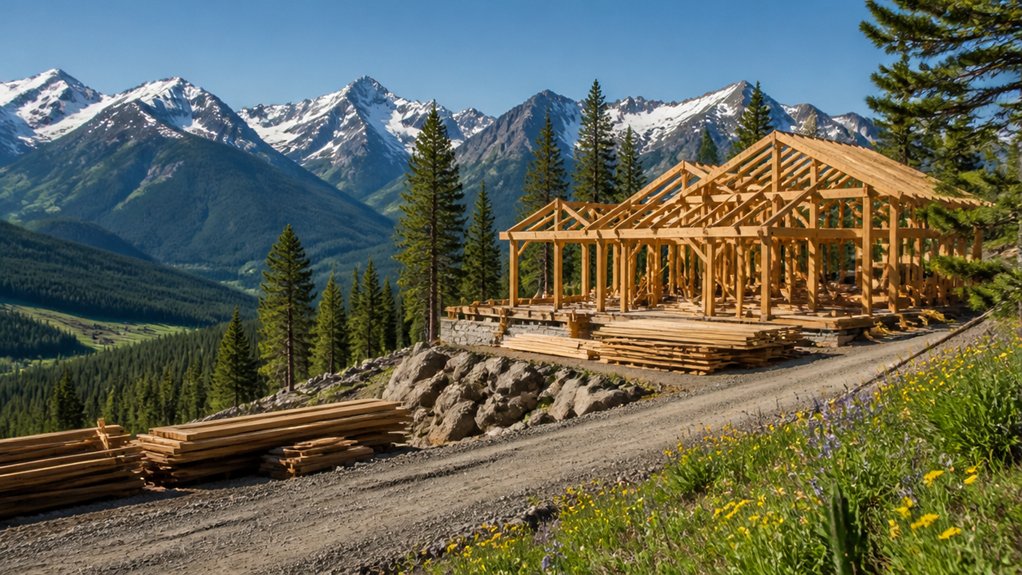
If your project includes a timber frame, coordinate fabrication and transport early so the frame arrives after the foundation is ready. Allow time for soil stabilization, foundation work, inspections, and curing before framing or masonry begins. Local permits, building codes, and inspection requirements vary by state and county, so confirm them with the appropriate authorities and licensed professionals, including a structural engineer when required.
We’re stone and marble masons based in Casper, Wyoming, and have worked across the Mountain West since 2013. We take projects from quarry to completion—from sourcing and cutting stone to building and finishing interiors. Ask local contractors about seasonal access and site conditions, then set a start date that accounts for weather, material lead times, and the work each trade needs to complete.
How Do Spring Mud and Runoff Affect Building?
Spring’s longer days can make a building site look ready before the ground is firm. We plan excavation around snowmelt and runoff because saturated soil loses strength under equipment, and thawing ground can shift beneath footings. In Wyoming and across the Mountain West, freeze-thaw cycles make stable subgrade and reliable drainage especially important.
Before work begins, we check for:
- Ruts forming along haul routes
- Standing water near the foundation
- Saturated soil at test pits
- Ditches carrying fast meltwater
- Culverts blocked by debris
We delay heavy deliveries until the subgrade can support the loads. Test pits, moisture checks, and local forecasts help us and the project team assess conditions. We also keep sediment controls in place and direct runoff away from excavations to reduce erosion, protect access, and limit delays.
Drainage planning matters for masonry as well as foundations. Water that collects beside stonework can enter joints or freeze against the surface, contributing to movement and damage. We coordinate grading and drainage details with the builder and, where needed, a licensed engineer. Permit, inspection, and code requirements vary by state and county.
Why Is Summer Peak Season for Rocky Mountain Builds?
Summer is the busiest building season in the Rocky Mountains because warmer temperatures and longer days make it easier to schedule excavation, concrete work, masonry, and framing. We plan around those conditions, but summer weather still requires care: high-altitude sun and wind can dry mortar and concrete too quickly, while afternoon storms and sudden temperature changes can disrupt work. We protect fresh masonry and pours, manage moisture, and allow for proper curing.
Stone choice and installation details matter in a mountain climate. Freeze-thaw cycles can damage porous stone or poorly detailed joints, and snow loads and wind affect how exterior masonry must be supported and protected. We coordinate material sourcing, cutting, deliveries, crews, and inspections early so the work can progress within the limited season. Permits, inspections, local codes, and licensed professionals such as structural engineers may be required; requirements vary by state and county.
How Does Fall Weather Affect Construction in the Rockies?
As a stone and marble masonry team based in Casper, Wyoming, we plan fall construction around cooler temperatures, shorter days, and fast-changing Mountain West weather. Cold slows concrete curing and can affect mortar, so we check product requirements, protect fresh work from freezing, and schedule masonry when temperatures allow.
Stone also needs careful handling: porous materials can absorb water that later freezes, while dense stone may be less absorbent but still needs properly detailed joints and drainage.
Shorter daylight hours mean we organize work efficiently and allow time for safe setup and cleanup. Wind, snow, and strong high-altitude UV can also affect materials and working conditions. We build weather buffers into the schedule, prioritize tasks that can be completed safely, and protect unfinished work from moisture and freeze-thaw exposure. As a team that takes projects from quarry to completion, we coordinate stone sourcing and cutting with installation and interior finishing so seasonal changes are accounted for throughout the project. Permit, inspection, and code requirements vary by state and county; structural work may require review by a licensed professional, such as a structural engineer.
Cooler Temperatures
How fall temperatures affect construction in the Rockies
We plan fall masonry and construction around the temperatures at the job site—not just the regional forecast. In Wyoming and across the Mountain West, elevation, wind, sun exposure, and fast-moving weather can make conditions change quickly. Cold can slow concrete curing, while freeze-thaw cycles can damage materials that are installed or left unprotected before they’re ready.
Before a pour or stone installation, we check the product requirements and confirm a cold-weather protection plan with the contractor.
- Concrete: Cold slows curing and early strength gain. Follow the mix and placement specifications, and protect fresh concrete from freezing with insulated blankets or a temporary enclosure when required.
- Stone and mortar: Natural stone varies in porosity and moisture absorption. Keep stone, mortar, and substrates dry and within the manufacturer’s application temperatures. Water trapped in porous stone or fresh mortar can freeze and cause damage.
- Adhesives, sealants, and coatings: Check each product’s temperature limits for application and curing. A product that can be applied in cool weather may still need warmer conditions to cure properly.
- Materials and equipment: Store materials dry and above their required minimum temperatures. Inspect fuel, batteries, and hydraulic systems, since cold can affect equipment reliability.
- Site conditions: Track temperatures where the work is happening, including overnight lows, and account for wind and shade. At higher elevations, intense UV and abrupt weather shifts can also affect exposed materials and work schedules.
We coordinate sourcing, stone cutting, building, and interior finishing from quarry to completion, with climate and installation requirements considered at each stage. Confirm protection plans before each pour or installation. Depending on the project and location, permits, inspections, local building codes, and input from licensed professionals such as a structural engineer may be required; requirements vary by state and county.
Shorter Daylight Hours
As fall daylight shortens across the Mountain West, we plan outdoor masonry and construction work around the hours when crews can see and work safely. Excavation, stone setting, and exterior finishing all need enough light for accurate layout and careful handling. We schedule early starts with time for travel, site access, and setup, and coordinate deliveries and inspections within the usable daylight window.
When work may continue toward dusk, we place portable lights to illuminate the full work area without glare or deep shadows. That matters when cutting or setting stone, where poor visibility can affect fit, joint consistency, and safe footing. We also sequence work to avoid rushing exposed stone or mortar as temperatures drop. In cold, windy conditions, materials and fresh masonry may need protection from freezing and rapid drying; the right measures depend on the stone, mortar, and site conditions. We adjust crew size and task order to keep the work controlled as daylight fades.
Changing Weather Conditions
Fall weather in the Rockies can shift from sun to rain, snow or strong winds within hours. Before each workday, we check the forecast and conditions at the site, then adjust the work plan. Flexible scheduling and properly secured stone, tools and other materials help protect both the project and the crew.
- Rain and saturated ground: Rain can soften access roads and fill excavations. We maintain drainage, pump standing water and check that the ground can safely support equipment and material deliveries.
- Early snow and cold temperatures: Snow and cold can delay concrete work and affect mortar curing. We monitor temperatures and follow approved cold-weather procedures, including protecting fresh work from freezing.
- High winds: Gusts can make crane lifts and handling large stone pieces unsafe. We follow site wind limits and pause lifting when conditions require it.
- Freeze-thaw cycles: Water that enters stone, mortar joints or unfinished work can freeze, expand and cause damage. We cover and insulate vulnerable surfaces, and use suitable materials and installation details for the exposure.
- Dry conditions and wildfire risk: We clear combustible debris, control hot work and keep fire-suppression equipment ready.
These checks help us limit weather-related damage, avoid rework and keep crews safe. For work affected by structural or site conditions, permits, inspections and local code requirements may apply; requirements vary by state and county.
Can You Build Through a Rocky Mountain Winter?
Yes, we can build through a Rocky Mountain winter, but weather affects the work plan. Snow, frozen ground, high winds, and short daylight hours can limit site access and reduce productive work time. Cold also changes how mortar and concrete set, how stone is handled, and how equipment performs.
We plan around those conditions. Depending on the work and site temperatures, that may mean heated enclosures, cold-weather mixes, protected material storage, and scheduling exterior masonry for suitable weather windows. Freeze-thaw exposure also matters: stone, mortar, and drainage details must be selected and installed to manage water before it freezes. Snow loads, altitude, and strong UV can affect the wider building assembly, so we coordinate with the project team and follow applicable plans and specifications.
We’re Bluestone Masonry & Construction, stone and marble masons based in Casper, Wyoming. Since 2013, we’ve worked on high-end construction across Wyoming, Montana, Colorado, Idaho, Utah, Nebraska, and South Dakota, taking projects from quarry to completion—from sourcing and cutting stone to building and finishing interiors. Winter schedules and requirements vary by site; permits, inspections, local codes, and licensed professionals such as structural engineers may be required, depending on the state and county.
Winter Construction Challenges
Can you build through a Rocky Mountain winter? Yes, but weather can interrupt work, add costs and tighten schedules. We’re the Bluestone Masonry & Construction team, stone and marble masons based in Casper, Wyoming. Since 2013, we’ve worked on high-end construction across Wyoming, Montana, Colorado, Idaho, Utah, Nebraska and South Dakota, taking projects from quarry to completion: sourcing and cutting stone, building, and finishing interiors.
Elevation, wind exposure, snow conditions and site access all affect how quickly a workday can change. A clear forecast doesn’t guarantee that roads, ground conditions or the work area will be safe or ready.
- Snow can delay deliveries, cover staging areas and restrict access for cranes, lifts and other equipment.
- Freeze-thaw cycles can soften soil, then leave it icy or unstable. That affects excavation, foundations and safe access around the site.
- Short daylight hours reduce productive work time. Cold temperatures can also affect mortar, grout, sealants and other materials, so installation may require weather protection or a different schedule.
- Wind and cold create safety concerns, especially at exposed or elevated sites. Snow load and drifting can also affect temporary structures and unfinished work.
- Delays may extend equipment rentals and labor time or affect financing and other project costs.
Stone selection and installation need to account for the local climate. Some stones absorb more water than others, which can increase the risk of damage during repeated freezing and thawing. We consider the stone’s properties, finish, exposure and installation details, including drainage and appropriate setting materials. Strong UV exposure, wind-driven moisture and snow accumulation matter, too.
Build a realistic allowance for weather-related delays rather than assuming every winter day will be workable. Ask your builder how the schedule accounts for cold-weather protection, material handling and site access, and confirm which delay-related costs the contract assigns to you. Depending on the work, permits, inspections, local building codes and licensed professionals such as structural engineers may be required; requirements vary by state and county.
Cold-Weather Building Strategies
Cold-weather construction takes planning before the first freeze. We’re Bluestone Masonry & Construction, stone and marble masons based in Casper, Wyoming, and we plan for the Mountain West’s snow, wind, altitude, strong UV exposure, and repeated freeze-thaw cycles. Since 2013, we’ve taken projects from quarry to completion across Wyoming, Montana, Colorado, Idaho, Utah, Nebraska, and South Dakota—sourcing and cutting stone, building, and finishing interiors.
Protect materials from moisture and frozen ground. Store lumber under cover with air circulation, and keep stone and masonry materials clean and dry. Snow or ice trapped in stone joints, mortar, or setting materials can interfere with installation and contribute to damage when temperatures fluctuate. Follow each product’s temperature and moisture requirements; mortar, concrete, adhesives, and sealants don’t all behave the same in cold conditions.
When work requires above-freezing temperatures, use properly designed, ventilated, and monitored enclosures. Maintain the conditions specified for curing and protect fresh masonry from freezing, wind, and rapid moisture loss. Don’t use unvented heaters where combustion gases or excess moisture could create hazards or affect finishes. Seal the building envelope, insulate temporary openings, and protect plumbing and interior materials from freezing.
Check forecasts daily, allow time for snow removal, and coordinate deliveries around road and site conditions. Stop work when ice, wind, or temperatures make the work unsafe or fall outside product requirements. Structural work, temporary enclosures, and heavy snow loads may require review by a licensed professional, such as a structural engineer. Permits, inspections, and cold-weather requirements vary by state and county, so confirm local codes before work begins.
How Should Your Site Shape Your Build Schedule?
Your site conditions should shape the build schedule more than a generic seasonal window. We’re Bluestone Masonry & Construction, stone and marble masons based in Casper, Wyoming. Since 2013, we’ve worked on high-end construction across Wyoming, Montana, Colorado, Idaho, Utah, Nebraska, and South Dakota, taking projects from quarry to completion—from sourcing and cutting stone to building and finishing interiors.
Before setting dates, we walk the property with you, your builder, and other relevant professionals. Elevation, slope, soil, drainage, and access affect when crews can work safely and how stone and foundations should be installed.
- At higher elevations, plan excavation and foundation work with the shorter construction season in mind. Snow can arrive earlier and linger longer, while freeze-thaw cycles can affect exposed masonry and unfinished work.
- On steep slopes, schedule grading and foundation work for stable ground. A structural engineer may need to assess slope stability, retaining walls, and loads before construction begins.
- In clay or rocky soil, allow time for soil testing, drainage planning, and specialized excavation equipment. Poor drainage can leave water near foundations, where freezing can cause movement or damage.
- On narrow or steep access roads, confirm that trucks, cranes, and stone deliveries can reach the site before ordering large or heavy materials. Wind, snow, and road conditions may also affect delivery timing.
- Check local snow-load requirements for roofs and structures. If the project includes fuel storage, follow applicable fire-safety requirements and keep tanks and equipment clear of ignition sources.
- For exterior stone, consider freeze-thaw exposure, wind-driven moisture, and strong UV. Dense, properly selected stone and suitable installation details can help, but performance depends on the stone, setting materials, drainage, and workmanship.
We coordinate the stone work with the overall build sequence so materials arrive when the site is ready. Permits, inspections, and local building codes may apply; requirements vary by state and county, and licensed professionals may be required.
Frequently Asked Questions
What Permits Are Required to Build a Home in the Rocky Mountains?
Before planning a home in the Rocky Mountains, check with the county or municipality that has jurisdiction over your parcel. Depending on the site and project, permits may be required for building, septic, a well, driveway access, and electrical work, as well as wildfire or flood review. Zoning, inspections, local building codes, and requirements for licensed professionals such as structural engineers vary by state and county. Confirm them before finalizing plans or ordering materials.
How Does Building at High Altitude Affect Construction Costs?
Building at high altitude can raise construction costs because materials, equipment, and crews may need to travel farther and work in more difficult conditions. We plan for access, transport, and the equipment needed to handle stone safely on steep or exposed sites. Cold temperatures, wind, snow, and short work seasons can also delay masonry, increase the need to protect materials and unfinished work, and extend financing costs. In the Mountain West, we account for freeze-thaw exposure when selecting and installing stone, and coordinate structural requirements with the project team. Permits, inspections, and local codes vary by state and county; a structural engineer or other licensed professional may be required.
What Foundation Types Work Best on Rocky or Steep Mountain Sites?
On rocky or steep sites, we typically consider drilled piers, helical piles or stepped foundations. Drilled piers can anchor into competent rock, while helical piles may suit sites where excavation is difficult; both require evaluation of soil and rock conditions. Stepped foundations follow the slope, but need careful design for drainage, frost depth and lateral forces. We coordinate with a licensed structural engineer to confirm the right system and protect slope stability. In the Mountain West, freeze-thaw cycles, snow loads and runoff make proper drainage and durable materials essential. Permits, inspections and code requirements vary by state and county.
How Can You Protect a Mountain Home From Wildfire?
We recommend clearing flammable vegetation and maintaining defensible space around your mountain home. Choose fire-resistant landscaping, keep plants and stored materials away from exterior walls, and remove dry leaves and needles from roofs and gutters.
Embers can enter through small openings, so install ember-resistant vent screens and seal gaps at eaves. Class A roofing and noncombustible siding, including stone, can reduce the amount of combustible material on your home’s exterior. Stone selection and installation matter: some stones absorb more water than others, and moisture trapped in masonry can contribute to freeze-thaw damage in a cold Mountain West climate. We assess the stone, detailing, drainage and installation conditions as part of a durable exterior.
We’re Bluestone Masonry & Construction, a stone and marble masonry team based in Casper, Wyoming. Since 2013, we’ve handled high-end construction across Wyoming, Montana, Colorado, Idaho, Utah, Nebraska and South Dakota—from quarrying and cutting stone through construction and interior finishing. For wildfire-related work, coordinate masonry and exterior upgrades with qualified building professionals. Permits, inspections, local codes and licensed professionals, such as structural engineers, may be required; requirements vary by state and county.
What Materials Are Best Suited to Rocky Mountain Homes?
Choose materials for the site’s freeze-thaw exposure, snow load, wind and strong high-altitude UV—not just their appearance. We’re the Bluestone Masonry & Construction team, stone and marble masons based in Casper, Wyoming. Since 2013, we’ve taken projects from quarry to completion across Wyoming, Montana, Colorado, Idaho, Utah, Nebraska and South Dakota, sourcing and cutting stone, building with it, and finishing interiors.
Stone and concrete can perform well in cold climates when they’re detailed to shed water and installed over suitable foundations. Stone type matters: dense, low-absorption stone generally resists freeze-thaw damage better than porous stone, which needs careful selection, protection and maintenance. Engineered wood can be a practical choice for framing and cladding, but it must be installed with proper flashing, drainage and clearance from snow and soil. Metal roofing handles snow well when the roof structure, seams, fasteners and snow-retention details are designed for local conditions; inspect it periodically for damage or loose connections.
Straw bale and rammed earth can also work, but they require experienced design, moisture control and foundations suited to the site. Before choosing materials, confirm local building codes and permit and inspection requirements. These vary by state and county; a licensed structural engineer may be needed for snow-load and foundation design. Proper material selection and detailing help limit maintenance and keep the home comfortable.