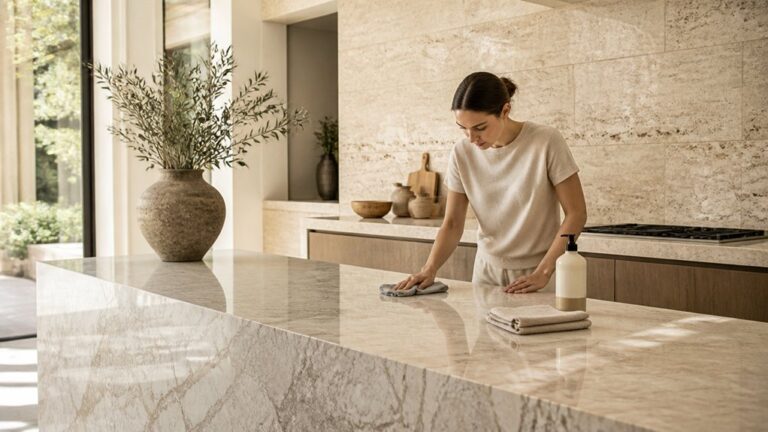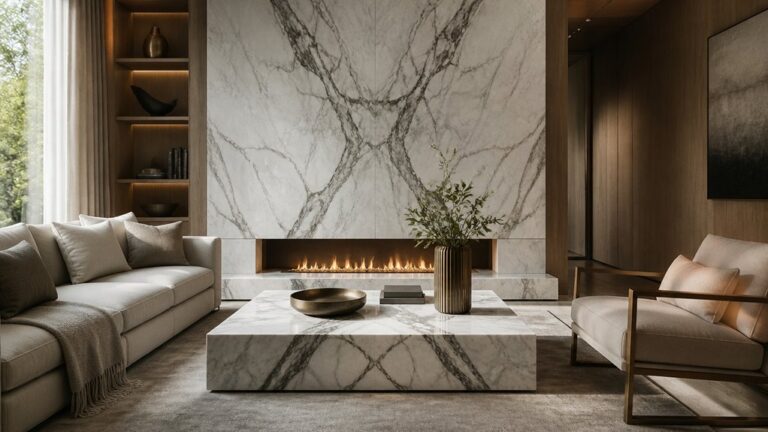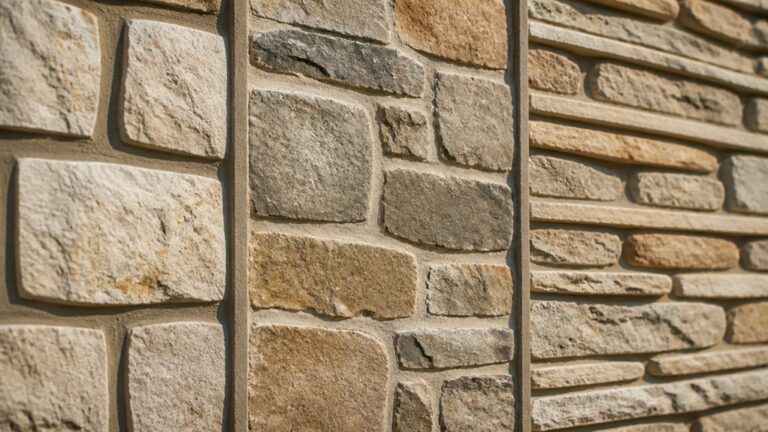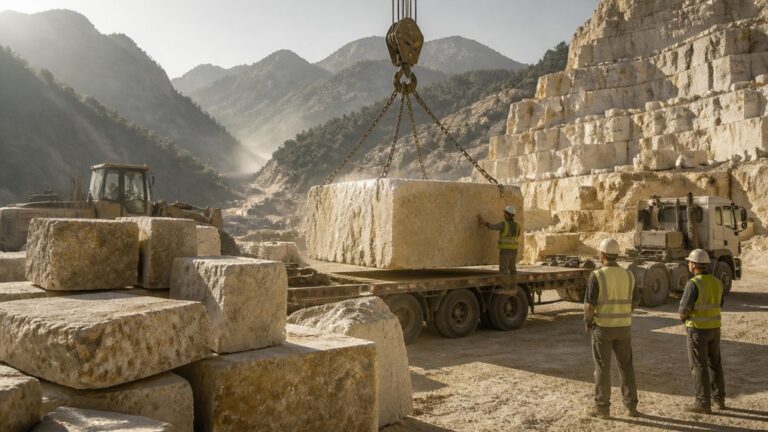
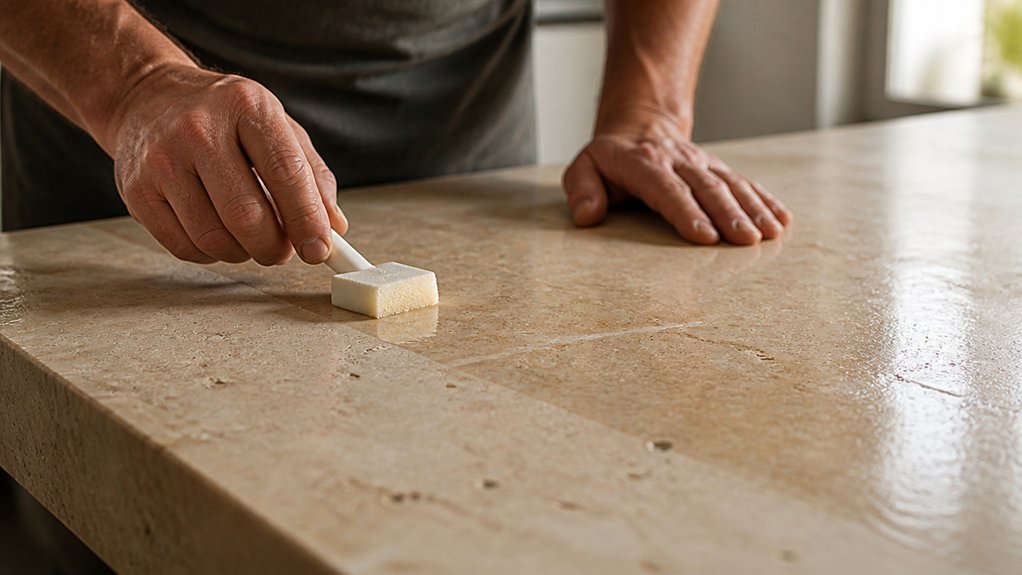
Sealing depends on the stone, its finish, and what it will be exposed to. Dense granite may need little or no sealer, while more porous stones such as limestone and some marbles can absorb water or oils more readily. A sealer can reduce staining, but it won’t make stone waterproof or prevent damage from freeze-thaw cycles, UV exposure, or deicing salts.
We recommend testing a clean, dry area with a few drops of water, then checking whether the stone darkens or absorbs the water. Results can vary across one surface, so test several spots—especially on exterior stone exposed to snow, wind, and strong sun at Mountain West elevations. Follow the sealer manufacturer’s instructions, and avoid applying sealer to damp stone or in unsuitable temperatures.
There’s no universal resealing schedule. Traffic, exposure, stone type, finish, and the product used all affect how often maintenance is needed. We assess those conditions before recommending a sealer or reapplication, helping homeowners and builders protect the stone without over-applying product.
Which Natural Stones Need Sealing?
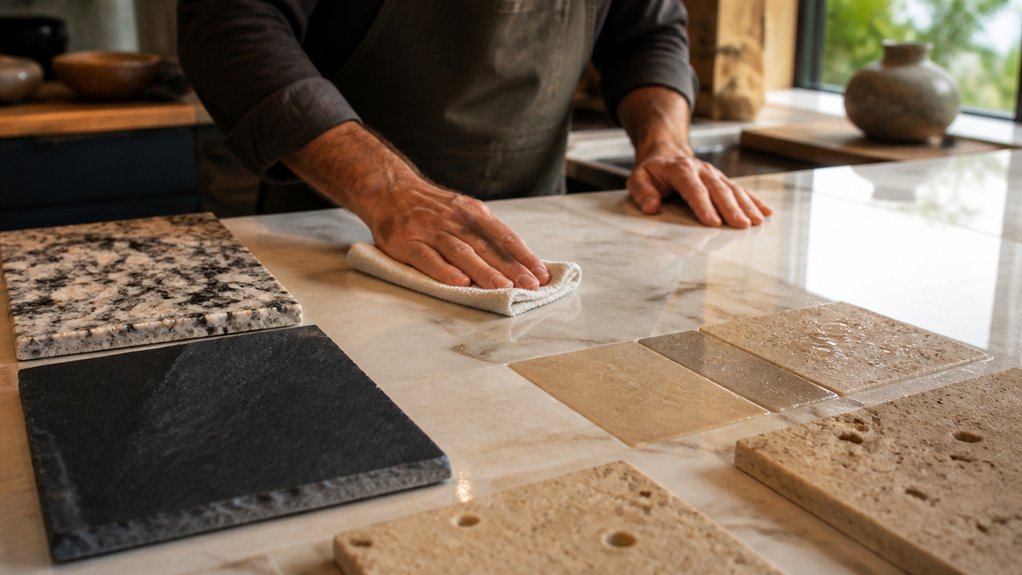
Whether natural stone needs sealing depends on its porosity, finish, installation, and exposure—not just its name. We’re the Bluestone Masonry & Construction team, stone and marble masons based in Casper, Wyoming. Since 2013, we’ve taken projects from quarry to completion across Wyoming, Montana, Colorado, Idaho, Utah, Nebraska, and South Dakota, sourcing and cutting stone, building, and finishing interiors.
Limestone, marble, travertine, and sandstone often benefit from sealing because they can absorb water, oils, and other staining liquids. Granite is generally denser, but some varieties still absorb moisture and may need protection. Slate varies, too: a dense, smooth slate may need less sealing than a more porous or textured one. Honed and rough finishes can take in spills more readily than polished surfaces, though polish doesn’t make stone stain-proof.
Choose a sealer for the specific stone, finish, and use. A kitchen countertop needs protection from food and oils; a shower wall faces frequent moisture and cleaning products; and an outdoor installation must handle weather. In the Mountain West, freeze-thaw cycles, wind-driven snow, strong UV exposure, and elevation can all affect exterior stone. Sealing may reduce water absorption, but it doesn’t replace proper drainage, sound installation, or a suitable stone selection.
Before sealing, confirm the product guidance with your stone supplier or installer. Test the sealer in an inconspicuous area, follow the manufacturer’s instructions, and plan to check the surface periodically. Reapplication depends on the stone, sealer, use, and exposure—not a single schedule that fits every installation.
How Can You Tell If Stone Needs Sealing?
How can you tell if stone needs sealing?
We test stone with a few drops of water on a clean, dry spot and watch for about 10 minutes. If the stone darkens as water soaks in, it may benefit from a penetrating sealer. If the water beads and the color stays the same, existing protection may still be working. This is a useful first check, not a guarantee: stone type, finish, prior treatments, and wear all affect how it responds.
- Test several places, including a discreet area and a section that gets frequent use. Absorption can vary across a slab, and different stones behave differently. Dense granite may absorb little, while more porous stones such as limestone can take in water more readily.
- Blot the water and look for lingering dark patches. A temporary change from moisture isn’t necessarily a stain. Let the area dry fully before deciding whether the stone needs attention.
- Use a stain test only with a product suitable for that stone, and follow its label directions. Test any sealer in an inconspicuous spot first. An enhancing sealer can deepen color, but it doesn’t replace proper surface preparation or correct installation.
As stone masons based in Casper, Wyoming, we consider the stone, its finish, location, and exposure before recommending a sealer. Exterior stone in the Mountain West faces snow, wind, strong UV, and freeze-thaw cycles. Sealer can reduce water absorption, but it can’t prevent damage caused by trapped moisture, poor drainage, or an unsuitable installation. We take projects from quarry to completion, including sourcing and cutting stone, building, and finishing interiors across Wyoming, Montana, Colorado, Idaho, Utah, Nebraska, and South Dakota.
What Changes How Often Stone Needs Sealing?
How often stone needs sealing depends on its porosity, finish, location, and exposure to moisture, spills, and wear. We assess these factors together rather than relying on a fixed schedule.
Dense granite usually absorbs less than porous limestone or marble, but stone varies by source and composition. A honed finish may absorb liquids differently from a polished one, so the finish matters as much as the stone type. In kitchens, bathrooms, and entryways, water, oils, cleaners, and grit can wear down a sealer. Outdoor stone also faces wind, UV exposure, snow, and freeze-thaw cycles common in Wyoming and the Mountain West. These conditions can affect both the stone and its protective treatment.
We recommend matching the sealer to the specific stone, finish, and conditions it will face. Before resealing, test an inconspicuous area or consult a stone professional; applying the wrong product or sealing damp stone can cause problems. Regular cleaning and prompt attention to spills also help protect the surface between applications.
How Often Should You Reseal Natural Stone?
We recommend resealing natural stone based on how it absorbs water, not just on a fixed schedule. Stone type, finish, traffic, cleaning products, and exposure all affect how well a sealer performs. As stone and marble masons serving the Mountain West, we check high-use areas and compare them with less-exposed spots.
- Test the surface: On clean, dry stone, place a few drops of water in an inconspicuous area. If the water soaks in quickly or the stone darkens, the sealer may need attention. This test is a useful guide, but it doesn’t replace the sealer manufacturer’s instructions.
- Inspect busy areas more often: Check kitchen counters, showers, and entryways every six to twelve months. Snow, grit, and frequent cleaning can wear down protection near entrances. In showers, look for water absorption, but remember that ventilation and grout condition also affect moisture problems.
- Adjust for the stone: Porous stones such as some marbles and limestones may need more frequent attention than denser stones. Polished surfaces often absorb less readily than honed or textured finishes, though the stone itself and the product used matter.
- Allow longer intervals where appropriate: Low-traffic stone that remains water-resistant may go several years between applications. Follow the sealer manufacturer’s guidance, and avoid applying more sealer than the stone can absorb; excess can leave a cloudy or sticky residue.
In Wyoming and the surrounding Mountain West, outdoor stone also faces freeze-thaw cycles, snow, wind, and strong UV exposure. Sealer can reduce water absorption, but it can’t correct poor drainage, unsuitable stone, or faulty installation. We recommend checking exterior stone before cold weather and using products specified for the stone and its exposure.
How Can You Seal Natural Stone Safely?
We recommend sealing natural stone only after it’s clean and completely dry. Choose an impregnating sealer labeled for the specific stone and finish, and test it in an inconspicuous area first. Limestone, marble and other porous stones may absorb sealer differently from dense granite, so follow the product instructions rather than assuming one application method suits every surface.
Before applying sealer, ventilate the area, wear chemical-resistant gloves and eye protection, and keep children and pets away. Apply a thin, even coat with a clean cloth, brush or applicator. Follow the label’s dwell time, then wipe off all excess before it dries; residue can leave a hazy film. Keep the stone dry for the full cure time listed on the product label. In cold, dry or windy Mountain West conditions, check the label’s temperature and ventilation requirements and avoid sealing exterior stone when weather could interfere with curing. Sealer can help reduce staining, but it doesn’t prevent freeze-thaw damage or replace sound installation and drainage.
Frequently Asked Questions
Can Sealing Natural Stone Change Its Color or Finish?
Yes. Sealing can change natural stone’s color or finish, depending on the stone and product. Enhancing sealers typically deepen color and make stone look darker or richer. Topical sealers can add a surface sheen, while penetrating sealers generally protect without creating a noticeable film.
Results vary: a porous stone may absorb sealer unevenly, and polished, honed, and textured surfaces can look different after treatment. We recommend testing the sealer on a clean, dry, inconspicuous area and checking it after it has fully cured. That helps confirm the color and finish before you treat the whole surface.
Is Stone Sealer Safe to Use Around Food?
Stone sealer is not automatically safe for food contact. We recommend using a product specifically labeled for food-contact surfaces and approved for the stone and application. Follow the manufacturer’s instructions for application and curing, and keep food off the surface until it has fully cured.
For kitchen countertops, choose a penetrating sealer approved for that use. Check the label and technical data sheet, since suitability can vary by product and stone. Natural stones such as granite, marble and limestone absorb sealers differently, so test the product in an inconspicuous area and follow the stone manufacturer’s care guidance.
Can Sealed Natural Stone Still Stain?
Yes. Sealed natural stone can still stain because sealer slows liquid absorption; it does not make the surface stain-proof. Marble and limestone are also vulnerable to etching from acidic spills, which sealer cannot prevent. Wipe spills promptly, especially oil, wine, and acidic liquids, and clean with a stone-safe product. We recommend periodic water-drop tests to check whether the stone is still repelling moisture; reseal when water begins to darken the surface. The right sealer and maintenance schedule depend on the stone’s porosity, finish, and exposure.
Should I Hire a Professional to Seal Natural Stone?
For delicate, porous, or extensive stone installations, we recommend having a professional assess the material and apply the sealer. Limestone, marble, and some sandstones can absorb sealer unevenly or show residue if the product or application method is wrong. Dense granite and other less-porous stones may need a different product—or no sealer at all—so test a small, inconspicuous area first.
For a small, straightforward project, you may be able to seal the stone yourself. Follow the sealer manufacturer’s instructions, prepare the surface carefully, and account for drying and curing time. In Wyoming and the wider Mountain West, exterior stone also faces freeze-thaw cycles, snow, wind, and strong UV exposure. Sealer can help limit water absorption, but it cannot correct poor drainage, unsuitable stone, or faulty installation. We can help you choose an appropriate product and application approach for your stone and site.
How Do I Remove Old Sealer From Natural Stone?
We remove old sealer with a stripper labeled safe for your specific stone. Natural stone varies: a product that works on dense granite may discolor or damage marble, limestone, or other acid-sensitive stone. Test it in an inconspicuous area first, then follow the label’s dwell time and application instructions. Scrub gently with a nonabrasive brush, and rinse thoroughly so residue does not remain in the stone or joints. Avoid acids, harsh cleaners, and abrasive tools, which can etch or scratch the surface. If the sealer is stubborn or the stone’s finish is valuable, have a stone mason assess it before proceeding.