We’re Bluestone Masonry & Construction, stone and marble masons based in Casper, Wyoming. Since 2013, we’ve taken projects from quarry to completion across Wyoming, Montana, Colorado, Idaho, Utah, Nebraska, and South Dakota—sourcing and cutting stone, building with it, and finishing interiors.
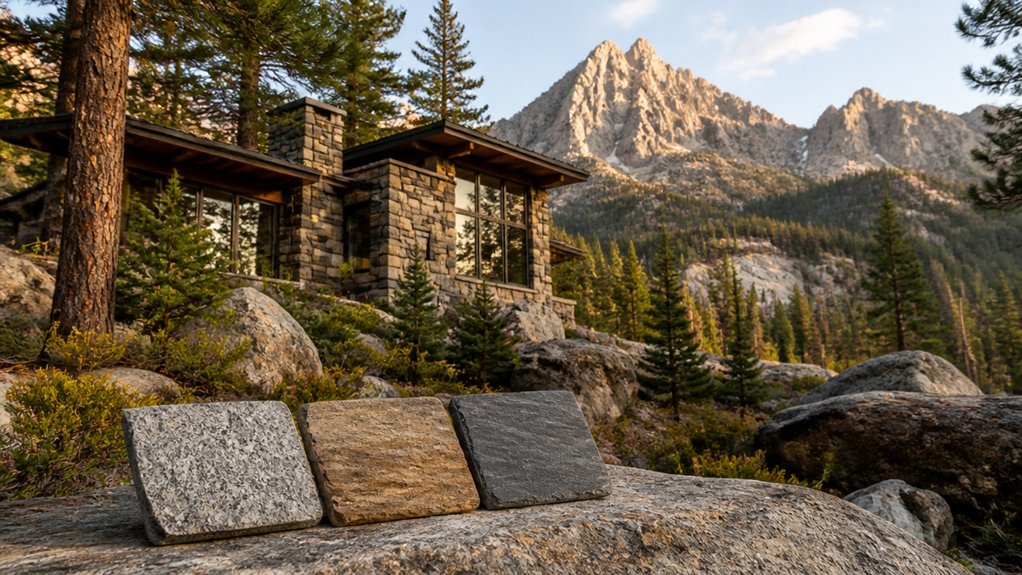
To choose stone for a mountain home, begin with the site rather than an indoor sample. Compare candidate stones in direct sun, shade, and changing weather. Mountain conditions can intensify UV exposure, wind, snow, and freeze-thaw cycles, so check each stone’s density, water absorption, frost resistance, and color stability. Granite is generally hard-wearing and handles exposure well, while softer or more porous stones may need careful detailing, sealing, or more maintenance.
Consider how the stone’s color and texture relate to local rock, vegetation, and the home’s other materials. The finish matters, too: a rough surface can suit an exterior but may hold snow or be harder to clean, while a smoother finish can become slippery underfoot. Good installation is just as important as stone selection. Proper drainage, flashing, mortar, joints, and support help limit water entry and damage during freeze-thaw cycles. For structural work, permits, inspections, local codes, and a licensed professional such as a structural engineer may be required; requirements vary by state and county.
Read the Mountain Landscape for Color and Texture
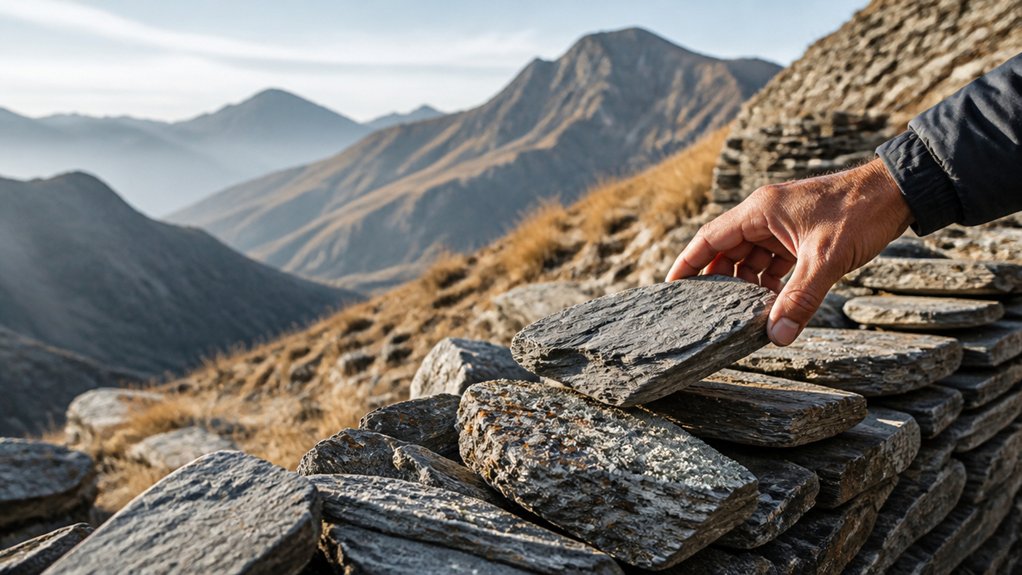
Before choosing stone, study the mountain landscape’s colors, textures, and patterns. Look at exposed rock, soil, vegetation, and how seasonal light changes the view. Compare warm and cool colors, then note the overall range of light and dark values, from pale scree to dark cliff bands. Check stone samples outdoors in both shade and direct sun; high-altitude UV and changing light can alter how colors appear.
Pay attention to texture as well as color. Fine-grained stone, coarse fractures, layered bedding, and weathered surfaces each create a different effect. Consider how the stone will perform in a cold Mountain West climate: freeze-thaw cycles can damage porous or poorly installed material, while snow, wind, and UV exposure affect placement, detailing, and maintenance. Match the stone’s surface character to the nearby landforms without trying to reproduce every detail.
This visual assessment gives us a clear material direction before we evaluate specific stone options. As stone and marble masons based in Casper, Wyoming, we take projects from quarry to completion, including sourcing and cutting stone, construction, and interior finishing across Wyoming, Montana, Colorado, Idaho, Utah, Nebraska, and South Dakota.
Compare Local Stones for Style and Performance
We help you choose regional stone that suits the landscape, your design, and the demands of a Mountain West climate. Compare samples outdoors, where changing light reveals differences in color, grain, and surface texture. We also consider how each stone handles freeze-thaw cycles, snow, wind, and strong UV exposure. Dense, durable stone can perform well in exposed areas, while softer or more porous varieties may need careful placement, suitable installation details, and regular maintenance.
As stone and marble masons based in Casper, Wyoming, we take projects from quarry to completion: sourcing and cutting stone, building, and finishing interiors. We weigh appearance, strength, weather resistance, installation needs, upkeep, and budget so you can make a practical choice. Project costs depend on the stone’s availability, selection and cutting, transport, site access, and installation complexity. Building requirements vary by state and county; permits, inspections, local codes, and licensed professionals such as structural engineers may be required.
Match Regional Character
Regional stone can give a mountain home a strong connection to its setting, but appearance alone won’t tell us how it will perform. We look at how nearby quarries classify and process each stone, then compare test data for compressive strength, water absorption, and freeze-thaw resistance. We also check the supplier’s recommended uses and installation guidance.
These details matter in the Mountain West, where elevation, snow, wind, strong UV exposure, and repeated freeze-thaw cycles can challenge stonework. A stone that works well on a dry interior wall may absorb too much water for exposed steps or a retaining wall. For exterior work, we consider drainage, slope, exposure, mortar and joint details, and how the stone will be maintained. Retaining walls and other structural work may also require permits, inspections, or review by a licensed structural engineer; requirements vary by state and county.
We source and cut stone, build, and finish interiors as part of our work from quarry to completion. Local sourcing can reduce transport and connect a project to regional character, but proximity alone doesn’t guarantee durability. Before specifying a stone, we match its tested properties to the site and intended use.
Compare Color and Texture
Color and texture affect how local stone sits against a mountain landscape, and they can also hint at differences in mineral content, grain, and surface finish. We recommend comparing samples outdoors, where direct sun, shade, and high-altitude UV reveal undertones that indoor lighting can hide. Check how each sample looks beside nearby cliffs, soil, and vegetation, then compare it with your siding, mortar, and roofing.
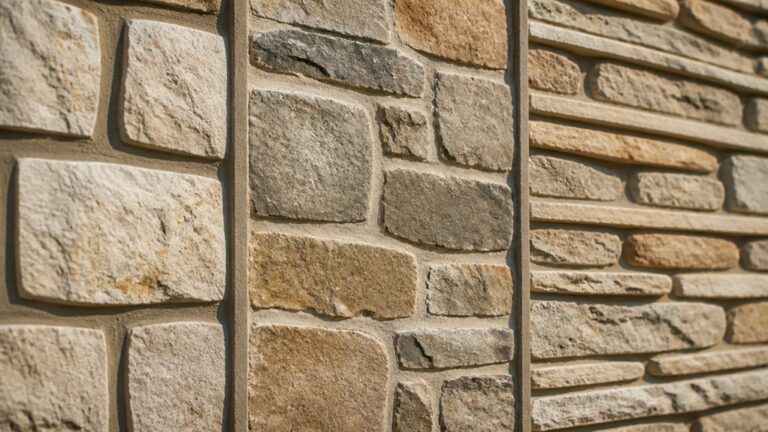
Texture matters for both appearance and performance. Split-face stone creates depth and casts stronger shadows; smooth trim gives it a clean contrast. Fine-grained stone reads more quietly, while pronounced grain or veining can vary across a large wall. In the Mountain West, also consider how the finish sheds water and snow and how exposed edges will handle wind and freeze-thaw cycles. Ask for samples from the intended production batch, and confirm how the stone will be cut, laid, and sealed, if sealing is appropriate. We source and cut stone, then build and finish projects from quarry to completion, so we can help assess these details before installation.
Weigh Durability and Upkeep
We evaluate each stone for the conditions it will face on your site. In the Mountain West, repeated freeze-thaw cycles, snow, wind, high-altitude UV exposure, and drainage all affect durability. Before choosing, we compare local options for water absorption, freeze-thaw resistance, and abrasion, and check quarry specifications and samples for consistent structure.
Dense granite generally resists cracking and abrasion and often needs little sealing. Layered sandstone can split or erode if water collects in its bedding planes, so detailing and drainage matter. Limestone may work well on sheltered walls, but acidic runoff can speed weathering. The right choice depends on exposure and intended use—not just color or texture.
We also consider upkeep and installation. Porous stone may need periodic sealing, while rough surfaces can hold dirt, ice, and debris. We’ll help you choose a finish you can maintain safely and affordably, and plan details that shed water and limit moisture at joints and edges. As stone and marble masons based in Casper, Wyoming, we take projects from quarry to completion, including sourcing and cutting stone, building, and finishing interiors across Wyoming, Montana, Colorado, Idaho, Utah, Nebraska, and South Dakota.
Match Mountain Stone to Your Home’s Architecture
Your home’s architecture should guide your stone choice alongside the mountain setting. For a rustic cabin, we often recommend rugged stone with varied shapes and a pronounced surface texture. It pairs well with heavy timber and broad rooflines, but irregular pieces require careful fitting and a well-detailed mortar joint to limit water entry.
For a modern home, cut stone with consistent dimensions and restrained color variation complements smooth siding and simple forms. Precise layout and substrate preparation matter, especially where wind-driven rain and freeze-thaw cycles can reach the wall.
Match the stone’s scale to the façade. Oversized blocks can overwhelm a compact entry, while small units may look busy across a large wall. Consider how snow, wind, altitude, and strong UV exposure affect the installation and finish; stone type, anchoring, drainage, and joint details all play a part. We recommend viewing samples beside your exterior finishes in natural light before committing, since color and texture can look different outdoors.
As stone and marble masons based in Casper, Wyoming, we take projects from quarry to completion, sourcing and cutting stone, building, and finishing interiors across Wyoming, Montana, Colorado, Idaho, Utah, Nebraska, and South Dakota. Local permits, inspections, and code requirements vary by state and county, and some projects may require licensed professionals, including a structural engineer.
Protect Mountain Stone From Local Weather
Once the stone suits your home’s architecture, we help match it to the weather it will face. In the Mountain West, repeated freeze-thaw cycles can damage porous stone when absorbed water freezes and expands. Choose a dense, low-absorption stone rated for your local exposure, and confirm that the stone, mortar, and installation details are compatible.
> Choose dense, low-absorption stone rated for local exposure to withstand Mountain West freeze-thaw cycles.
A breathable sealer may reduce water uptake while allowing moisture to escape. It isn’t a substitute for sound detailing: use proper flashing, slope ledges to shed water, and keep drainage paths clear. Follow the sealer manufacturer’s instructions for application and recoating.
- For heavy snow: Choose stone with strong frost resistance. Design walls, caps, and ledges to shed snow and water, and have a qualified professional review structural requirements where snow loads apply.
- For wet or windy sites: Favor low-porosity stone, protect exposed joints, and detail openings and edges to limit water entry.
- For high-altitude sun: Select mineral colors and finishes with good UV stability. Strong sunlight can fade some applied finishes over time.
We inspect joints and surfaces for cracks, loose stone, and signs of water entry, then repair problems before freezing weather can make them worse. Maintenance needs vary by stone and exposure, so follow the supplier’s guidance and have repairs assessed by a qualified mason. Building requirements vary by state and county; permits, inspections, local codes, or licensed professionals may be required.
Choose Stone Size, Finish, and Placement
We match stone size to the building and surrounding terrain. Larger pieces can suit broad walls, but they need adequate support and careful handling. Smaller units work well for tight details and curved areas, though they create more joints to maintain. We also consider the stone’s weight, the wall’s design, and whether a structural engineer or other licensed professional needs to review the installation.
Finish affects appearance, traction, and upkeep. Split stone has a naturally uneven face; honed stone is smoother and may become slippery when wet or icy; tumbled stone has softened edges and a worn texture. In the Mountain West, we account for freeze-thaw cycles, snow and ice, strong UV exposure, and wind. For paving and steps, we consider traction in wet and icy conditions. We also choose stone and installation methods suited to local exposure, drainage, and maintenance needs.
We place stones to follow the site’s grades while directing water away from foundations, walls, and paths. Proper drainage helps limit water infiltration and freeze-thaw damage. We plan joints, base preparation, and runoff paths before setting the stone, and we follow applicable local codes and inspection requirements, which vary by state and county.
Stone Size and Scale
Stone size affects both the look and the performance of a mountain landscape. We match each piece to nearby landforms, building materials, and how the area will be used. Large blocks can anchor steep slopes and exposed edges; smaller pieces are easier to handle on narrow paths and in planting beds. Texture matters, too: pairing rough stone with smoother materials can add contrast, but too many competing textures can make a space feel busy.
- Use heavier stones at retaining walls and exposed edges. Their mass can help resist movement, but the wall still needs a suitable base, drainage, and construction for the soil and slope.
- Choose pieces that are manageable to set for steps and paths. Consistent tread dimensions and stable, well-seated stones help provide secure footing, especially when surfaces are wet or icy.
- Vary block dimensions in dry-stacked features for a natural profile, while keeping bearing surfaces broad and contact points stable. Avoid relying on small, loose chips to support large stones.
In the Mountain West, freeze-thaw cycles, snow, wind, strong UV exposure, and elevation can affect stone selection and installation. Dense stone generally absorbs less water than more porous stone, but performance varies by type and finish. We consider drainage and water shedding carefully so trapped moisture is less likely to freeze and loosen the work. Before installation, we test a small layout on site to check scale, fit, and footing.
We are the Bluestone Masonry & Construction team, stone and marble masons based in Casper, Wyoming. Founded in 2013, we work across Wyoming, Montana, Colorado, Idaho, Utah, Nebraska, and South Dakota, taking projects from quarry to completion: sourcing and cutting stone, building, and finishing interiors. Depending on the project and location, permits, inspections, local building codes, or a licensed professional such as a structural engineer may be required; requirements vary by state and county.
Natural Stone Finishes
After we establish the stone’s size and scale, we help you choose a finish suited to its location, exposure and maintenance needs. A split-face finish keeps a rugged profile and natural texture, while a sawn face creates cleaner lines and tighter joints. On steps and walkways, a thermal or flamed finish can provide better traction, but it isn’t a substitute for checking slip resistance under local requirements. In the Mountain West, snow, ice and freeze-thaw cycles make proper drainage and a durable, well-installed surface especially important.
For walls and other areas with less foot traffic, a honed or brushed finish can reduce glare while preserving the stone’s character. We recommend checking samples both wet and dry because moisture can change a stone’s color and texture. We also match the finish and stone to the site’s exposure, including UV, wind and freeze-thaw conditions, and discuss the maintenance each surface will need. Our team takes projects from quarry to completion, sourcing and cutting stone, building, and finishing interiors.
Strategic Stone Placement
Where we place each stone matters as much as its size and finish. We match larger, heavier pieces to retaining walls and exposed slopes, where their mass can help resist movement. Smaller stone is often a better fit for paths, edging, and drainage beds. The right choice also depends on the stone: dense, durable varieties generally handle freeze-thaw cycles better, while softer or more porous stone may need extra protection and careful detailing.
We check the source, dimensions, durability, and availability before ordering. Local geology can help guide color and texture choices, but stones still need to work together visually and perform in Wyoming and the wider Mountain West, where snow, wind, altitude, and strong UV exposure affect outdoor installations.
- Set stones on compacted, well-drained bases to limit shifting during freeze-thaw cycles. Direct water away from walls and paths so it can’t collect beneath the stone.
- Turn cut faces toward the view and set rough faces against soil where they provide better contact. Orient each piece to suit its shape and intended load.
- Schedule installation after grading and drainage work but before planting. This gives us room to move and set stones without disturbing finished landscaping.
We dry-fit prominent stones first, then adjust their spacing and orientation on site. For retaining walls and other structural work, the base, drainage, stone selection, and installation method all matter; permits, inspections, local codes, or a licensed structural engineer may be required, depending on the project and jurisdiction.
As stone and marble masons based in Casper, Wyoming, we take projects from quarry to completion: sourcing and cutting stone, building, and finishing interiors across Wyoming, Montana, Colorado, Idaho, Utah, Nebraska, and South Dakota.
Coordinate Stone With Roofing, Wood, and Landscaping
To make stone feel at home on a mountain property, coordinate its color and texture with the roof, woodwork, and landscape. We recommend comparing full-size stone samples with roofing and siding in natural daylight. Match warm or cool undertones rather than trying to find identical shades; sunlight, altitude, and snow glare can all change how colors read.
With dark metal roofing, choose stone with enough variation in color and texture to keep the facade from looking flat. Consider how the stone will perform in a cold Mountain West climate, too: freeze-thaw cycles, wind-driven moisture, and UV exposure can affect both the material and its finish. Proper flashing, drainage, and installation details help limit water entry and reduce the risk of damage.
Relate the stone’s surface to the wood grain. Split-face stone often works well beside hewn beams, while smoother-cut stone can complement refined siding. Repeat timber tones in fences or retaining edges, then balance them with plants suited to the site’s exposure and climate. Before installation, review samples beside each material and confirm that the assembly meets applicable local codes and project requirements. We take projects from quarry to completion, including sourcing and cutting stone, building, and finishing interiors.
Frequently Asked Questions
How Much Does Mountain Stone Installation Typically Cost?
Mountain stone installation costs depend on the stone, wall or veneer design, site access, and the preparation the work requires. We assess stone sourcing, cutting, delivery, drainage, substrate, and labor before estimating a project. In the Mountain West, freeze-thaw cycles, snow load, wind, altitude, and UV exposure also affect stone selection and installation details. We plan for proper drainage and secure attachment, and can include wildlife-impact mitigation where needed. Permit, inspection, and code requirements vary by state and county; some projects may also require a licensed structural engineer.
Do I Need a Permit to Add Stone Features to My Property?
Permit requirements depend on your location and the feature’s size, height, drainage, and structural role. Before excavation, check with your county or city building department about permits, inspections, setbacks, and drainage rules. Retaining walls and work that changes grading or stormwater flow may require additional review, and a structural engineer may be needed for larger or load-bearing walls. Requirements vary across Wyoming and neighboring states, so confirm local codes before work begins.
Can Existing Stonework Be Repaired Without Replacing the Entire Feature?
Yes. We can often repair existing stonework without replacing the entire feature. The right approach depends on the stone, the condition of the mortar, and whether the structure has shifted or taken on water. We can repoint deteriorated joints, replace individual cracked or spalled stones, and match the new material and mortar as closely as practical.
In Wyoming and the surrounding Mountain West, freeze-thaw cycles make sound drainage and compatible mortar especially important. A mortar that is too hard for softer stone can cause the stone itself to crack or spall, while poorly directed water can damage even durable granite. We inspect the cause of the deterioration before recommending repairs, then finish the work to preserve the feature’s strength and appearance. If damage may involve structural movement, a licensed structural engineer or other qualified professional may be needed; permit and inspection requirements vary by state and county.
How Can I Verify That Stone Was Ethically and Sustainably Sourced?
We verify stone sourcing by requesting quarry permits, documented chain-of-custody records, labor audits and environmental reports. We also confirm the quarry’s location, extraction practices and any relevant certifications directly with the supplier; certification alone does not prove responsible working conditions or sound environmental practices. Because we take projects from quarry to completion, we can review sourcing alongside the stone’s suitability for the job, including how it will handle freeze-thaw cycles, snow and UV exposure.
Should I Hire a Mason or Install Mountain Stone Myself?
For retaining walls, structural stonework, or irregular mountain stone, we recommend hiring an experienced mason. Proper footing, drainage, stone selection, and placement help the work withstand freeze-thaw cycles, snow, wind, and strong UV exposure. We handle projects from quarry to completion, including sourcing and cutting stone, construction, and interior finishing.
DIY may suit a small, accessible project if you can safely handle the stone’s weight and complexity and prepare a stable base. Before building a wall or other structural feature, check local codes and permit requirements; a structural engineer or other licensed professional may be required, depending on the project and location.