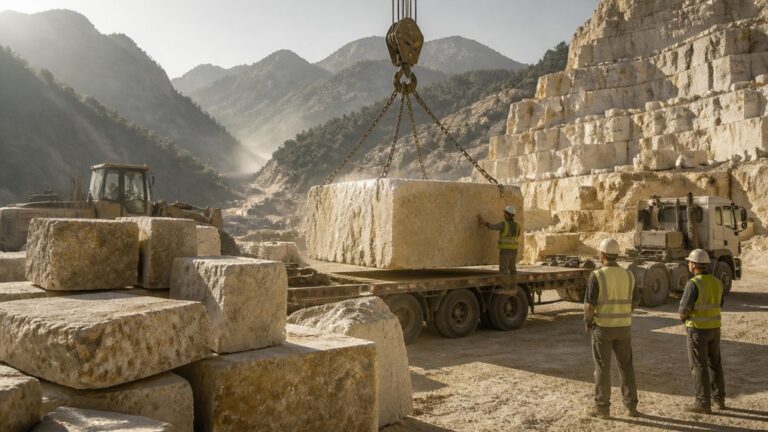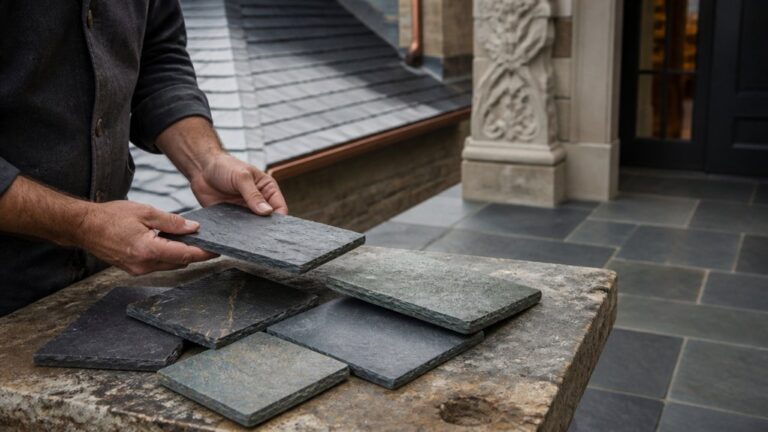
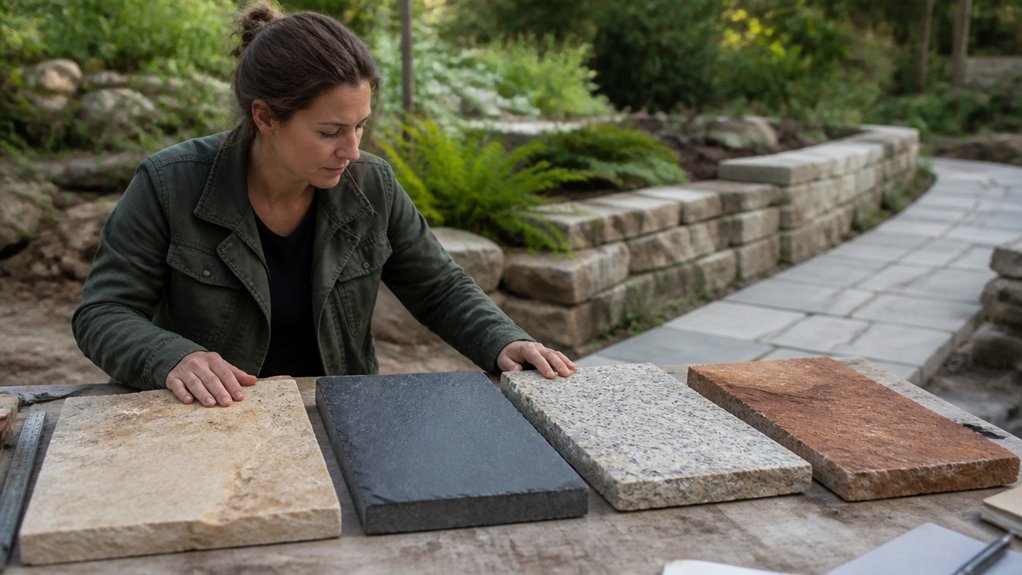
Choosing natural stone starts with matching its strength, surface, and maintenance needs to the site and how you plan to use it. We evaluate each option for traffic, exposure, drainage, and installation conditions. Granite is hard-wearing and handles abrasion and weather well, but its weight and hardness can make cutting and installation more demanding. Limestone is easier to shape and can suit detailed work, though acids may etch it and some varieties absorb more water. Slate and sandstone vary widely, so check their layer stability, porosity, and slip resistance before using them outdoors.
In Wyoming and the wider Mountain West, freeze-thaw cycles, snow, wind, strong UV exposure, and elevation can affect both the stone and its installation. Proper drainage, suitable setting materials, sound substrate preparation, and correctly detailed joints help limit water damage and movement. We take projects from quarry to completion, sourcing and cutting stone, building, and finishing interiors. Material availability, fabrication, access, site preparation, and installation complexity all affect cost. Permits, inspections, and local building codes may apply; requirements vary by state and county, and some work may require a licensed professional, such as a structural engineer.
Compare Granite, Limestone, Slate, and Sandstone
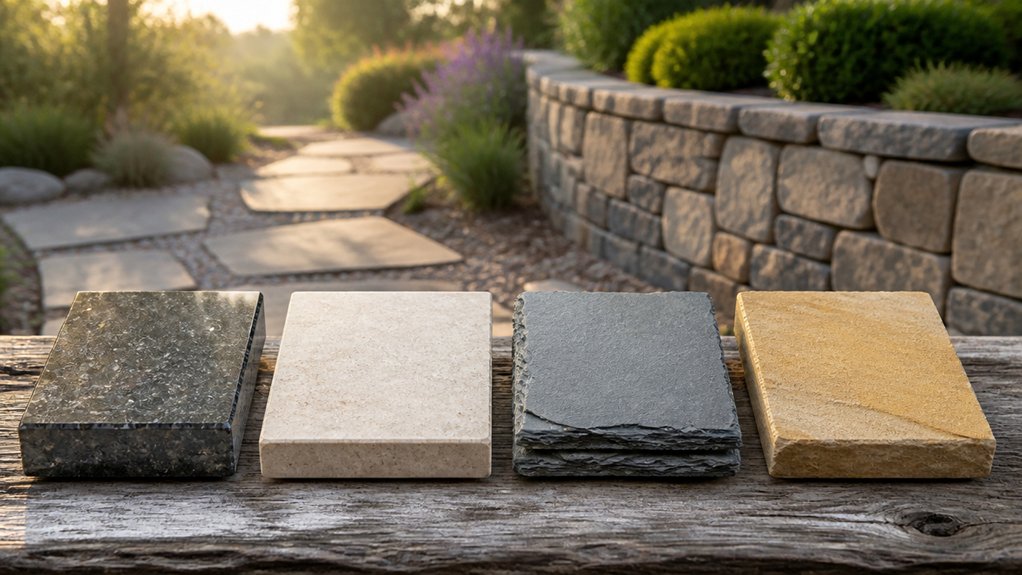
Choosing among granite, limestone, slate, and sandstone
We’re Bluestone Masonry & Construction, stone and marble masons based in Casper, Wyoming. Since 2013, we’ve worked on high-end construction across Wyoming, Montana, Colorado, Idaho, Utah, Nebraska, and South Dakota, taking projects from quarry to completion: sourcing and cutting stone, building, and finishing interiors.
Each stone behaves differently underfoot, on a wall, and through a Mountain West winter. The right choice depends on the application, the stone’s quality and finish, exposure to moisture and UV, and how much maintenance you’re prepared to do.
- Granite has a dense, crystalline structure that generally resists abrasion and weathering. It’s a strong option for heavily used surfaces and exposed applications, provided the stone and installation are suited to the job. Some finishes need sealing to help resist stains. For exterior work, we also consider water drainage, freeze-thaw exposure, and anchoring details.
- Limestone is relatively easy to cut and shape, which makes it useful for detailed masonry and interior finishes. Its calcium carbonate reacts with acids, so acidic cleaners and exposure to acidic materials can etch the surface. Choose cleaners made for limestone, and consider how snowmelt, wind-driven rain, and freeze-thaw cycles may affect exterior installations.
- Slate naturally splits into layers, creating surfaces that range from smooth to strongly textured. That texture can provide traction, but quality varies with mineral content and cleavage. We check the stone for sound layers and select material appropriate to the installation; weak or poorly bonded layers can separate over time, especially where water freezes in the stone.
- Sandstone offers colors and grain patterns from subtle to pronounced. Its porosity varies, but some sandstone absorbs water readily. Suitable sealing, sound drainage, and regular checks for erosion, cracking, and discoloration help protect it. Wind-driven moisture, snow accumulation, and rapid freeze-thaw changes deserve particular attention outdoors.
For any exterior stone, the details matter as much as the material: substrate, setting method, joints, flashing, drainage, and the stone’s orientation can all affect performance. At altitude, strong UV and wind can add to weathering, while snow load may affect the structure supporting stone features. We assess those conditions before recommending a stone or finish. Structural work may require permits, inspections, local code review, and a licensed professional such as a structural engineer; requirements vary by state and county.
Match Natural Stone to Your Project
We start by looking at how the stone will be used and what it needs to withstand. A patio or walkway must handle foot traffic, snow, ice, and freeze-thaw cycles. A wall or interior surface has different demands, including support, anchoring, and ease of cleaning.
Choose natural stone based on how it will be used, the conditions it must withstand, and the support and maintenance it requires.
For exterior work in Wyoming and the surrounding Mountain West, consider how the stone responds to moisture and temperature changes. Dense, low-absorption stone is generally a safer choice where water can enter and freeze. Some limestones and sandstones are more porous and may need careful selection, detailing, or sealing. Granite is typically hard-wearing, but its texture and finish affect traction. We can help assess the stone’s suitability for the location and intended use.
Next, confirm dimensions, finish, color range, and installation method. For paving, choose a format that suits the layout and allows consistent joints, with adequate slope and drainage to move water away. For cladding, verify panel thickness, weight, support, and fixing details. Wind exposure, snow loads, altitude, and strong UV can affect material selection and installation details, so exterior assemblies should be designed for local conditions.
We also consider how the stone will meet adjacent materials, where water will drain, and how crews and materials will reach the site. As a stone and marble masonry team based in Casper, Wyoming, we work across Wyoming, Montana, Colorado, Idaho, Utah, Nebraska, and South Dakota. Our work can take a project from quarry to completion, including sourcing and cutting stone, building, and finishing interiors.
Before finalizing specifications, ask about quarry practices, available quantities, lead times, fabrication, and expected waste. Transport distance and how the stone is extracted and processed can also inform environmental decisions. Request samples and check them in the project’s lighting; natural stone varies in color and veining. Confirm maintenance needs too: some stones benefit from sealing, while others need only routine cleaning with a suitable product.
The final choice should fit the design, site conditions, maintenance plan, and budget. Cost depends on factors such as stone type, quarry location, thickness, finish, fabrication, transport, site access, and installation complexity. Permits, inspections, local building codes, and licensed professionals such as structural engineers may be required; requirements vary by state and county.
Check Durability for Patios, Walls, and Facades
We assess stone durability based on where and how it will be used. For patios, abrasion resistance, dependable traction, and low water absorption matter. Snow, ice, and repeated freeze-thaw cycles can damage porous stone, while a polished finish may become slippery when wet. We recommend checking wet slip resistance and choosing a finish suited to foot traffic, drainage, and winter maintenance.
For walls and facades, we consider the stone’s weight, strength, anchoring, and exposure to moisture, wind, temperature swings, and high-altitude UV. The support system must be designed for the stone’s weight and local conditions, including wind and snow loads where applicable. We confirm that each piece can be securely anchored and that the installation details allow water to drain rather than collect behind the stone.
Before selecting stone, review test results for water absorption, flexural strength, and abrasion resistance. These results help compare materials, but they don’t replace sound detailing or installation. Ask your supplier for test data and maintenance guidance, and have the support system reviewed by a qualified professional when needed. Permits, inspections, local codes, and a structural engineer may be required; requirements vary by state and county. We bring our stonework from quarry to completion, including sourcing, cutting, building, and finishing, with durability suited to Mountain West conditions in mind.
Choose Stone Colors and Textures
Color and texture affect how stone looks and how it performs. We compare samples in the project’s actual lighting because daylight, indoor lighting, and high-altitude sun can shift how colors appear. We also check stone against nearby materials such as brick, wood, and concrete so the full palette works together.
Natural stone varies from piece to piece. We review several slabs to understand the range of color, veining, and texture, then plan how to distribute that variation. A consistent field may suit a large floor or wall, while stronger patterns can be placed deliberately as a focal point. For a more uniform result, we source from the same quarry lot when possible and inspect full-size pieces before ordering.
Texture matters beyond appearance. Rough finishes can provide better traction outdoors, but they may hold dirt and snow; smoother surfaces are easier to clean but can become slippery when wet or icy. In the Mountain West, we also consider freeze-thaw exposure, wind, UV, and snow conditions when selecting and placing stone. We set clear limits for acceptable variation and confirm them with the supplier and installer before work begins. As stone masons working from quarry to completion, we can coordinate sourcing, cutting, installation, and interior finishing across Wyoming and neighboring states.
Check Slip Resistance and Climate Suitability
We check slip resistance and climate suitability before recommending stone for paths, steps, pool surrounds, or other wet areas. Ask for test data that measures traction when the surface is wet, such as a wet pendulum rating, and compare it with applicable local safety requirements. A textured finish can improve grip, but rougher surfaces may feel uncomfortable underfoot and can take more effort to clean. We consider the stone, finish, drainage, and installation together; standing water and poor drainage can increase freeze-thaw damage in Casper and across the Mountain West.
For climate suitability, we account for freezing and thawing, snow and ice, rainfall, summer heat, high-altitude UV exposure, and wind. Dense, low-porosity stone is generally a better choice for frequent freezing, but stone types and finishes vary in how they absorb moisture and resist surface wear. We verify that the selected material is suitable for the site and plan installation details, including drainage and jointing, to limit water intrusion. As stone and marble masons based in Casper, Wyoming, we take projects from quarry to completion across Wyoming, Montana, Colorado, Idaho, Utah, Nebraska, and South Dakota. Local codes and permit or inspection requirements vary by state and county; larger or structurally complex installations may also require a licensed professional, such as a structural engineer.
Compare Natural Stone Costs and Maintenance
Compare stone costs by grade, finish, thickness, and availability. Granite and quartzite are generally hard-wearing, while marble and limestone can scratch, etch, or weather more readily; each stone’s suitability depends on where it will be installed and how it will be maintained. We source and cut stone as part of our work from quarry to completion, so we can help you weigh material choices against the project’s design and site conditions.
For an accurate installation estimate, account for fabrication, delivery, access, site preparation, labor, setting materials, and any structural support the stone requires. In the Mountain West, freeze-thaw cycles, snow load, altitude, strong UV exposure, and wind can affect material selection and installation details. Plan for appropriate sealing, routine cleaning, and possible repairs when comparing long-term costs. We’re Bluestone Masonry & Construction, stone and marble masons based in Casper, Wyoming, serving projects across Wyoming, Montana, Colorado, Idaho, Utah, Nebraska, and South Dakota. Permits, inspections, local codes, and review by a licensed professional such as a structural engineer may be required; requirements vary by state and county.
Comparing Material Costs
A stone’s cost depends on more than its price per square foot. Quarry availability, grade, thickness, finish, delivered quantity, freight, installation, and maintenance all affect the total. We source and cut stone as part of our work from quarry to completion, so we compare material quotes against the conditions the stone will face on site.
In the Mountain West, long-distance freight can add to the cost of heavy stone. Installation also depends on access, substrate preparation, cutting requirements, and the stone’s weight. For exterior work, account for freeze-thaw cycles, snow load, wind, and strong UV exposure. These conditions can affect material selection, anchoring, joint details, and ongoing care.
- Granite: Often costs more upfront, but its hardness helps it resist wear and weathering. It generally needs little routine care, though the right finish and installation details matter for exposed surfaces.
- Limestone: Can cost less initially, but porosity varies by type. Some limestone needs sealing and careful cleaning, and may be less suitable for exposed areas with frequent freeze-thaw cycles.
- Slate: Cost varies by grade, thickness, and finish. Sound, properly installed slate can last well, but lower-grade pieces may split or delaminate, especially where moisture and freezing temperatures are concerns.
Compare expected upkeep and service life as well as purchase and installation costs. For structural or heavily loaded stonework, a structural engineer may be needed. Permits, inspections, and code requirements vary by state and county, so confirm local requirements before work begins.
Understanding Installation Expenses
Installation costs depend on site access, base preparation, drainage, cutting, anchoring, and the stone’s size and weight. We assess these factors before work begins, including how freeze-thaw cycles, snow loads, wind, and UV exposure may affect the installation in your area. Heavy slabs, tight access, and reinforced foundations can require more labor, equipment, and coordination.
When comparing bids, separate material, labor, equipment, and delivery charges so you can see what each quote includes. Confirm that the installer specifies joint spacing, setting materials, drainage details, and surface tolerances for the application. These choices matter in the Mountain West, where trapped water can freeze and damage stone or its supporting base.
Ask whether warranties cover stone defects, transport damage, and installation errors, and get exclusions in writing. We also recommend confirming that the installer carries appropriate insurance and follows the stone supplier’s handling requirements. Depending on the project and location, permits, inspections, local building codes, or review by a licensed structural engineer may apply; requirements vary by state and county.
Planning Long-Term Maintenance
Long-term maintenance is part of a stone project’s total cost. We help clients plan for routine cleaning, sealing when appropriate, repairs, and eventual replacement. The right schedule depends on the stone, its finish, exposure, traffic, and installation—not on a one-size-fits-all interval.
When we plan maintenance, we consider:
- Cleaning: Set a practical cleaning schedule and use products compatible with the stone. Avoid acidic cleaners on acid-sensitive materials such as marble and limestone. For exterior stone, account for windblown grit, snow, and deicing products.
- Sealing: Not every stone or application needs a sealer. Where one is appropriate, follow the stone supplier’s and sealer manufacturer’s guidance, and account for the stone’s porosity, finish, and exposure. A sealer doesn’t prevent damage from freeze-thaw cycles or poor drainage.
- Repairs: Allow for possible repairs to chips, joints, and weather-damaged areas. In the Mountain West, water that enters joints or porous stone can freeze and expand, so sound installation, drainage, and timely repairs matter.
- Access and labor: Include the cost of reaching and working on the stone, especially on tall façades, steep sites, or areas exposed to snow and wind.
As stone and marble masons based in Casper, Wyoming, we plan projects from quarry to completion: sourcing and cutting stone, building, and finishing interiors. We consider local exposure—including freeze-thaw, snow load, altitude, UV, and wind—when advising on stone selection and care. Keep maintenance records and address small problems before water intrusion or joint failure spreads. Permit, inspection, and code requirements vary by state and county; some work may require licensed professionals, including a structural engineer.
Frequently Asked Questions
Is Natural Stone Environmentally Sustainable Compared With Manufactured Materials?
Natural stone can be a sustainable choice when it is responsibly quarried, sourced close to the project, and built to last. As stone and marble masons based in Casper, Wyoming, we take projects from quarry to completion, so we consider the full process: quarrying, cutting, transport, installation, and long-term care.
Stone’s durability can reduce the need for replacement, but performance depends on the material and installation. Dense granite generally handles freeze-thaw cycles well when properly detailed. Some limestone and marble are more porous or sensitive to deicing salts, so they may need careful placement, suitable jointing, and periodic sealing. In the Mountain West, drainage and flashing matter: trapped water can freeze and damage stone, while snow, wind, altitude, and strong UV exposure can affect the surrounding assembly and finishes.
Compare the stone’s quarry impact, transport distance, and processing energy with the manufacturing and replacement needs of alternatives. We recommend checking quarrying practices and choosing a stone suited to the application—not just the appearance. Local building codes, permits, and inspections may apply, and requirements vary by state and county.
How Can I Verify That Stone Was Ethically Sourced?
We verify ethical sourcing by tracing stone back to its quarry. We request quarry records, shipment documents and supplier audits, then check certification claims with the organizations that issued them. We also ask specific questions about worker safety, wages, labor practices and oversight of subcontractors.
For a project, we can explain what documentation is available for the stone and where it was quarried. That matters for more than accountability: quarry location and stone type can also help us assess how the material may perform through Mountain West freeze-thaw cycles, snow, wind and UV exposure. We take projects from quarry to completion, sourcing and cutting stone, building with it and finishing interiors.
Can Natural Stone Be Recycled or Reused After Demolition?
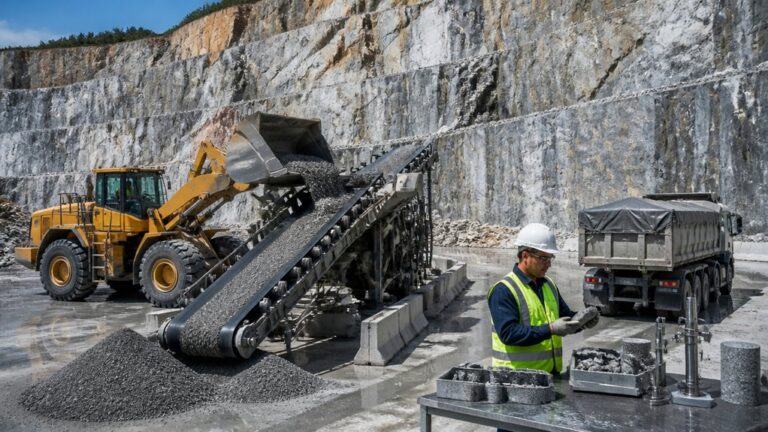
Yes. We salvage sound stone for reuse in paving, walls, steps, or landscaping, and crush unsuitable pieces into aggregate where local processing rules allow. Before reuse, we sort stone by type and check for mortar, coatings, or other contamination. We also assess cracks, weathering, and dimensions: freeze-thaw exposure can worsen existing damage, while dense stone may be suitable for paving if it is properly installed and drained. Confirm local requirements before transporting or processing demolition material.
What Permits May Be Required for Natural Stone Construction Projects?
Permit requirements vary by state, county, and project scope. You may need building, grading, drainage, or historic-district permits, and plans may require environmental review for wetlands, protected habitats, or stormwater impacts. We recommend checking with your local building department early, before stone is ordered or site work begins. Ask which inspections, local code requirements, and licensed professionals—such as a structural engineer—apply to your project.
How Should Natural Stone Be Transported and Stored Before Installation?
We transport natural stone upright on padded, secured A-frame racks or pallets, with pieces separated to prevent rubbing and edge damage. We secure the load against shifting, avoid overloading, and use lifting equipment rated for the stone’s weight. Marble and softer stones need extra protection from impacts; slabs with natural fissures or delicate edges also require careful support.
Before installation, we store stone on a firm, level surface in a covered, dry area, separated by type and finish. Keep it off soil and standing water, and protect it from snow, freezing conditions, windblown grit, and prolonged sun exposure. Freeze-thaw cycles can damage stone that absorbs moisture, while UV can affect some finishes. We inspect deliveries for cracks, chips, and moisture before installation, and follow the supplier’s guidance for each material.