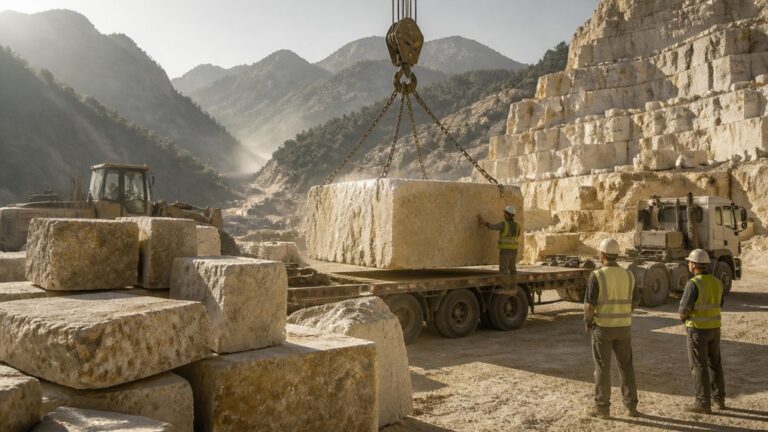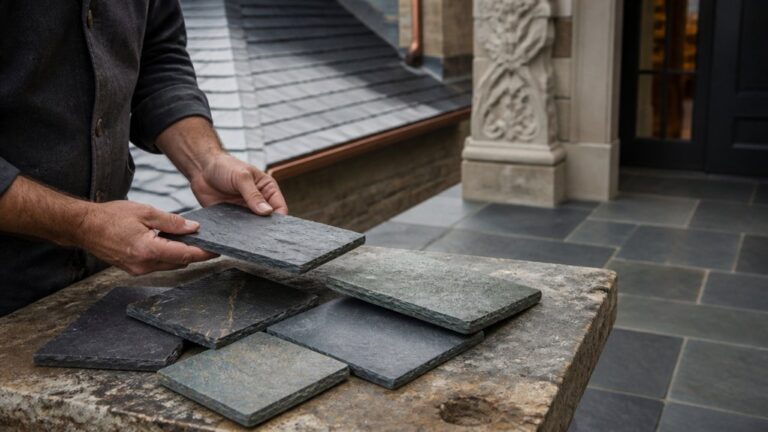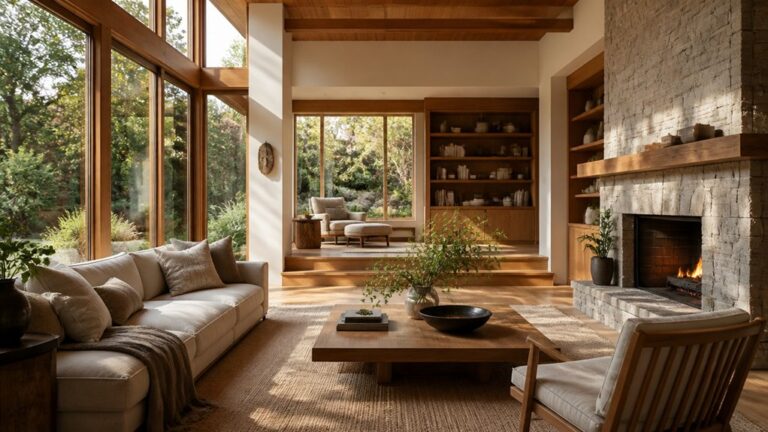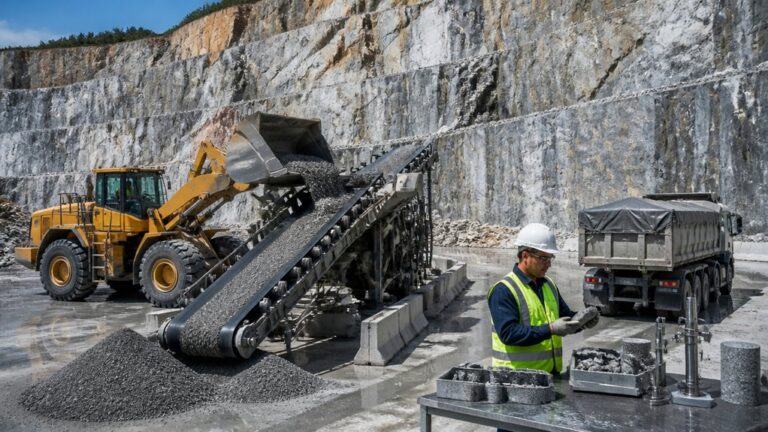
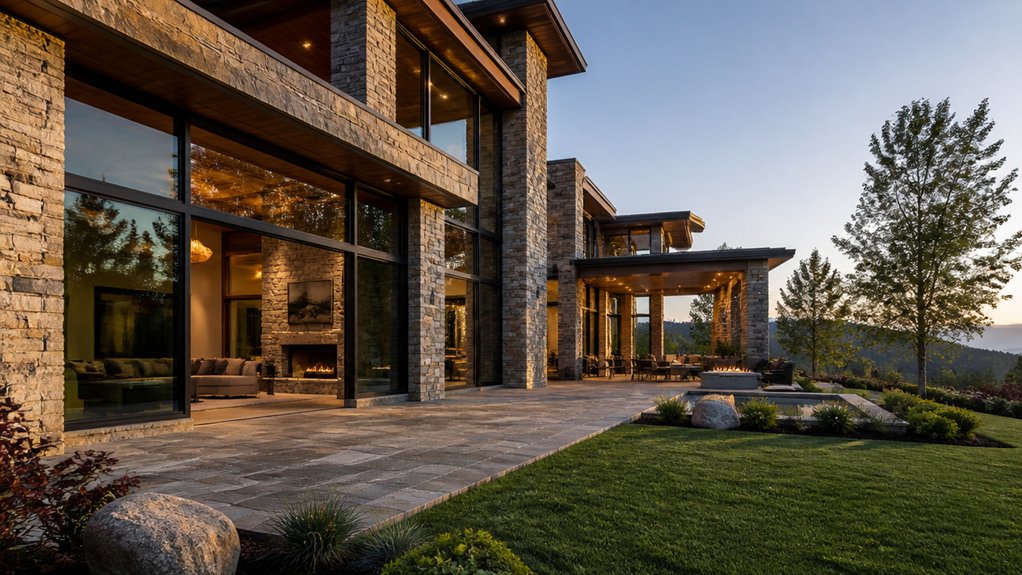
When we plan a high-end custom home with natural stone, we start with the budget and decide where stone will do the most work—structurally, practically, and visually. Cost depends on more than the stone itself: quarry selection, cutting, transport, access to the site, installation, and the details of the finish all matter. In the Mountain West, we also plan for freeze-thaw cycles, snow loads, wind, altitude, and strong UV exposure. We coordinate early with your architect, builder, and, when needed, a structural engineer on support, drainage, flashing, and installation details. As stone and marble masons based in Casper, Wyoming, and working across Wyoming, Montana, Colorado, Idaho, Utah, Nebraska, and South Dakota, we take projects from quarry to completion: sourcing and cutting stone, building, and finishing interiors. The right stone depends on how each space will be used—and on details that are easy to overlook.
Set Your Natural Stone Budget and Priorities
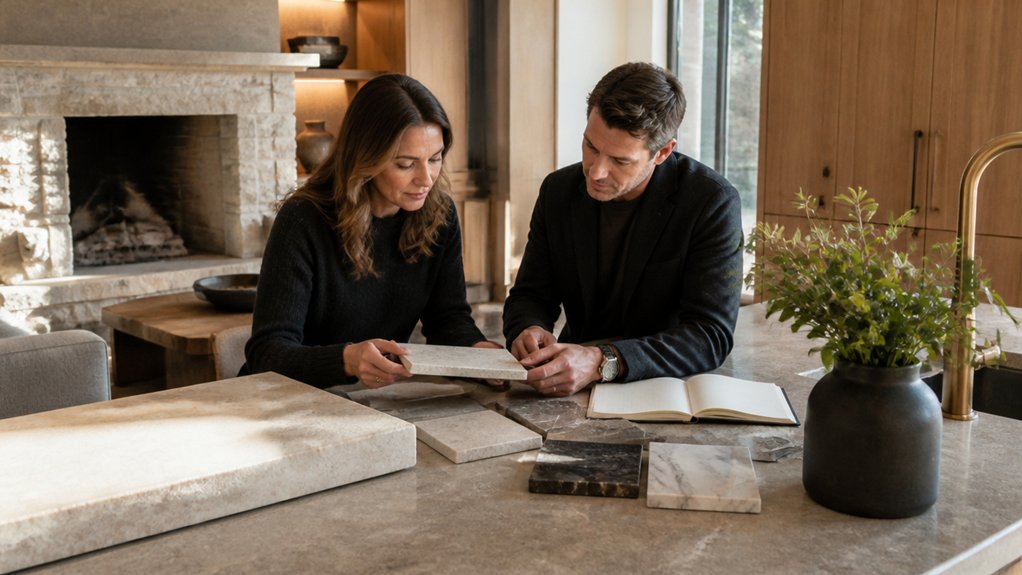
Before we select stone, we help you set a budget that covers the full scope: material, fabrication, transport, installation, and sealing. We also account for templating, edge profiles, cutouts, substrate preparation, and a contingency for breakage or adjustments in the field. These details can affect both cost and schedule, especially when stone must travel to a remote Mountain West site or be handled during winter conditions.
Ask for itemized estimates, confirm how many slabs the design requires, and check what each quote excludes. Stone type, slab size, finish, vein matching, access to the site, and the complexity of fabrication all influence the total. Then set priorities: you might put more of the budget toward book-matching, a custom edge, or carefully finished seams. Keep a written allowance for each part of the work and track changes before approving shop drawings. This gives us a clear plan for taking your project from quarry to completion without rushing important craftsmanship or making avoidable compromises.
Choose Natural Stone for Each Room
We match stone to how each room is used, how it will be installed, and the conditions it must withstand. As stone and marble masons based in Casper, Wyoming, we take projects from quarry to completion: sourcing and cutting stone, building, and finishing interiors across Wyoming, Montana, Colorado, Idaho, Utah, Nebraska, and South Dakota.
In kitchens and dining areas, granite and quartzite are often practical choices for countertops because they handle heat and daily use well. Their resistance to stains depends on the specific stone, finish, and sealer, so we recommend testing samples and following a maintenance plan. Marble offers distinctive veining but can etch from acids and show wear; it may suit a homeowner who accepts that patina. We also coordinate slab selection, edge details, cabinet support, and seams with the fabricator and installer.
In bathrooms and wet rooms, we consider water absorption, surface texture, and drainage together. Dense stone can still need sealing, and polished finishes may become slippery when wet. We plan slopes, drains, grout joints, and movement joints carefully to limit standing water and reduce the risk of cracking or leaks. In cold Mountain West climates, sound waterproofing and freeze-thaw-resistant materials matter wherever stone is exposed to outdoor temperatures.
In living spaces and around fireplaces, we match the stone’s scale, weight, and heat tolerance to the design and installation. A large-format slab may need additional support, while a textured stone can collect dust and require more involved cleaning. For fireplace surrounds, we confirm the stone is suitable for the application and coordinate clearances and assembly details with the fireplace manufacturer and applicable code.
For exterior stone, we account for snow, wind, freeze-thaw cycles, altitude, and strong UV exposure. Stone type, anchoring, drainage, and joint design all affect long-term performance. Permits, inspections, local building codes, and licensed professionals such as structural engineers may be required; requirements vary by state and county.
Kitchens and Dining Areas
Where does natural stone make the biggest difference in a kitchen or dining area? We often start with the island: a well-chosen slab can anchor the room, but the stone also needs to suit how you cook and clean. Granite is generally hard-wearing and handles daily use well; marble offers distinctive veining but can etch from acids and stain if spills are left unattended. Quartzite varies by type, so we recommend checking the specific slab rather than relying on its name alone.
You can carry the island’s stone onto perimeter counters for a coordinated look, or choose a contrasting slab to make the island a focal point. For dining areas, a stone tabletop is durable but heavy and may need a properly designed base. Stone flooring can connect the spaces; choose a finish that provides traction, especially where snow and wet boots are common. In Mountain West homes, consider entry mats and regular cleaning to limit grit and moisture that can wear finishes.
We take projects from quarry to completion, including sourcing and cutting stone, building, and finishing interiors. Before purchase, we inspect full slabs for color variation, fissures, and usable yield, then coordinate the layout and cuts with your fabricator. Price depends on the stone, slab availability, waste, fabrication, edge details, and installation requirements. We also specify suitable sealers and eased edges where appropriate, and explain the maintenance each stone needs. For heavy slabs or structural changes, a structural engineer or other licensed professional may be required; permits, inspections, and building-code requirements vary by state and county.
Bathrooms and Wet Rooms
We help homeowners, architects, and builders choose and install bathroom stone that performs well in wet conditions. Low-porosity options such as granite and some dense marbles can work well for counters and shower walls, but each stone varies in absorption, finish, and maintenance needs. We check the specific material and finish for wet, barefoot use; polished stone can be slippery, while a textured finish may offer better traction but require more cleaning.
For shower floors and walls, we plan the tile layout around the drain, consistent joints, and practical cuts. Where the stone’s veining allows, we can align it across adjoining surfaces. Proper installation also depends on a compatible waterproofing system, flexible setting mortar, and grout suited to the stone. We follow the stone supplier’s guidance for sealing, and recommend pH-neutral cleaners to help protect the surface.
In Wyoming and the broader Mountain West, reliable ventilation helps limit condensation, especially when cold outdoor temperatures make moisture control more demanding. Accessible drains and correctly sloped floors make maintenance easier and help water reach the drain. We take projects from quarry to completion, sourcing and cutting stone, building, and finishing interiors across Wyoming, Montana, Colorado, Idaho, Utah, Nebraska, and South Dakota. Permits, inspections, and applicable building codes vary by state and county, so we coordinate with the appropriate licensed professionals when required.
Living Spaces and Fireplaces
For living spaces and fireplaces, we help you choose stone based on heat exposure, foot traffic, finish, and maintenance—not appearance alone. Granite and quartzite are durable options for busy floors, but their texture and finish affect traction, especially when snow and moisture are tracked indoors. We’ll review slip resistance and cleaning needs before you decide.
For a hearth or surround, confirm that the stone and its setting materials are suitable for the temperatures involved. Follow the fireplace manufacturer’s clearance requirements, and check local codes and permit or inspection requirements, which vary by state and county. A detailed layout lets us plan veining, joints, and slab edges before cutting, reducing waste and helping create clean transitions. We source and cut stone, then build and finish interiors from quarry to completion.
Honed and leathered finishes reduce glare and can provide more texture than polished stone, though their care requirements differ by material. Polished stone reflects more light but may show scratches or residue more readily. In the Mountain West, we also consider strong UV exposure, wind-driven snow, and freeze-thaw conditions where stone meets exterior openings or unconditioned spaces. We coordinate color, scale, and texture while keeping durability and safe installation at the center of the plan. Our stone and marble masons are based in Casper, Wyoming, and have served projects across Wyoming, Montana, Colorado, Idaho, Utah, Nebraska, and South Dakota since 2013.
Compare Natural Stone Durability and Care
Before we specify stone for a high-use surface, we compare its hardness, porosity, and resistance to acids. Granite is generally hard and durable, while marble and limestone are more prone to scratching and etching. Quartzite is often hard, but its performance depends on the specific stone, so we verify the material rather than relying on its name alone. Porosity and finish also affect how each stone handles moisture, staining, and daily wear.
In Wyoming and across the Mountain West, we consider the setting as well as the stone. For exterior work, freeze-thaw cycles, snow, wind, and strong UV exposure make correct material selection, drainage, installation, and joint detailing essential. We match cleaning and sealing recommendations to the stone and its finish, and explain the care needed to protect its performance over time. As stone and marble masons based in Casper, we take projects from quarry to completion, sourcing and cutting stone, building, and finishing interiors across Wyoming, Montana, Colorado, Idaho, Utah, Nebraska, and South Dakota.
Stone Durability by Type
Each stone responds differently to abrasion, moisture, heat, and cleaning, so we match the material to the surface and its exposure. For kitchen counters, granite’s dense structure generally resists scratching and heat well, but it still needs proper support, suitable sealing when required, and prompt cleanup of spills. Quartzite can offer similar hardness, though its mineral composition varies; we check the specific slab rather than relying on the stone name alone.
Marble is softer and more prone to scratches and acid etching from foods such as lemon juice. It can work well where a worn, honed surface is acceptable, but it needs careful cleaning and realistic expectations.
Limestone and travertine have a warmer, more porous character. Their performance depends on density, finish, sealing, and exposure to water and deicing salts. Slate can be a practical flooring choice, but its layers, thickness, and surface texture affect stability, traction, and installation.
In Wyoming and the wider Mountain West, exterior stone must also suit freeze-thaw cycles, snow and ice, strong UV, and wind-driven moisture. We review the stone, finish, setting materials, drainage, and placement together; a sealer can’t make an unsuitable stone frost-resistant. For exterior work, we also account for the building assembly and local requirements, which vary by state and county and may call for permits, inspections, or input from a licensed professional such as a structural engineer. From quarry sourcing and cutting through installation and interior finishing, we help clients choose stone that fits the use and the conditions.
Natural Stone Care Needs
Stone care depends on porosity, finish, installation, and exposure—not just the stone’s name. We match maintenance guidance to how each surface is used and to the conditions it faces across the Mountain West.
Dense granite generally resists staining and often needs less frequent sealing than porous marble or limestone. Marble and limestone can absorb spills and etch when exposed to acids, including some household cleaners. Honed finishes may show marks differently than polished ones, and exterior stone must withstand UV, wind, snow, runoff, and freeze-thaw cycles. Good drainage and properly detailed joints help limit water entry that can damage stone or mortar in cold weather.
We recommend asking your fabricator or installer for a sealing schedule based on the specific stone, finish, and location. Clean with a pH-neutral product, use a soft cloth, and wipe spills promptly. Test sealers on a sample before applying them, and inspect grout, joints, edges, and drainage paths regularly. For exterior work, follow the stone and mortar manufacturer’s guidance on products and installation conditions. We source, cut, build, and finish stone from quarry to completion, and can help you plan for the demands of your project.
Match Stone Features to Your Home’s Style
Your home’s architectural style is a useful starting point for choosing stone, but performance matters just as much. We match color, texture, and finish to the home’s proportions and existing materials, then consider exposure, drainage, and freeze-thaw conditions common across the Mountain West. Stone that looks right in a sample may read differently across a large wall or under strong, high-altitude sunlight, so review samples outdoors and check them beside the home’s siding, roofing, and trim.
Consider these pairings:
- Traditional: Warm limestone or brick can suit traditional detailing. Hand-dressed edges add character, while a honed finish gives a more even surface. Limestone varies in porosity, so we check its suitability for wet, exposed locations and specify appropriate installation and sealing where needed.
- Modern: Large-format slabs, restrained veining, and crisp, rectified edges create a clean look. Large pieces need careful handling, a stable substrate, and well-planned joints. In areas exposed to snow and freeze-thaw cycles, the stone and setting materials must be suitable for exterior use.
- Rustic: Irregular fieldstone with split faces and varied earth tones works well with natural materials and less formal detailing. Its uneven surface can collect water and snow, so we plan the wall assembly and drainage to limit moisture exposure.
- Coastal: Pale granite or limestone with subtle texture and a matte finish can bring a lighter feel to a home. Granite is generally hard-wearing, but stone performance still depends on the specific material, finish, and installation. Pale surfaces can also show dirt and staining, so consider maintenance and exposure.
We source and cut stone, build, and finish interiors, taking projects from quarry to completion. As stone and marble masons based in Casper, Wyoming, we work across Wyoming, Montana, Colorado, Idaho, Utah, Nebraska, and South Dakota. Before selecting a material, we compare samples in natural light and review how veining, joints, and finishes look alongside existing materials. We also account for wind, UV exposure, snow loads, and water management. Permits, inspections, local codes, and licensed professionals such as structural engineers may be required; requirements vary by state and county.
Work With Your Design Team to Choose Stone
We bring stone selection into the project early, working with your architect, builder, and stone mason to match the material to the design and the demands of the site. Tell us what matters most—color, texture, durability, maintenance, and budget—so we can help compare suitable options.
Stone behaves differently depending on its composition, finish, and installation. For example, some stones absorb more water than others, which can affect their performance through Mountain West freeze-thaw cycles. We also consider snow loads, wind exposure, altitude, and strong UV when reviewing the stone and its application. Ask us about sealing, cleaning, and repairs before you choose; maintenance needs vary by stone and finish.
We coordinate stone dimensions with elevations, joints, corners, and transitions, and review substrate, drainage, attachment, and structural requirements with your project team. Stone veneer and full-bed stone have different weight and support needs, so a structural engineer or other licensed professional may need to confirm the design. Permits, inspections, and local building codes may also apply, with requirements varying by state and county.
We take projects from quarry to completion, including sourcing and cutting stone, building, and finishing interiors. We can help assess material consistency, fabrication details, and technical documentation, then review samples with you under the home’s actual lighting. Before ordering, confirm the stone, finish, dimensions, installation method, and maintenance plan with the full team.
Source, Approve, and Install Your Stone
Once you’ve approved a stone, confirm the quarry, lot, thickness, finish, and dimensions before we place the order. Natural stone varies in color, veining, and texture, even within the same lot. We document your selection and coordinate delivery with your installer as part of our work from quarry to completion.
- We request full-slab photos and check dimensions, thickness, and finish against the drawings. For exterior work, we also confirm the stone is suitable for local freeze-thaw conditions.
- We review the actual slabs under consistent lighting, mark acceptable variation, and reserve extra material when the layout or future repairs call for it.
- We record the approved selections, lot numbers, and fabrication templates before cutting. For veined stone, we plan the layout so patterns meet cleanly at seams.
- We inspect delivered pieces for cracks, chips, and unexpected color shifts before fabrication or installation.
Before installation, we confirm substrate and structural support, joint width, drainage, and sealant compatibility. Exterior stone must be detailed to shed water and withstand snow, wind, UV exposure, and seasonal temperature changes. Requirements for permits, inspections, and structural review vary by state and county, so we coordinate with the appropriate licensed professionals when needed.
We protect finished surfaces during construction and explain care based on the specific stone and finish. Some stones need periodic sealing; others do not. We’ll provide practical guidance on cleaning, stain prevention, and winter maintenance.
Frequently Asked Questions
How Long Does Designing and Building a Custom Home Typically Take?
Plan on 12–24 months for designing and building a custom home, though the schedule depends on the design, site, permit reviews, contractor availability and weather. In Wyoming and the wider Mountain West, snow loads, wind exposure, altitude and freeze-thaw conditions can affect structural details, material choices and construction timing. We recommend allowing time to select and source stone, coordinate its cutting and installation, and resolve design changes before they delay work. Permit, inspection and code requirements vary by state and county; consult your local building department and licensed professionals, including a structural engineer where required.
When Should I Involve an Architect in My Custom Home Project?
Involve an architect before you buy land or finalize your plans. We can work with you and your architect early to review site access, slope, drainage, exposure to wind and UV, and how snow and freeze-thaw conditions may affect stone selection and installation. As stone and marble masons based in Casper, Wyoming, we take projects from quarry to completion—sourcing and cutting stone, building, and finishing interiors. Early coordination also helps align stone details, materials, structure, and budget before construction begins. Permits, inspections, local codes, and input from licensed professionals such as structural engineers may be required; requirements vary by state and county.
How Can I Plan for Unexpected Construction Costs?
We recommend building a contingency into your budget and reviewing it with your architect and contractor. The right reserve depends on the project’s scope, site conditions, material choices and the amount of existing work that may need repair. Stone projects can bring added uncertainty if quarry availability, slab dimensions, cutting requirements or transport change the plan.
Before work begins, confirm what each allowance covers, how changes will be priced and who must approve them. We take projects from quarry to completion, so we can help identify stone-related costs early, from sourcing and cutting through installation and interior finishing. In the Mountain West, also plan for site access, snow and freeze-thaw conditions, which can affect scheduling and installation details. Track decisions and expenses in writing, and check whether changes require revised permits, inspections or approval from a licensed professional. Requirements vary by state and county.
What Permits Are Needed to Build a Custom Home?
Before building a custom home, we recommend checking permit requirements with the city or county where the property is located. Depending on the project and local code, approvals may include building, electrical, plumbing, mechanical and grading permits. Zoning, setbacks, access, utilities, snow-load design and energy requirements can also affect what you need to submit.
Prepare engineered plans, site surveys and required energy documents before construction begins. A structural engineer or other licensed professional may need to review parts of the design, and inspections are typically required at specified stages. Requirements vary across Wyoming, Montana, Colorado, Idaho, Utah, Nebraska and South Dakota, as well as between counties and municipalities, so confirm details with the local authority before work starts.
How Can I Make My Custom Home More Energy-Efficient?
We start with an energy audit to identify where heat is escaping and which upgrades will make the biggest difference. For a custom home in Wyoming and the surrounding Mountain West, we also plan for long heating seasons, strong winds, snow loads, high-altitude conditions and intense UV exposure.
Orient the home to make practical use of daylight, then pair well-detailed insulation with airtight windows and carefully sealed wall and roof assemblies. Choose an efficient HVAC system and heat-pump water heater suited to the home’s climate and layout. Seal and insulate ducts, especially where they pass through unconditioned spaces. We coordinate these details with the rest of the build so the envelope, mechanical systems and finishes work together.
Durable stone and marble can contribute to a long-lasting exterior or interior, but they are not substitutes for insulation or air sealing. Stone type, thickness, anchoring, drainage and joint design all matter. In freeze-thaw conditions, water management is essential: trapped moisture can damage stone and surrounding materials. We source and cut stone as part of our work from quarry to completion, then build and finish interiors with installation details suited to the project.
Before construction, confirm applicable permits, inspections and local building codes; requirements vary by state and county. A licensed professional, such as a structural engineer, may be needed for structural design. Commission the completed home to check that insulation, air sealing, HVAC and ventilation perform as intended.