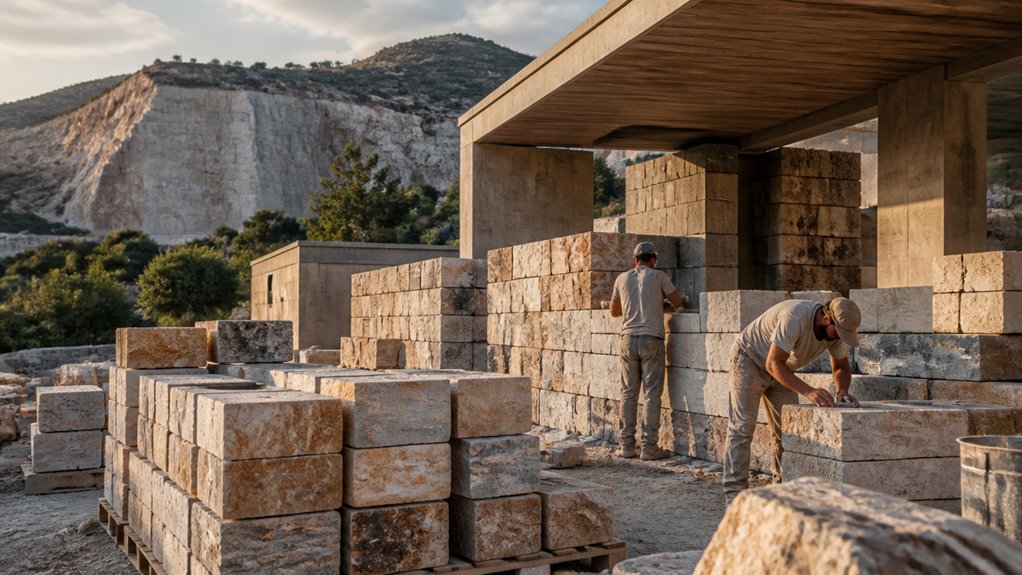
When we source stone locally, we can often shorten haul distances, coordinate deliveries more closely with the job schedule, and choose material that fits the character of the region. But a nearby quarry is only a good fit if its stone is available in the required quantity and can meet the project’s needs for grading, finish, durability, and code compliance.
We’re the Bluestone Masonry & Construction team, stone and marble masons based in Casper, Wyoming. Since 2013, we’ve taken projects from quarry to completion across Wyoming, Montana, Colorado, Idaho, Utah, Nebraska, and South Dakota—sourcing and cutting stone, building with it, and finishing interiors. We assess more than distance: sandstone, limestone, granite, and other stones differ in strength, porosity, weathering, and maintenance needs. In the Mountain West, freeze-thaw cycles, snow, wind, strong UV exposure, and high-altitude conditions make the stone’s performance and installation details especially important. We coordinate with quarry operators early to confirm supply, lead times, and fabrication requirements, helping reduce the risk of schedule changes. Permit, inspection, and building-code requirements vary by state and county; some projects may also require review by a licensed structural engineer.
What Counts as Locally Sourced Stone?

Locally sourced stone comes from a quarry within a distance defined by the project; there’s no universal mileage threshold. We recommend setting that boundary in the specification and procurement plan, then measuring it consistently—for example, by road miles from the quarry to the job site. Check where the stone is extracted, not just the supplier’s address or the location of a distribution yard.
For projects across Wyoming, Montana, Colorado, Idaho, Utah, Nebraska and South Dakota, local sourcing can mean different things depending on state or regional requirements, available stone and practical haul routes. We consider those factors alongside the stone’s suitability for the installation. In a cold Mountain West climate, freeze-thaw exposure, snow loads, wind and strong UV can affect stone selection, detailing and maintenance.
Before specifying a quarry, confirm that it can provide the required stone type, quantities, dimensions and finish on the project schedule. We take projects from quarry to completion, coordinating stone sourcing and cutting with construction and interior finishing. Permits, inspections, local building codes or input from a licensed professional, such as a structural engineer, may also be required; requirements vary by state and county.
Why Choose Locally Sourced Stone?
Once we confirm a quarry can meet your project’s requirements, sourcing stone closer to the job site can reduce hauling distance, transportation costs, and delivery-related emissions. It can also make coordination easier: we can review samples, confirm color and finish, and work through grading, quantity, and specification questions with the supplier before stone reaches the site.
Those details matter in the Mountain West, where freeze-thaw cycles, snow, wind, altitude, and strong UV exposure can affect how stone performs. We check that the selected material and finish suit the application, and that the quarry can provide the required volume and consistency. Ask suppliers for test data, extraction practices, and production capacity, then compare those details with project standards, maintenance needs, durability, availability, and total delivered cost. Local sourcing can help, but the right stone still depends on the building, installation, and site conditions.
How Local Stone Cuts Transport Impacts
We source stone with the full delivery route in mind. Choosing a quarry closer to your project can reduce haul distance, fuel use, freight costs, and transport emissions. The actual impact depends on the route, truck capacity, load weight, and vehicle efficiency, so we compare project-specific logistics rather than judging by mileage alone.
Local sourcing can also make deliveries easier to coordinate and reduce exposure to long-distance supply delays. Quarry operating limits, environmental requirements, and available stone volumes can affect production schedules, so we confirm those details before setting the construction sequence. We plan quantities and delivery timing to support consolidated loads and avoid unnecessary trips or partially filled trucks.
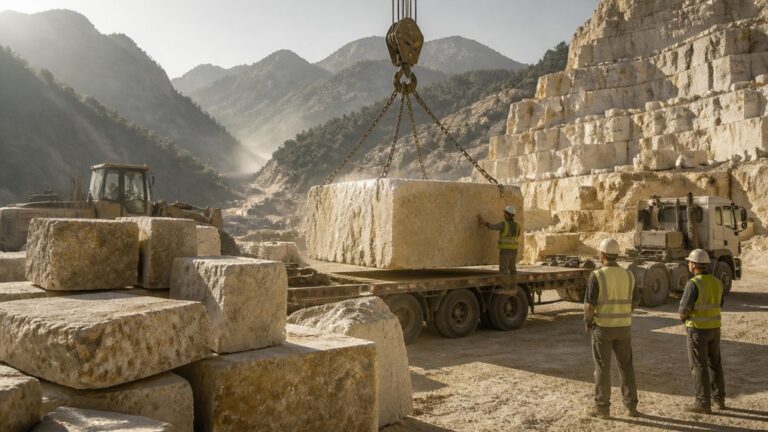
Stone weight and handling also matter. Heavy blocks and slabs require suitable trucks, access, and lifting equipment, especially at high-altitude or remote Mountain West sites where wind, snow, and winter conditions can complicate deliveries. We coordinate sourcing, cutting, building, and interior finishing from quarry to completion. Permits, inspections, and local building codes may apply; requirements vary by state and county.
How to Find Local Stone Suppliers
Where to find local stone suppliers
We recommend starting with regional quarry directories, stone-industry associations, and construction-material databases. These can help you identify suppliers by stone type, quarry location, and delivery area. Ask your architect, builder, or structural engineer for referrals, too; local project teams often know which quarries and fabricators can supply stone suited to your design and site conditions.
Start with regional quarry directories and industry associations, then ask local project professionals for supplier referrals.
You can also contact quarry operators directly or visit building-material trade events. When comparing suppliers, ask where the stone is quarried, whether it’s available in the sizes and finishes you need, and how the supplier handles cutting, packaging, and delivery. Request samples and technical information, including the stone’s absorption and freeze-thaw performance. These details matter in the Mountain West, where snow, freeze-thaw cycles, strong UV exposure, wind, and high-altitude conditions can affect stone selection and installation.
As stone and marble masons based in Casper, Wyoming, we take projects from quarry to completion: sourcing and cutting stone, building, and finishing interiors across Wyoming, Montana, Colorado, Idaho, Utah, Nebraska, and South Dakota. We can help you assess whether a stone is appropriate for its intended use and coordinate the practical details from material selection through installation.
Keep a shortlist of suppliers with their product options, lead times, delivery areas, and technical documentation. Confirm that the stone and proposed installation meet applicable local building codes. Permits, inspections, and input from licensed professionals, such as a structural engineer, may be required; requirements vary by state and county.
What to Check Before Choosing Local Stone?
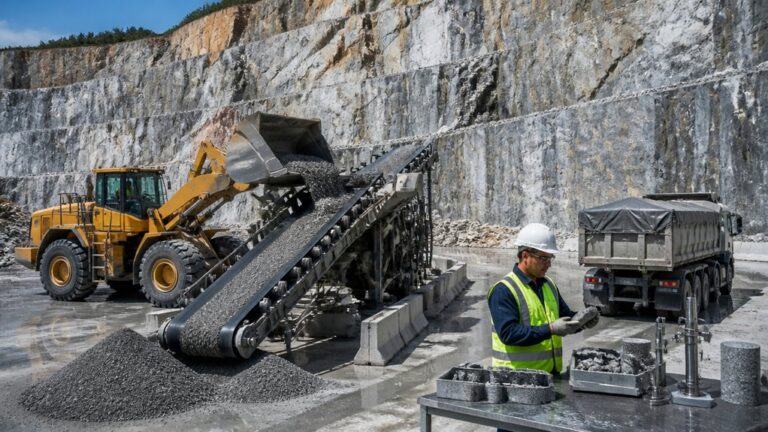
Before approving a local stone, we check that it suits the project—not just that it’s available nearby. We review test data for compressive strength, water absorption, abrasion resistance, and freeze-thaw durability, then compare the results with the stone’s intended use and exposure. In the Mountain West, water absorption and freeze-thaw performance matter especially for exterior paving, steps, walls, and other surfaces exposed to snow and repeated temperature changes. Sun, wind, altitude, and snow loads can also affect material selection and installation details.
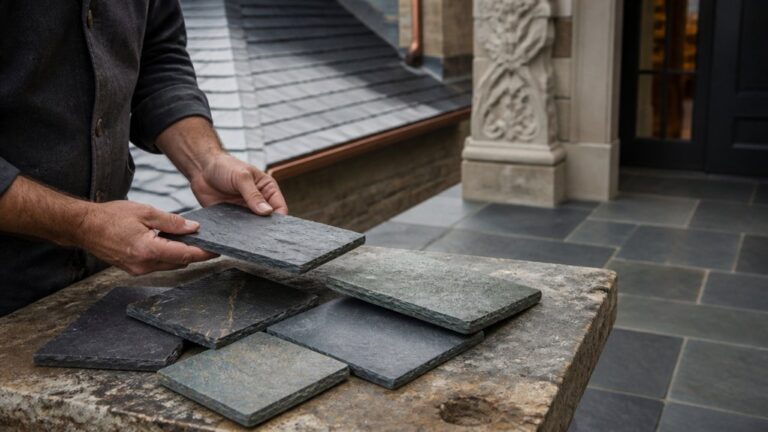
We examine samples for color and texture variation and ask whether the quarry can maintain a consistent appearance across the full order. We also confirm block sizes, cutting and fabrication capabilities, lead times, installation guidance, and the availability of replacement stone. Different stones have different maintenance needs, so we clarify how to clean and care for the material before it’s approved.
As stone and marble masons based in Casper, Wyoming, we take projects from quarry to completion: sourcing and cutting stone, building, and finishing interiors. We assess transportation using actual distances, loads, and delivery methods rather than assuming local sourcing always has a lower carbon impact. Before work begins, we also confirm pricing, availability, traceability, certifications, and any applicable permit, inspection, or building-code requirements. Requirements vary by state and county, and some projects may require licensed professionals, such as a structural engineer.
Frequently Asked Questions
Can Locally Sourced Stone Increase a Property’s Resale Value?
Yes, locally sourced stone can support resale value when it suits the property, holds up in the Mountain West climate, and is installed well. We help homeowners choose stone for its appearance and performance: for example, dense stone generally handles freeze-thaw exposure better than more porous varieties, while the right finish can improve traction on snowy walkways.
Durability depends on the stone, its placement, drainage, mortar, and workmanship. We source and cut stone, build with it, and finish interiors—from quarry to completion—so we can consider those details together. Proper installation and maintenance help protect the stone’s appearance, but no material guarantees a higher sale price. Local buyer preferences and the quality of the overall work matter, too.
Does Local Stone Require Specialized Installation Techniques?
Local stone does not always require specialized installation, but the right method depends on its type, thickness, size, and finish. We assess how the stone varies in strength, absorption, and shape, then confirm the substrate, anchoring, drainage, and structural support before work begins. In the Mountain West, freeze-thaw cycles, snow loads, wind, and strong UV can affect material and installation choices. We source and cut stone, build, and finish interiors from quarry to completion, coordinating with experienced masons and, when needed, licensed professionals. Permit, inspection, and code requirements vary by state and county.
How Should Locally Sourced Stone Be Cleaned and Maintained?
We clean locally sourced stone with a pH-neutral cleaner, clean water and a soft-bristle brush. Avoid acids, harsh chemicals and abrasive tools, which can etch or scratch stone. Because limestone and marble are more sensitive to acids than many granites and sandstones, check the stone’s care guidance before choosing a cleaner.
We inspect for stains, loose or damaged pieces, failing joints and drainage problems, then set a maintenance schedule suited to the stone and its exposure. In the Mountain West, keep water from pooling or penetrating joints: freeze-thaw cycles can worsen small defects, while snow, wind and strong UV exposure can increase wear. Seal only when the stone and installation call for it, and use a compatible product. Follow the supplier’s or installer’s care instructions, and arrange repairs promptly to protect the work from quarry to completion.
Is Locally Sourced Stone Suitable for Indoor Applications?
Yes. We install locally sourced stone indoors for floors, walls, countertops, and fireplaces. The right choice depends on how the stone will be used: dense granite generally handles wear and moisture well, while more porous limestone and marble may need more careful sealing and maintenance. We also match the finish to the space—honed stone can provide better traction than polished stone on floors.
We plan for a stable, properly prepared substrate, compatible setting materials, and movement joints where needed. For fireplaces, we confirm that the stone and installation materials are suitable for the heat exposure. Inside, freeze-thaw is usually less of a concern than outdoors, but tracked-in snow, deicing salts, and water can still affect floors and stone near entryways. We recommend routine cleaning with a stone-safe product and resealing when the stone’s condition and use call for it. As a team based in Casper, we bring our quarry-to-completion experience to interior stone projects across the Mountain West.
Can Local Stone Be Customized to Match a Specific Design?
Yes. We can cut and finish local stone to suit a specific design, then build and finish the project from quarry to completion. The options depend on the stone: granite is generally hard-wearing, while softer stones such as limestone may need more careful detailing and maintenance. We’ll review samples, dimensions, finish, tolerances, and fabrication limits with you before ordering.
For Mountain West projects, we also consider freeze-thaw exposure, snow loads, wind, altitude, and UV when selecting stone and planning installation. Proper drainage, suitable mortar or anchoring, and correctly detailed joints help reduce weather-related problems. We’re stone and marble masons based in Casper, Wyoming, serving Wyoming, Montana, Colorado, Idaho, Utah, Nebraska, and South Dakota. Permit, inspection, and code requirements vary by state and county; some projects may require a licensed professional, such as a structural engineer.