When we take on a stone project, we consider its full path from quarry to completion. Our team at Bluestone Masonry & Construction, based in Casper, Wyoming, sources and cuts stone, builds with it, and finishes interiors across Wyoming, Montana, Colorado, Idaho, Utah, Nebraska, and South Dakota. We assess each block for strength, fractures, grain direction, and suitability for its intended use before cutting and transport. Those choices affect how the stone handles fabrication, installation, and long-term wear.
Stone behaves differently depending on its type and where it will be used. In the Mountain West, freeze-thaw cycles, snow, wind, altitude, and strong UV exposure can influence material selection, anchoring, drainage, and maintenance. We plan for those conditions from the start, then measure, fabricate, deliver, and install with care so the finished work fits properly and performs as intended. Building permits, inspections, local codes, and licensed professionals such as structural engineers may be required; requirements vary by state and county.
What Happens When Natural Stone Is Cut at the Quarry?
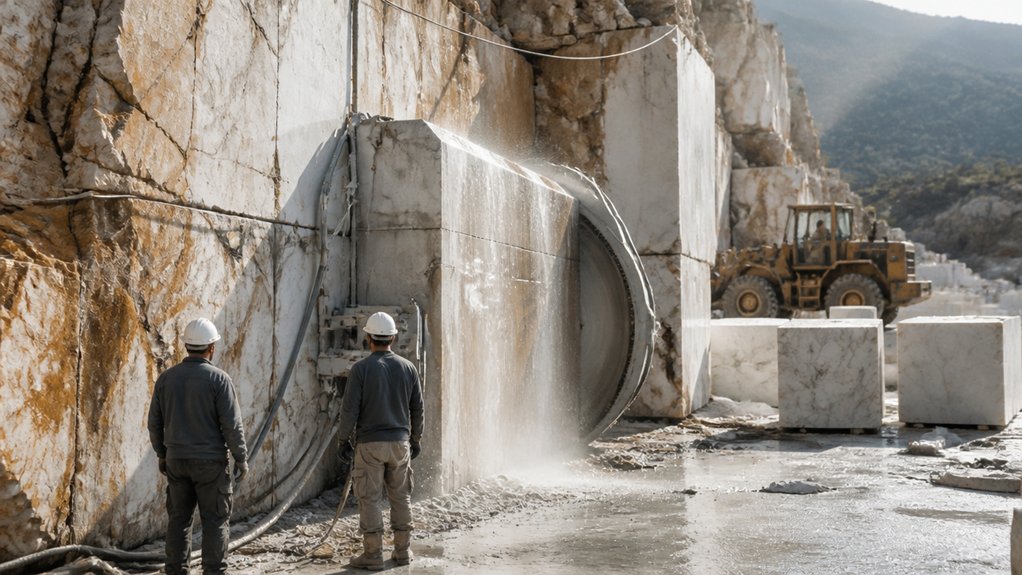
At the quarry, we select and cut stone with its intended use in mind. As stone and marble masons based in Casper, Wyoming, we take projects from quarry to completion, including sourcing and cutting stone, building, and finishing interiors across Wyoming, Montana, Colorado, Idaho, Utah, Nebraska, and South Dakota.
We select and cut stone for its intended use, taking projects from quarry to completion across the Mountain West.
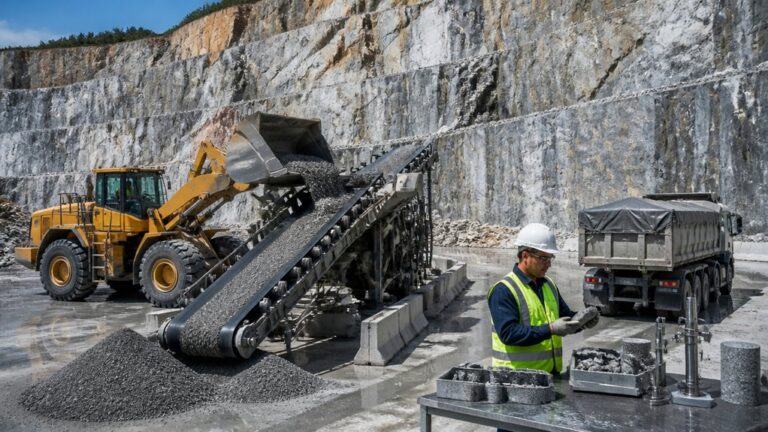
We start by reviewing the deposit for sound material, natural fractures, and grain direction. Those features affect how a block can be cut and how the finished stone may perform. Granite is generally hard and durable, while softer or more layered stones may split more readily along natural planes. The right choice depends on the application, the stone’s condition, and the finish required.
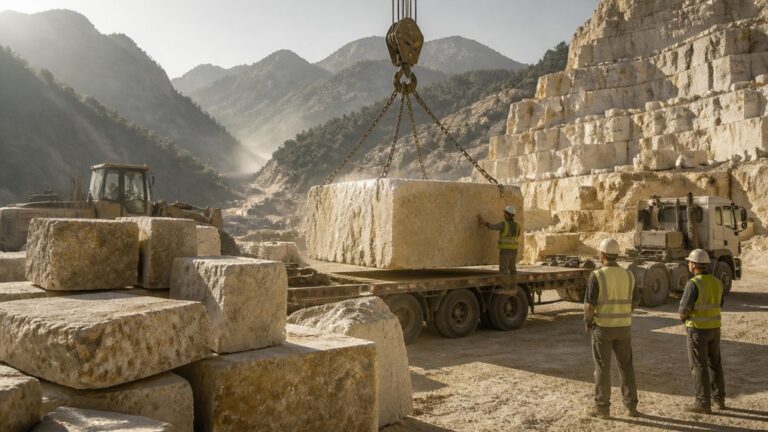
Crews remove overburden and use diamond-wire saws, chain saws, or controlled drilling and splitting to separate blocks. The method depends on the stone and the required block dimensions. Controlled blasting may be used where permitted, but precise cutting and splitting can help limit vibration and avoid unnecessary waste. We inspect exposed faces, separate blocks along natural joints when practical, and set aside cracked or unsuitable sections.
Quarry work also involves managing water and dust, securing the work area, and recording each block’s dimensions and characteristics. These details help guide fabrication and installation. For Mountain West projects, we consider how the selected stone and its installation will handle freeze-thaw cycles, snow load, strong UV exposure, and wind. Stone is durable, but performance depends on sound material, suitable detailing, and proper installation. Building permits, inspections, local codes, and licensed professionals such as structural engineers may be required; requirements vary by state and county.
How Do Stone Blocks Travel to the Mill?
How do stone blocks travel to the mill?
Once a block passes inspection, we prepare it for the trip to the mill. We clear away loose debris, mark the block for identification, and record its dimensions and weight. That information helps the carrier choose suitable equipment and plan a safe route.
We secure each block to a reinforced truck or trailer with properly rated chains, clamps, and blocking. Careful load distribution helps prevent shifting, which could damage the stone or compromise the vehicle’s stability. Oversized loads may require permits, route planning, escorts, and scheduled delivery windows. Requirements vary by state and county, so we confirm them before transport.
At the mill, we check the paperwork, block identification, and visible condition before unloading with equipment rated for the load. Clear communication among the quarry, carrier, and mill helps us keep the stone’s journey from quarry to completion organized and safe.
How Are Stone Slabs Sawn and Finished?
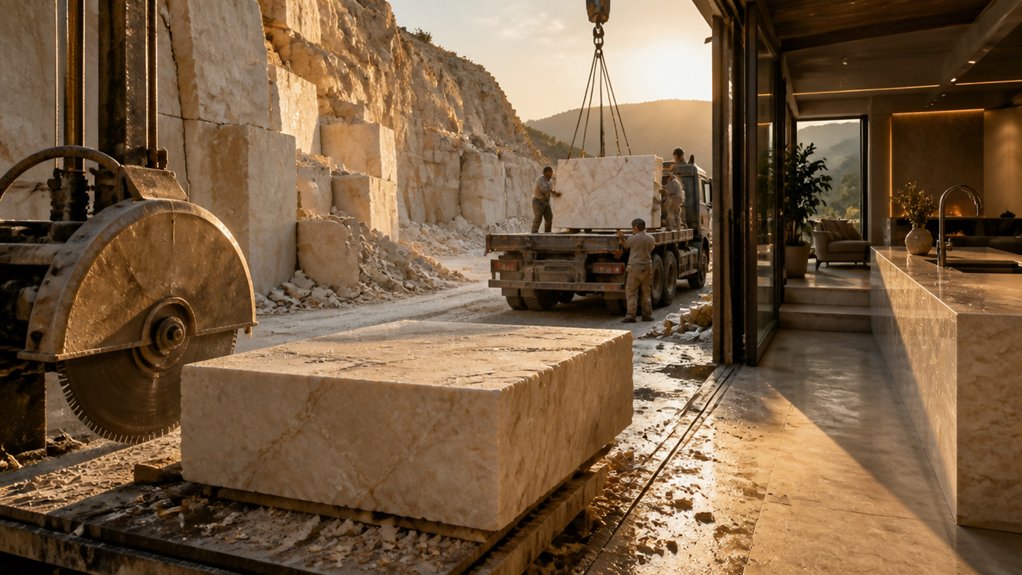
We start by matching the cutting method to the stone, block size, and intended use. Granite, marble, limestone, and other stones vary in hardness, grain, veining, and existing fractures, so the right setup helps control waste and reduce the risk of damage. At our mill, we use diamond-wire saws or gang saws as appropriate, with water to cool the cutting surfaces and carry away abrasive slurry.
- Inspect the block: We look for cracks, veins, and other features that could affect the cut or the finished slab. Natural patterns can guide how we orient the block.
- Secure and position it: We support the block evenly and keep it from shifting. Stable positioning is especially important when cutting large or irregular pieces.
- Saw the stone: We adjust the blade speed and feed rate to suit the material. Cutting too aggressively can cause chipping or stress, while a controlled feed helps produce consistent slabs.
- Grind and finish: We grind the faces to the required flatness and finish the edges to remove roughness and chips. The surface treatment depends on the application and the stone; polished, honed, and textured finishes have different appearances and maintenance needs.
These steps prepare slabs for fabrication and installation. We take projects from quarry to completion, including sourcing and cutting stone, building, and finishing interiors. Based in Casper, Wyoming, and founded in 2013, Bluestone Masonry & Construction serves Wyoming, Montana, Colorado, Idaho, Utah, Nebraska, and South Dakota. For exterior stonework in the Mountain West, the stone, finish, support, and installation details should account for freeze-thaw cycles, snow loads, wind, and strong UV exposure.
How Are Stone Slabs Measured and Fabricated?
We measure and fabricate each slab to fit its intended location. Before cutting, we check its dimensions, thickness, and surface for cracks, pits, or other features that could affect the finished piece. We also map the usable area and note natural veining so we can plan cuts that make the best use of the stone and create a considered pattern across adjoining pieces.
Stone type matters. Granite is generally hard and durable, while marble is more prone to scratching and etching. Natural stone can also vary in thickness and structure, so we check each slab rather than relying on nominal measurements. A stone gauge helps us verify thickness and select suitable edge profiles and cutting settings.
For accurate sizing, we work from a site template or precise measurements that account for walls, corners, finished edges, and openings for sinks or cooktops. We cut the pieces with a saw or waterjet, then shape and finish exposed edges and polish surfaces as specified. Before packing, we check each component against the approved layout and dimensions. Careful templating and fabrication are especially important where stone meets cabinets, walls, or other materials, since movement and uneven surfaces can affect the fit.
How Is Natural Stone Delivered and Installed at Home?
How we deliver and install natural stone
At Bluestone Masonry & Construction, we take stone projects from quarry to completion: sourcing and cutting the material, building with it, and finishing interiors. Before delivery, we check each finished piece against the approved dimensions, labels, and edge details, then confirm that the route into your home can accommodate it. Clear the pathway and protect floors before the crew arrives. Large slabs are heavy and difficult to maneuver, so tight turns, stairs, and limited access may affect handling and scheduling.
- Unload: We use A-frames, suction equipment, and lifting tools suited to the stone and each piece. We plan handling carefully because natural stone can crack if it’s unsupported or twisted.
- Position: We dry-fit countertops or panels and check alignment, seams, clearances, and support. Stone varies in density and strength; marble, for example, can scratch or etch more readily than many granites, so careful handling matters.
- Secure: We install the specified supports and adhesive, making sure the stone is properly supported without putting stress on it. Large or heavy installations may require review by a licensed professional, such as a structural engineer. Permit, inspection, and building-code requirements vary by state and county.
- Finish: We complete joints and apply sealer when appropriate for the stone and its intended use. We explain any curing time and how to clean and maintain the surface. Sealing can reduce absorption, but it doesn’t make stone stain-proof.
For exterior work in Wyoming and the Mountain West, installation details must account for freeze-thaw cycles, snow loads, wind, altitude, and strong UV exposure. Keep the work area accessible and follow our crew’s safety instructions while installation is underway.
Frequently Asked Questions
How Do I Choose the Right Natural Stone for My Home?
Choose stone by matching its durability, porosity, color, and maintenance needs to the room and its exposure. Granite and some quartzites generally handle heavy use well, while marble and limestone can scratch, etch, or stain more easily and need more careful sealing and cleaning. For outdoor work in the Mountain West, confirm that the stone and installation are suitable for freeze-thaw cycles, snow, wind, and strong UV exposure; not every stone sold for exterior use performs well in every location.
We also consider finish and weight. A textured finish can improve traction on steps and walkways, while a polished finish is smoother and may be more slippery when wet. Stone is heavy, so we check the supporting structure and plan safe handling, cutting, and installation. As stone and marble masons based in Casper, Wyoming, we take projects from quarry to completion across Wyoming, Montana, Colorado, Idaho, Utah, Nebraska, and South Dakota. Structural work may require a licensed professional, permits, or inspections; requirements vary by state and county.
How Much Does Natural Stone Typically Cost?
Natural stone costs vary by stone type, finish, thickness, availability and how much cutting the project requires. Installed cost also depends on access, substrate preparation, structural support and detailing around edges, joints and openings. In Wyoming and the surrounding Mountain West, freeze-thaw cycles, snow loads, wind and strong UV exposure can affect the stone and installation methods we recommend. We source and cut stone, then build and finish it from quarry to completion, helping you weigh upfront cost against maintenance and long-term performance.
Which Natural Stones Are Best for Kitchens and Bathrooms?
For kitchen countertops, we often recommend granite or quartzite. Both handle daily wear well, but their performance depends on the specific stone: granite varies in porosity and may need periodic sealing, while quartzite is hard and heat-resistant but can still stain if left unsealed. We inspect slabs for color consistency, natural fissures and other features that could affect cutting or installation.
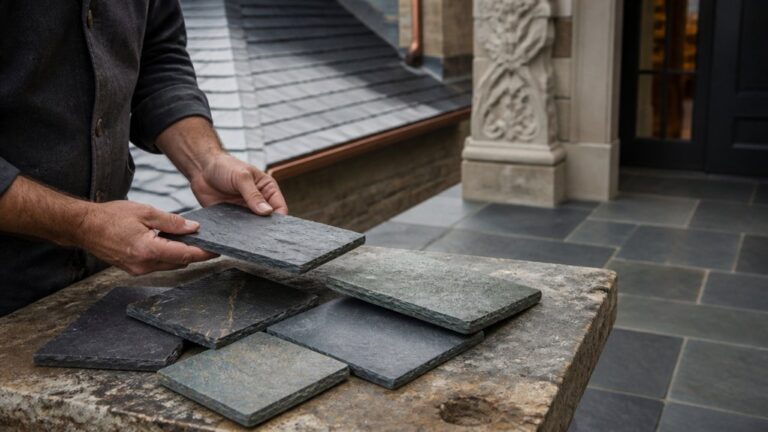
For bathroom vanities, marble offers distinctive veining, but it scratches and etches more readily than granite or quartzite. Use a suitable sealer and wipe up acidic products such as cosmetics promptly. For bathroom floors, textured slate can provide useful traction; choose a finish suited to wet conditions and confirm that the tile is appropriate for the floor and installation method.
We also consider the setting. In Mountain West homes, snow, mud and tracked-in grit can wear stone floors, while strong UV can affect some finishes and sealers. For stone used outdoors, freeze-thaw exposure, drainage and installation details matter. We source and cut stone, then build and finish interiors from quarry to completion across Wyoming, Montana, Colorado, Idaho, Utah, Nebraska and South Dakota. As stone and marble masons based in Casper, Wyoming, we help homeowners, architects and builders choose materials that suit the space, use and maintenance plan.
How Should I Clean and Maintain Natural Stone Surfaces?
We recommend cleaning natural stone with a pH-neutral stone cleaner and a soft cloth or mop. Avoid acidic cleaners, abrasive pads, and harsh chemicals: they can etch marble and other calcium-based stones, scratch polished finishes, or damage sealers. Blot spills promptly, especially oils, wine, and acidic liquids, and don’t leave standing water on the surface.
Stone types behave differently. Marble and limestone are more prone to etching and staining than granite, while slate may have a naturally textured surface that holds dirt. Use a cleaner suited to your specific stone and finish, and test it in an inconspicuous spot first. We also recommend following the stone supplier’s guidance for sealing; resealing frequency depends on the stone, finish, use, and sealer, so don’t assume every surface needs the same schedule.
In Mountain West homes, snow, grit, and tracked-in deicing salts can wear stone floors and entryways. Use mats at entrances, sweep grit regularly, and clean up melted snow rather than letting water sit. For exterior stone, freeze-thaw exposure, wind, and strong UV can affect both the stone and its joints, so proper installation and drainage matter as much as routine cleaning. We’re the Bluestone Masonry & Construction team, stone and marble masons based in Casper, Wyoming, serving projects across Wyoming, Montana, Colorado, Idaho, Utah, Nebraska, and South Dakota—from quarry sourcing and cutting through construction and interior finishing.
How Can I Tell Whether Stone Is Ethically and Sustainably Sourced?
We recommend asking the supplier for quarry permits, labor policies, environmental certifications, and records of independent audits. Request traceability documents that show where the stone was quarried and how it moved through the supply chain, along with the quarry’s reclamation plan. If records are missing or unclear, ask why and get the explanation in writing before you buy. We source and cut stone as part of our work from quarry to completion, so we can help you review documentation and consider whether a stone’s origin and production practices fit your project.