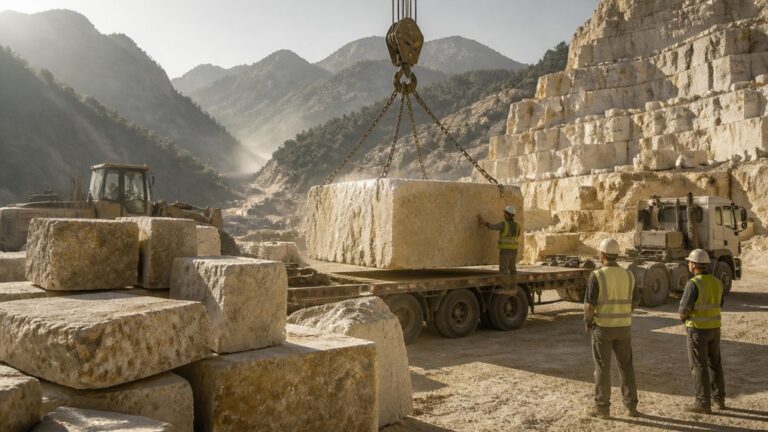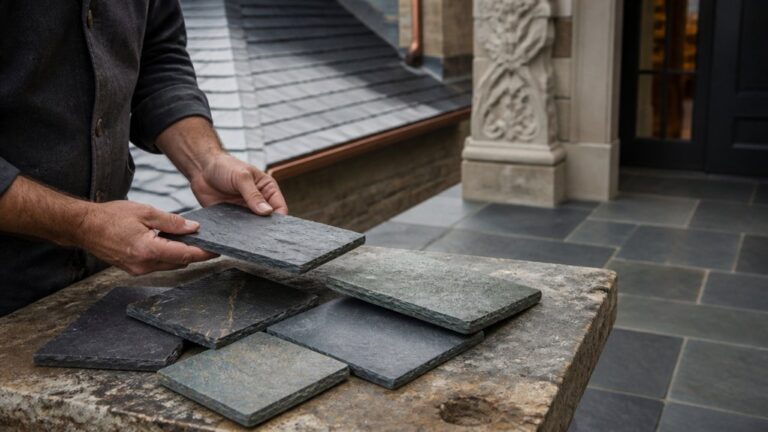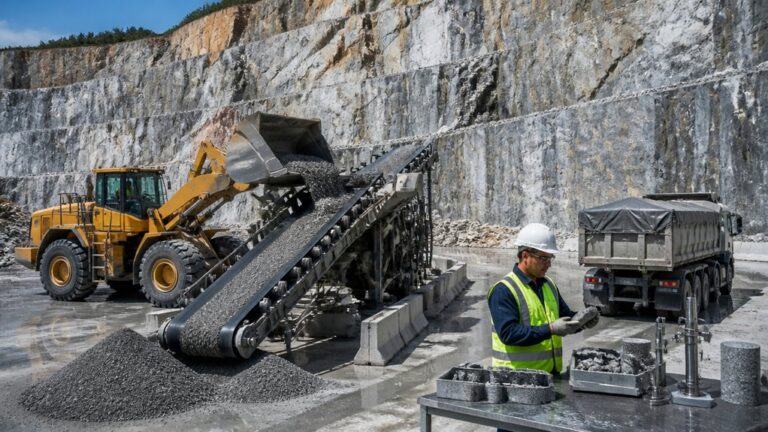
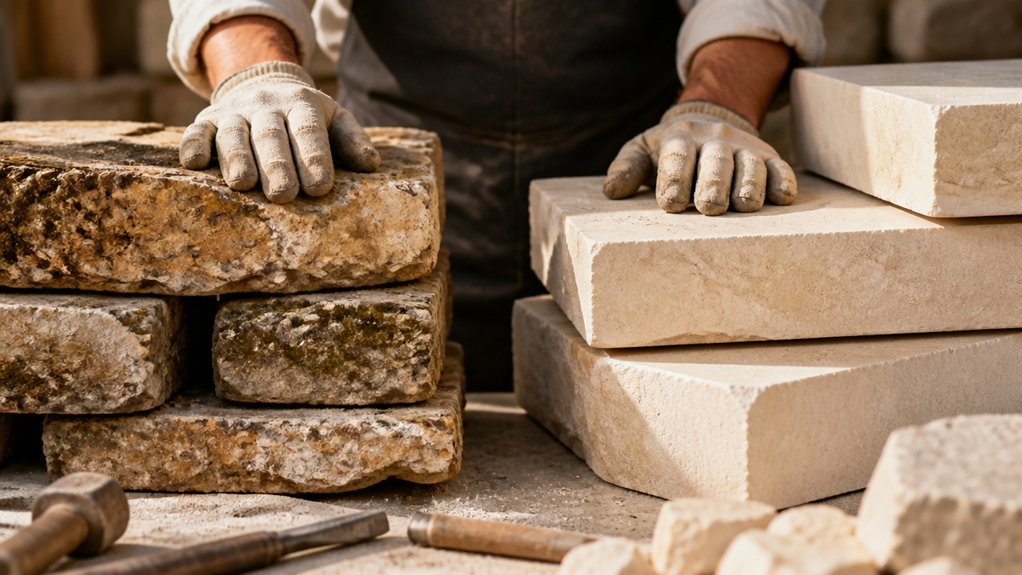
Choosing between reclaimed and newly quarried stone affects your budget, schedule, installation plan, and finished surface. We help clients weigh those trade-offs from quarry to completion, including sourcing and cutting stone, building, and finishing interiors.
Reclaimed stone offers natural variation, weathered surfaces, and a sense of age, but its dimensions and condition can be inconsistent. We inspect each piece for cracks, delamination, staining, and damage from freeze-thaw cycles. Irregular sizes may require more sorting, fitting, and adjustment during installation, and the available quantity may limit the design.
Newly quarried stone is generally more consistent in size, finish, and supply, which can make estimating and installation more predictable. Its performance still depends on the stone type, how it is cut and finished, and where it is used. In the Mountain West, we account for freeze-thaw exposure, snow loads, strong UV, wind, and elevation when selecting stone and planning details such as drainage, joints, anchoring, and surface slope.
Neither option is automatically lower-maintenance or less expensive. Cost depends on the stone, sourcing, preparation, cutting, transport, installation complexity, and any structural work. We can help you assess what the project can accommodate and choose a stone suited to its use and local conditions. Permits, inspections, building codes, and licensed professionals such as structural engineers may be required; requirements vary by state and county.
How Do Reclaimed and New Stone Compare?
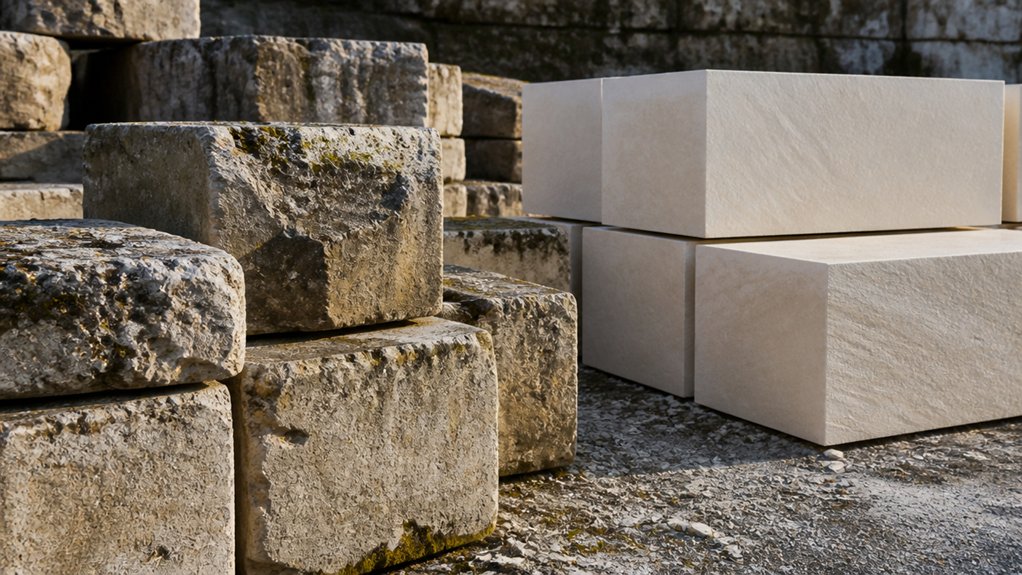
How do reclaimed and newly quarried stone compare?
We compare reclaimed and newly quarried stone by its condition, consistency, and fit for the project. Reclaimed stone often has weathered surfaces, varied dimensions, and marks from earlier use. Before installation, we inspect each piece for cracks, staining, soundness, and consistent thickness. Sorting and fitting take more time, and some pieces may need careful cutting or may not be suitable for reuse.
Reclaimed stone can reduce demand for newly extracted material and bring visible character to a project. Its supply, dimensions, and condition can be less predictable, so it may be difficult to source enough matching stone for a large area or future repairs. In the Mountain West, we also check whether its previous exposure or condition could affect performance through freeze-thaw cycles, snow, wind, and strong UV.
Reclaimed stone adds character and may reduce demand for new extraction, but supply and condition can vary.
Newly quarried stone is generally available in more consistent sizes and finishes, which can make layout, installation, and matching more straightforward. It may also be easier to order additional material from the same source, though color and texture can still vary between batches. Quarrying and transport have environmental impacts, so we review sourcing documentation as well as the stone’s suitability.
We help clients assess the material, processing, installation needs, and maintenance requirements from quarry to completion. For either option, the right choice depends on the stone type, its intended use, and local conditions. Exterior work in Wyoming and neighboring states must account for drainage and freeze-thaw exposure; permits, inspections, and code requirements vary by state and county, and structural work may require a licensed professional such as a structural engineer.
Which Stone Fits Your Project?
Match the stone to the project’s style, exposure and structural needs. We help clients across Wyoming, Montana, Colorado, Idaho, Utah, Nebraska and South Dakota compare color, texture, dimensions and finish, then select stone suited to the intended use. Granite is hard-wearing and handles abrasion well, while softer stones such as limestone may need more protection and care. Surface finish also matters: a rougher texture can improve traction outdoors, while a smoother finish is easier to clean but may be slippery when wet or icy.
In the Mountain West, account for freeze-thaw cycles, snow and wind exposure, strong UV at altitude, and the weight of stone on walls, steps or other structures. Proper drainage, a suitable setting bed and correctly detailed joints help limit water entry and damage. Compare the budget with local availability: reclaimed stone can vary in size and supply, while new stone generally offers more consistent specifications. Cost depends on the stone, sourcing, cutting, transport, installation details and site access.
As stone and marble masons based in Casper, Wyoming, and founded in 2013, we take projects from quarry to completion—sourcing and cutting stone, building, and finishing interiors. We can help assess maintenance needs and installation requirements before work begins. Permits, inspections, local codes or a licensed professional, such as a structural engineer, may be required; requirements vary by state and county.
Project Style
The right stone depends on the look you want and how the material will perform in your project. Reclaimed stone brings weathered surfaces, varied colors and visible history. New stone is generally more consistent in color, finish and dimensions.
We recommend reclaimed pieces when texture and patina suit a rustic, heritage or eclectic design. Check each piece for cracks, spalling, irregular thickness and dimensions that could affect cutting, setting or joint spacing. In Wyoming and the surrounding Mountain West, also consider whether the stone is suitable for repeated freeze-thaw cycles and exposure to snow, wind and strong UV. Reclaimed stone can preserve existing material, but its condition and sizing may require more sorting and fitting during installation.
For crisp lines, repeating patterns or a restrained contemporary palette, newly quarried stone offers more predictable sizing and finish. We can source and cut stone to suit the design, then build and finish it as part of a project from quarry to completion. Ask about the stone’s intended use and maintenance needs, especially for exterior surfaces exposed to moisture and freezing temperatures. We also consider sourcing: reclaimed material reuses existing resources, while responsible quarrying should support traceable extraction. Building requirements vary by state and county; permits, inspections or input from a licensed professional may be required.
Budget And Availability
We look beyond the stone’s price per square foot when comparing reclaimed and newly quarried material. Reclaimed stone may cost less to purchase, but sorting, recutting and fitting can add labor. New stone often comes in more consistent dimensions and quantities, which can make estimating and installation more predictable. We compare delivered costs and lead times, then account for how each option fits your schedule.
- Check reclaimed inventory early. Matching color, thickness and finish can be difficult, and available pieces may change before you’re ready to order.
- Ask suppliers to confirm dimensions, usable yield, delivery fees and whether the stone is suitable for your intended application.
- Consider new stone when you need consistent sizing or a large, repeatable order.
- Let your budget and design guide the layout. Reclaimed pieces work well when the plan can adapt to variation; standard quarry cuts can simplify estimating and fitting.
Before committing, reserve enough material for cuts, breakage and future repairs. Confirm the quantity, specifications, delivery timing and availability in writing. For exterior work in the Mountain West, also consider how the stone and installation will handle freeze-thaw cycles, snow and wind exposure, and intense high-altitude UV. We can help source and cut stone, build and finish interiors, taking a project from quarry to completion across Wyoming, Montana, Colorado, Idaho, Utah, Nebraska and South Dakota. Depending on the project and location, permits, inspections, local building codes or a licensed professional such as a structural engineer may be required; requirements vary by state and county.
Durability And Maintenance
Durability depends less on whether stone is reclaimed or newly quarried than on the stone’s type, condition, finish, and installation. We inspect reclaimed pieces for cracks, weathering, salt damage, and previous repairs, and we sort inconsistent batches before installation. Sound, dense stone can last for generations, but its history and condition matter. Newly quarried stone often has more consistent sizing and documented properties, which helps us match strength and water absorption to the application.
In Wyoming and the Mountain West, we also account for freeze-thaw cycles, snow, wind, altitude, and strong UV exposure. We select stone and installation details for the site’s exposure and expected traffic, and use suitable mortar, drainage, and movement joints where the design calls for them. Seal porous stone when appropriate, clean it with products compatible with the material, and follow a maintenance routine suited to its finish and conditions. Proper selection and installation often have more influence on service life than the stone’s age.
How Do Costs and Availability Compare?
Reclaimed stone often costs more per unit because salvage, cleaning, grading, and matching take additional labor. New stone pricing depends on the quarry, stone type, finish, and availability. We recommend checking local stock early: reclaimed pieces may be limited in size and quantity, while newly quarried stone is generally easier to order in consistent batches.
Compare the installed cost, not just the price per unit. Irregular reclaimed pieces may require extra sorting, fitting, and cutting, and both reclaimed and new stone need proper installation for Mountain West freeze-thaw conditions. We can help assess material availability, cutting needs, and installation requirements from quarry to completion.
Material Costs
Price depends on more than the stone itself. Reclaimed stone can cost more to source, clean, sort, and prepare. Newly quarried stone often has more consistent sizing and supply, which can make estimating and installation more predictable. When we compare reclaimed and quarried stone, we look at the cost of the finished, installed material—not just the price per unit.
Your budget may also reflect:
- Cleaning: Removing old mortar and treating the surface takes labor. The process must suit the stone so it doesn’t damage the face or edges.
- Grading: Matching stone by type, thickness, and dimensions can add time and cost. Consistent sizing also helps the mason set even courses and control joint widths.
- Waste: Reclaimed stone may vary in size or include damaged pieces, so extra material may be needed. In Mountain West climates, sound stone and well-fitted joints matter because water can enter gaps, freeze, and contribute to damage.
- Finishing: Newly cut stone may need less preparation, but custom cuts and profiles add work. We also consider exposure to snow, wind, and strong UV when selecting finishes and planning installation.
When reviewing quotes, confirm whether they include sourcing, cutting, delivery, preparation, installation, and finishing. As stone and marble masons based in Casper, Wyoming, we take projects from quarry to completion across Wyoming, Montana, Colorado, Idaho, Utah, Nebraska, and South Dakota. We can help compare materials and installation requirements; permits, inspections, and building codes vary by state and county, and some projects may require licensed professionals such as a structural engineer.
Sourcing Availability
How readily can you source each option? Availability depends on stone type, quantity, finish, and location. We source reclaimed stone through salvage yards, demolition projects, and specialist dealers, so stock can be limited. Finding enough material with a consistent color, finish, and dimension may take time. Ask for measured quantities and inspect samples in person when possible; reclaimed pieces can vary in weathering, thickness, and prior repairs, which affects cutting and installation.
Newly quarried stone is generally easier to order in repeatable sizes and finishes. Suppliers can confirm stock or production lead times, but delivery schedules may shift with seasonal demand and transport conditions. In the Mountain West, allow time for weather-related delays, especially when winter access or high-altitude routes are involved.
Before ordering, we check that the stone’s dimensions, density, and durability suit the application and work with drainage, anchoring, and other building systems. Freeze-thaw exposure, snow loads, wind, and strong UV can affect performance, so the right choice depends on the project and site. We can help source and cut stone as part of taking a project from quarry to completion.
Installation Expenses
Once we’ve confirmed the stone is suitable and available, we compare the full installed cost—not just the purchase price. Reclaimed stone may need cleaning, sorting, trimming, or reinforcement, and irregular dimensions can add fitting time. Newly quarried stone is often more consistent in size, which can make labor and waste easier to plan. We source and cut stone, build, and finish interiors across Wyoming, Montana, Colorado, Idaho, Utah, Nebraska, and South Dakota, taking projects from quarry to completion.
- Preparation: Allow for inspection and surface work, especially with reclaimed stone. We also check for cracks, weathering, and suitability for local freeze-thaw conditions.
- Handling: Heavy or fragile pieces may require specialized lifting and careful staging. Wind, snow, and site access can affect how and when materials are moved.
- Transport: Compare distance, shipping logistics, palletization, and unloading requirements. Remote or high-altitude sites may need additional delivery planning.
- Sourcing: Include documentation, reclamation practices, and limited quantities in your schedule. Confirm that enough stone is available for the full project and any future repairs.
We ask installers to price actual samples and site conditions. A higher material cost may reduce total installed cost if consistent sizing, reliable supply, and efficient labor offset it. For structural work, permits, inspections, local codes, or review by a licensed professional such as a structural engineer may be required; requirements vary by state and county.
Which Stone Holds Up Better Over Time?
Which stone holds up better over time?
We look at a stone’s composition, condition, and exposure—not just whether it’s reclaimed or newly quarried. Dense granite generally resists abrasion and moisture well. Limestone can also last for generations when the variety is suited to the application and it’s detailed to shed water. More porous stone, or stone weakened by weathering, may deteriorate sooner.
In the Mountain West, freeze-thaw cycles make water management especially important. Snow, wind-driven moisture, strong UV at higher elevations, and heavy snow loads can all affect the stone and its supporting structure. We check reclaimed pieces for cracks, salt damage, and weakened edges; age alone doesn’t determine durability. New stone also needs appropriate grading, sound support, and installation details that limit water entry and allow drainage.
We source and cut stone, build, and finish interiors as part of our work from quarry to completion. We match the material and installation to the climate and intended use, then recommend sealing only when the stone and application call for it. Regularly inspect the stone, drainage, and joints, and address damage before moisture gets in. Depending on the project, permits, inspections, local codes, and licensed professionals such as structural engineers may be required; requirements vary by state and county.
How Do Reclaimed and New Stone Differ in Sourcing?
Sourcing affects the selection, consistency, and traceability of the stone—not its durability by itself. As stone and marble masons based in Casper, Wyoming, we source and cut stone, build, and finish interiors across Wyoming, Montana, Colorado, Idaho, Utah, Nebraska, and South Dakota.
Reclaimed stone comes from buildings, paving, or other structures. Its availability depends on demolition schedules, salvage condition, and regional stock. Patina, wear, and cut sizes can vary, so matching a large quantity or fitting pieces to a planned layout may take extra research and careful cutting. Ask the supplier about the stone’s origin, previous use, and condition. In a Mountain West climate, check reclaimed pieces for cracks or damage that could hold moisture and worsen through freeze-thaw cycles.
New stone is sourced from an active quarry. You can request a stone type, finish, and size, subject to quarry capacity and shipping. Quarry identification and sourcing records can help with traceability, while more consistent grading and dimensions can make planning and installation more predictable. Confirm that the selected stone and finish suit the intended use and local exposure, including snow, wind, and strong UV.
We take projects from quarry to completion, so we consider sourcing alongside cutting, installation, and finishing. For either option, verify the stone’s condition and suitability before specifying it; structural work may require permits, inspections, local code review, or a licensed professional such as a structural engineer. Requirements vary by state and county.
What Should You Expect During Installation?
Installation starts with the stone, not the setting bed. We inspect each piece, check its thickness and condition, and plan around irregular edges, surface wear, and natural variation. Reclaimed stone may need sorting, cleaning, and careful fitting. Its durability depends on sound material and proper installation—not age alone. Newly quarried stone is often more consistent in size, which can make it easier to maintain even joints and courses, but we still verify dimensions and tolerances before laying it.
We also prepare a stable substrate, choose mortar compatible with the stone and site conditions, and account for the stone’s weight. In Wyoming and the surrounding Mountain West, freeze-thaw cycles, snow, wind, strong UV exposure, and elevation can affect material selection and installation details. New stone often calls for precise alignment; reclaimed stone may require a more flexible layout and additional cutting. We plan for those differences from quarry to completion, including sourcing, cutting, installation, and interior finishing. Depending on the project and location, permits, inspections, local codes, or review by a licensed structural engineer may be required; requirements vary by state and county.
Frequently Asked Questions
Can Reclaimed Stone Be Used in Historic Restoration Projects?
Yes. We use reclaimed stone in historic restoration when its type, dimensions, finish, and condition are compatible with the original masonry and the project’s conservation requirements. Check the stone’s provenance and inspect it for cracks, weathering, and damage from old mortar or previous installation. Reclaimed stone can preserve historic character, but matching it may take time, and its condition can make cutting and installation more demanding.
Before work begins, confirm requirements with the preservation authority and local building officials. Permits, inspections, or review by a licensed structural engineer may be required; rules vary by state and county. In Wyoming and the surrounding Mountain West, account for freeze-thaw cycles, snow loads, wind, and strong UV exposure when selecting stone, mortar, and installation details. Document each replacement and its location so future maintenance teams can understand what was changed.
How Can You Verify the Provenance of Reclaimed Stone?
We verify reclaimed stone by tracing it back to its source. Ask for invoices, salvage records, and photographs of the original site, then compare the documented origin with the stone’s type, dimensions, and tooling marks. These details can help distinguish genuine reclaimed material from stone that has been cut or finished to look old.
We also inspect each piece for cracks, weathering, and other damage that could affect its use. Reclaimed stone can vary in strength and thickness, so its condition and intended application matter—especially outdoors, where freeze-thaw cycles, snow, and wind put added stress on masonry. When the source or condition is unclear, we recommend having a conservation specialist assess it. Keep the records and assessment with your project files.
Does Reclaimed Stone Require Special Cleaning Products?
Reclaimed stone usually does not need a special cleaner. We recommend a pH-neutral stone cleaner, clean water, and a soft brush. Avoid acids, bleach, and abrasive pads, which can etch or scratch some stones and damage mortar or sealers. Reclaimed limestone and marble are especially sensitive to acids; harder stones such as granite are generally more resistant, but their finishes and any existing treatments still matter.
Test the cleaner on an inconspicuous area first, and follow the stone or sealer manufacturer’s guidance. For exterior stone in Wyoming and the Mountain West, rinse away deicing salts and avoid cleaning when water could freeze in the stone or joints. Freeze-thaw cycles can worsen existing cracks or moisture damage. As stone and marble masons, we assess the stone, finish, mortar, and sealer before recommending a cleaning method. Stone provenance alone does not determine what products are safe to use.
Can Reclaimed Stone Be Cut or Shaped for Custom Designs?
Yes. We can cut and shape reclaimed stone for custom designs, but first we check its thickness, condition, cracks, and existing finish. Granite and other dense stones generally cut differently from softer limestone or marble, while old mortar, hidden repairs, or weathering can affect the result. We select tools and cutting methods to suit the material and limit chipping.
For outdoor work in the Mountain West, we also consider water absorption and freeze-thaw exposure, along with snow load, wind, altitude, and UV exposure. Proper detailing and installation help protect the stone; maintenance depends on the stone type and finish. We take projects from quarry to completion, including sourcing and cutting stone, construction, and interior finishing. For structural applications, permits, inspections, local codes, or a licensed structural engineer may be required; requirements vary by state and county.
Are There Regulations for Using Reclaimed Stone in Buildings?
Yes. Reclaimed stone must meet the building codes and structural and fire-safety requirements that apply to your project. We recommend documenting the stone’s type, condition, dimensions and strength, since weathering and past use can affect how it performs. Check for cracks, delamination, staining or damage from earlier mortar and fasteners.
Requirements vary by state and county, so confirm acceptance with your building official before installation. Permits, inspections or review by a licensed structural engineer may be required, particularly when reclaimed stone will carry structural loads or be used in a retaining wall. In the Mountain West, also account for freeze-thaw exposure, snow loads, wind and UV when choosing the stone and detailing joints, drainage and anchoring. At Bluestone Masonry & Construction, we can help assess reclaimed stone and plan its use from sourcing and cutting through installation and finishing.