We start quarrying marble by surveying the deposit, access routes, and working elevations. We examine veins, fractures, and color variation to understand how the stone may respond to cutting and handling. Those details guide our choices of cutting method, block dimensions, and transport support—decisions that affect both the finished stone and job-site safety. Even a promising block can conceal flaws, so we inspect it as work progresses and adjust the plan when needed. As stone and marble masons based in Casper, Wyoming, we take projects from quarry to completion, sourcing and cutting stone, building, and finishing interiors across the Mountain West.
How Marble Quarrying Begins With Deposit Surveys
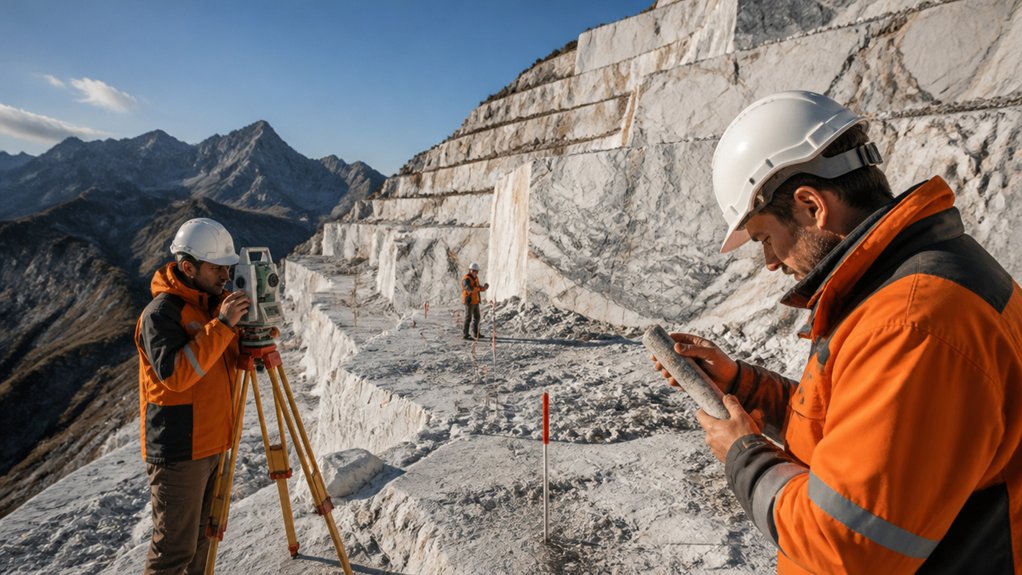
Before quarry crews cut a block, we survey the marble deposit to identify sound stone and estimate how much can be recovered. We map rock boundaries, elevation, and access routes, then compare those measurements with core samples to assess the deposit’s depth and condition. Vein patterns help us understand the stone’s structure and appearance, but they don’t determine extraction cuts on their own.
We can also use acoustic testing to compare how sound travels through different areas of the deposit, which helps identify changes in rock continuity. Color grading records natural shade variation so we can select material that meets the project’s specifications. Together, these findings help us plan extraction, equipment placement, and production before quarrying begins. For us, careful surveying is the first step in taking stone from quarry to completion.
How Crews Read Marble Veins and Flaws
How we read marble veins and flaws
At Bluestone Masonry & Construction, we read marble for both its appearance and its structural condition before we cut or build with it. A natural vein is usually a mineral band within the stone; a flaw may be an open crack, a shifted seam, or a crushed or weathered zone that can weaken a block.
We inspect exposed faces for color, continuity, and texture, then compare the pattern across adjacent surfaces. We note each line’s direction and whether it ends, branches, or continues across the block. A vein that looks sound on one face may reveal a separation on another, so we check more than one surface whenever possible.
For flaw mapping, we mark fractures, cavities, and weathered seams on the quarry plan and record their position, width, visible depth, and relationship to the stone’s structure. Measurements and photographs help us decide how to cut the block, where to avoid placing a load, and whether a piece is suitable for its intended use. Veins can be part of marble’s character, but their orientation and condition matter when a slab or block must carry weight.
We consider the finished location as well as the stone itself. Exterior marble in Wyoming and the wider Mountain West must be selected and detailed for freeze-thaw cycles, snow, wind, and strong UV exposure. Proper support, drainage, joints, and installation methods are essential; a mapped flaw shouldn’t be treated as harmless without assessing how the stone will be used.
As a Casper, Wyoming, masonry team founded in 2013, we take projects from quarry to completion across Wyoming, Montana, Colorado, Idaho, Utah, Nebraska, and South Dakota. That includes sourcing and cutting stone, building with it, and finishing interiors. For structural applications, permits, inspections, local codes, and review by a licensed professional such as a structural engineer may be required; requirements vary by state and county.
How Crews Choose a Marble-Cutting Method
We choose a marble-cutting method by examining the stone’s hardness, grain, and natural fracture patterns, then checking the conditions at the site. Access, slope, water supply, and equipment limits all affect what we can use safely and accurately.
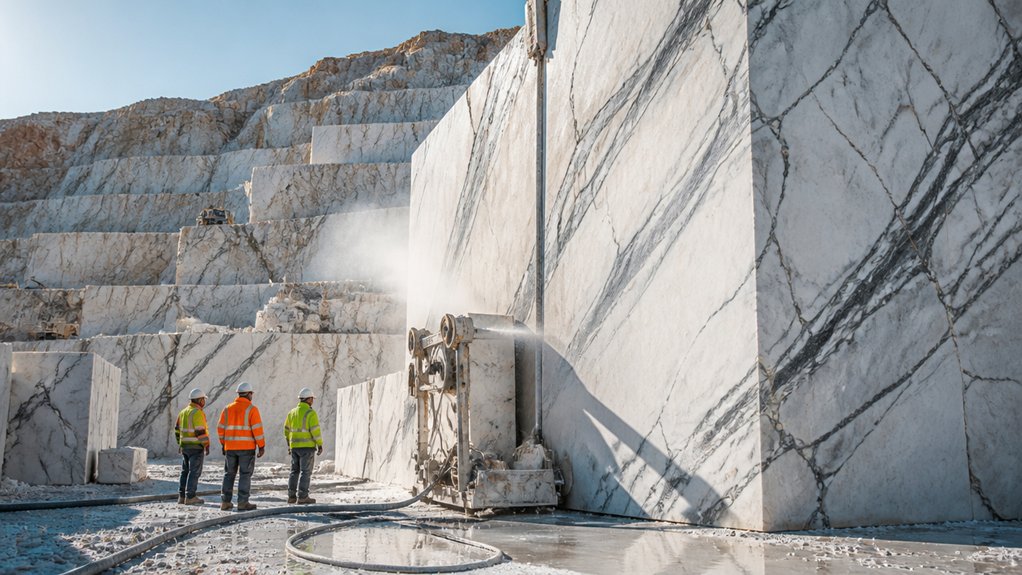
Wire saws work well for large cuts and irregular blocks; chain saws can make controlled cuts where access allows; and drilling can help separate stone along a planned line. We weigh each method’s precision, setup, and effect on the surrounding stone before cutting.
Stone Characteristics
Because marble can vary from one block to the next, we assess its grain, fractures, hardness, color, and mineral composition before choosing how to cut it. These traits affect the cut and the finished stone:
- Grain: We plan cuts with the grain where possible to reduce chipping and keep edges clean.
- Fractures: We map visible cracks and check for signs of hidden flaws. A fracture can cause a block to split during cutting or later installation.
- Hardness: We match the blade and feed rate to the stone. Cutting too aggressively can damage the marble and wear out equipment.
- Color and minerals: Variations in color and mineral content can signal changes in density, which may affect cutting, finish, and how adjacent pieces look together.
These observations help us choose between wire sawing, chain cutting, and drilling. Careful assessment lets us recover sound slabs, limit waste, and preserve the marble’s natural character—from quarry work through installation and finishing.
Site Conditions
Before we choose a cutting method, we assess access, terrain, water supply, power, drainage, and nearby structures. These conditions determine whether wire saws, chain saws, or drilling equipment can work safely and efficiently. Steep slopes and confined areas may call for compact equipment and carefully staged cuts, while stable, open benches can accommodate larger systems.
Reliable water is essential for cooling cutting blades and controlling dust. We also plan drainage to keep runoff from weakening work areas or carrying stone slurry into waterways. Equipment routes, power capacity, and clearance around buildings all affect the work plan. By assessing these details early, we can select an appropriate method, protect the crew, and reduce the risk of damaging valuable marble blocks. Our team works across the Mountain West, where changing weather and site conditions can also affect access and scheduling.
How Crews Separate and Lift Marble Blocks
At Bluestone Masonry & Construction, we handle stone from quarry to completion, including sourcing and cutting. When crews separate a marble block, the goal is to release it without creating cracks that could affect later cutting or installation.
- Cut: Crews drill guide holes and thread diamond wire through them to make aligned cuts. Marble can vary in veining and natural flaws, so the cut plan should account for the block’s structure.
- Release: Hydraulic wedges or cushions apply gradual, controlled force to separate the block from the quarry face. A measured release helps limit stress and sudden fractures.
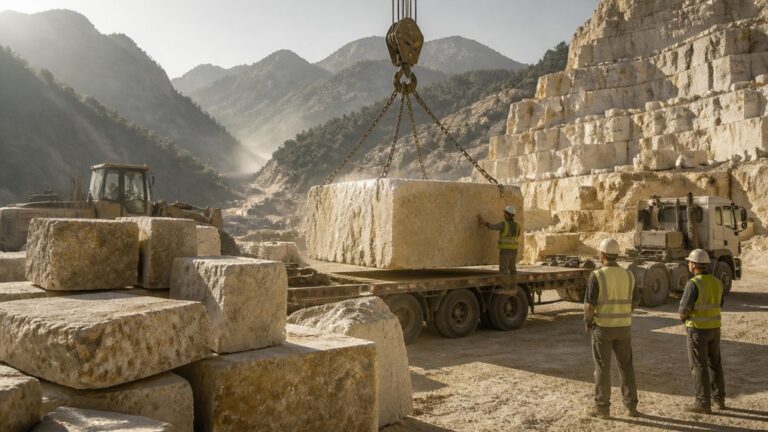
- Lift: The crew positions lifting equipment, secures slings at suitable points, and raises the block slowly. Spotters watch for shifting or imbalance as the stone moves onto a transport cradle.
Marble is heavy and can be vulnerable along veins or hidden fractures, so each step requires suitable equipment, clear communication, and a stable lift plan. Careful handling protects both the stone and the crew before the block reaches the next stage of fabrication.
How Crews Grade Marble Blocks for Quality and Use
When a marble block reaches our inspection area, we grade it for color, veining, dimensions, visible flaws, and likely yield. We compare those traits with the intended use: consistent patterns can work well across large slabs, while pronounced veining may suit decorative cuts. We also check for cracks, cavities, staining, and weathering, recording each defect’s location and depth because flaws can affect cutting, support, and long-term performance.
We measure the block and note which faces are usable before assigning a grade based on appearance, structural integrity, and expected yield. This helps us match the stone to project specifications and plan handling, cutting, and any further review before processing. For exterior work in the Mountain West, we also consider exposure to freeze-thaw cycles, snow, wind, and strong UV; the stone’s condition and intended installation both matter. We take projects from quarry to completion, sourcing and cutting stone, building, and finishing interiors across our service area.
How Crews Prepare Marble Blocks for Transport
Before transport, we stabilize each marble block to reduce cracking and shifting. Marble can be vulnerable to impact and stress, so we select braces, padding, or support frames to suit the block’s size, shape, and condition. We then secure it to the carrier with properly rated restraints and check that the load can’t move in transit.
As stone and marble masons based in Casper, Wyoming, we plan handling from quarry to completion, accounting for the route and Mountain West conditions such as wind, snow, and freeze-thaw exposure.
Stabilizing the Marble Block
With the block cut free, we stabilize it before moving it across the quarry. We check its balance and inspect visible fractures, paying particular attention to weak edges and corners. Marble can chip or crack under concentrated pressure, so we choose supports that spread the load without bearing directly on vulnerable areas.
- Check the base: Clear loose chips and look for uneven contact points. Set the block on a firm, level surface with support beneath the load-bearing areas.
- Brace the sides: Fit rigid supports against stable faces to limit sway. Keep braces secure and use protective material where contact could mark or damage the stone.
- Verify the load: Recheck balance, brace contact, and lifting points before repositioning the block. Make sure the handling equipment is rated for the load and used by qualified operators.
Each check helps prevent sudden movement and edge damage. Don’t proceed if the block rocks, a brace slips, or a crack widens. We stop and reassess the support plan before handling the stone. For large or unusually fractured blocks, a qualified lifting professional or structural engineer may need to review the plan; applicable requirements vary by state and county.
Securing Blocks for Transport
Once the block is stable, we secure it to a transport frame or vehicle with rated chains, straps, and blocking. We place restraints at approved anchor points, keeping pressure off vulnerable edges and preventing movement in every direction. Timber or engineered pads between the stone and contact surfaces help spread the load and reduce chipping.
Before lifting or hauling, we check that chain ratings, strap condition, tension, and locking devices are suitable for the block’s weight and the route. We also confirm the load is level, restraints remain accessible, and equipment won’t interfere with handling. These checks help us prepare the block for safe transport.
Frequently Asked Questions
What Environmental Safeguards Help Reduce the Impact of Marble Quarrying?
We reduce the impact of marble quarrying by controlling dust, recycling process water, stabilizing quarry slopes, and monitoring noise and runoff. We also limit the land cleared at one time and restore disturbed areas with native vegetation suited to local conditions. Biodiversity offsets can help protect equivalent ecosystems nearby, but they should complement—not replace—careful site planning and restoration. In the Mountain West, we also account for snowmelt, wind, and freeze-thaw conditions when managing slopes and runoff. Permits and reclamation requirements vary by state and county, so we follow applicable local rules.
Which Safety Measures Protect Workers in Marble Quarries?
We protect quarry workers through practical safety training, properly fitted protective gear, machine guards, dust suppression, and clear evacuation plans. We also manage water, control quarry waste, and restore disturbed areas to reduce hazards and keep operations safer. At Bluestone Masonry & Construction, our work takes stone from quarry to completion, so we treat worker safety and responsible stone handling as essential from sourcing and cutting through installation.
How Is Water Used and Managed During Marble Extraction?
During marble extraction, we use water to cool cutting tools, lubricate blades and control dust. We capture runoff and stone slurry, then settle out suspended solids before recycling the clarified water where practical. We also monitor any discharge to help prevent contamination and conserve water. Because freezing conditions can damage equipment and complicate water handling, we plan for drainage and winter operation at the quarry.
What Happens to Marble Quarry Waste and Unusable Stone?
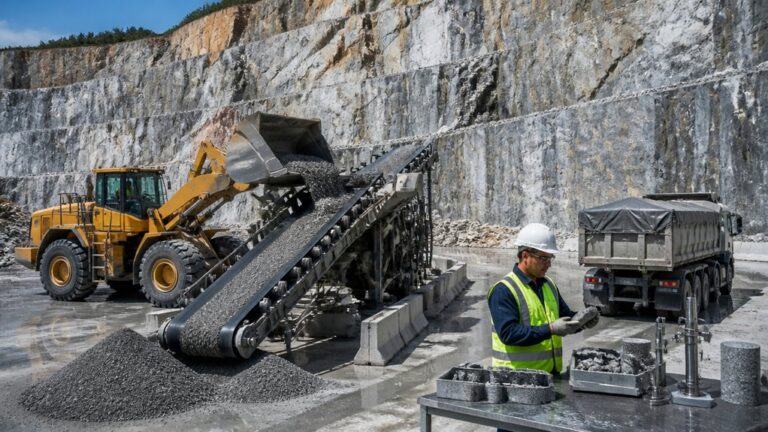
We sort quarry waste by size, composition and condition. Sound marble and stone fragments can often be reused as aggregate, road base or fill; other material may suit landscaping, cement production or restoration work. Reuse can reduce disposal, but the right option depends on the stone’s strength, cleanliness and intended use. In the Mountain West, we also consider drainage and freeze-thaw exposure before using stone as fill or in exterior work.
How Do Quarry Operators Restore Sites After Extraction Ends?
Quarry restoration is part of taking stone from quarry to completion responsibly. After extraction ends, we stabilize slopes, reshape the land, replace suitable topsoil, and manage drainage to limit erosion and standing water. Replanting native species helps the site recover, but the right approach depends on local soils, elevation, weather, and the planned use of the land.
In Wyoming and across the Mountain West, freeze-thaw cycles, snowmelt, strong winds, and high-altitude UV can put restored ground under stress. We track reclamation milestones and monitor water quality, vegetation, and erosion so problems can be addressed early. Permits, inspections, and reclamation requirements vary by state and county; qualified environmental and engineering professionals may be needed to confirm that the work meets local requirements.