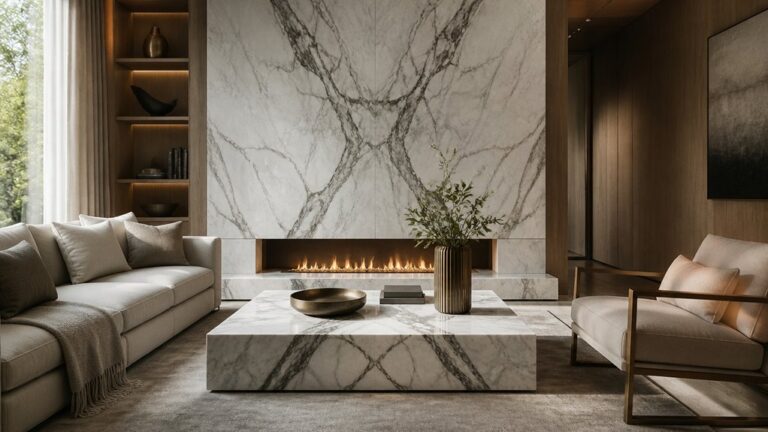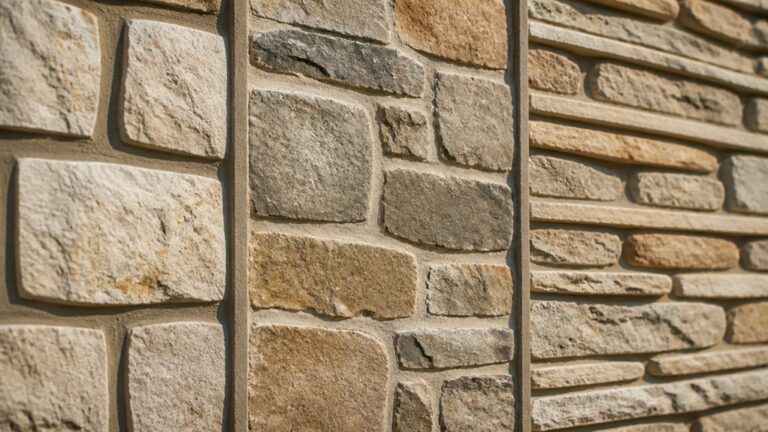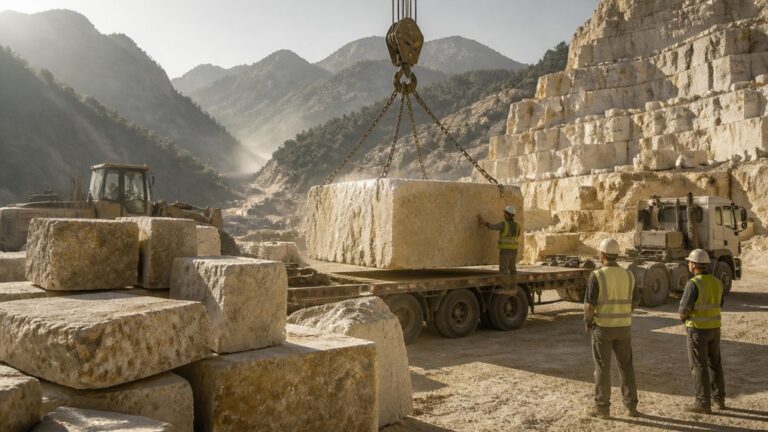
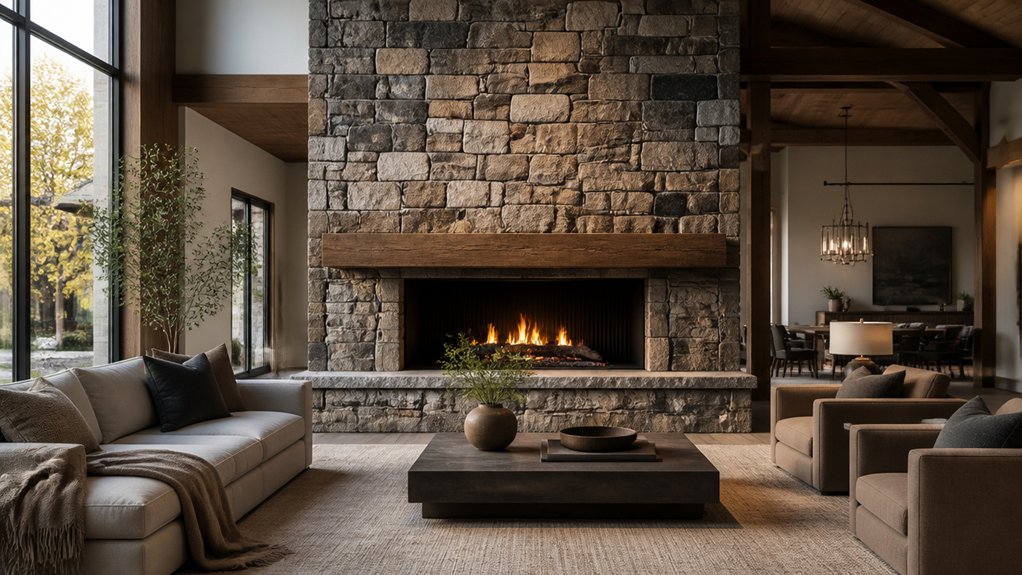
A statement stone fireplace can anchor a great room, but its size, location, and finish affect the room’s sightlines and structure. We begin by confirming the firebox location, wall proportions, hearth depth, and required clearances with your builder and fireplace manufacturer. A heavy stone surround may need structural support, and permits, inspections, or a licensed structural engineer may be required; local requirements vary by state and county.
Stone behaves differently from one type to another. Granite is hard-wearing, while some limestones and marbles are more vulnerable to staining or surface wear. In the Mountain West, exterior stone and exposed masonry must be detailed for freeze-thaw conditions, wind, snow, and strong UV; indoor fireplaces still need suitable materials and clearances for heat. We source and cut stone, build, and finish interiors from quarry to completion, serving Wyoming, Montana, Colorado, Idaho, Utah, Nebraska, and South Dakota from our Casper, Wyoming base. Founded in 2013, Bluestone Masonry & Construction brings stone and marble masonry experience to each stage. Before choosing a finish, view samples in the room under daylight and lamps, and consider how scale, texture, maintenance, and the surrounding materials work together.
Choose a Stone Fireplace Style and Placement
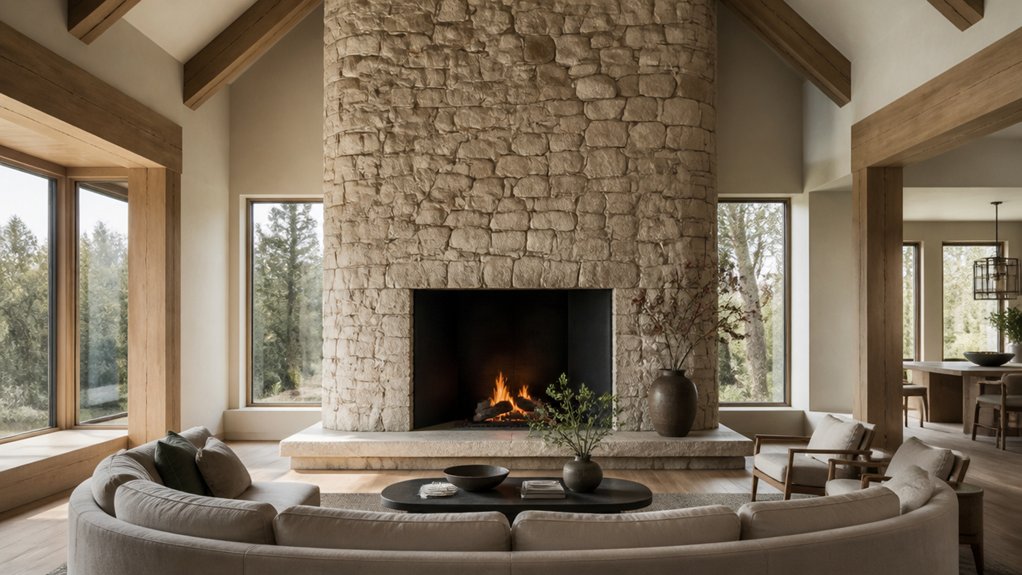
Start by deciding whether the fireplace should anchor the room or work with its architecture. That choice helps us recommend a stone and layout that suit the space. Irregular fieldstone creates a bold focal point, but its uneven faces and depths require careful fitting and can collect dust in crevices. Cut limestone gives you cleaner lines and more consistent joints; because it’s porous, it may need sealing and prompt cleanup if exposed to soot or spills.
We review stone samples in the room’s natural and artificial light, since color and texture can shift noticeably. Then we trace sightlines from entrances, seating, and adjoining spaces to confirm the fireplace’s placement and proportions. Before construction, we check framing, chimney routing, support requirements, and clearances. In the Mountain West, exterior stonework must also be detailed for freeze-thaw cycles, snow, wind, and strong UV exposure. We dry-lay the stones to balance joints, faces, and color before installation, then build and finish the surround as part of the project from quarry to completion. Permits, inspections, and code requirements vary by state and county; a structural engineer or other licensed professional may be needed where the design or building conditions call for one.
Set the Right Fireplace Scale for Your Room
Measure the wall, ceiling height, and seating area before setting the fireplace scale. We use those proportions to plan the firebox width, surround height, and hearth depth: a broad wall can carry a wider composition, while a low ceiling usually calls for a more restrained surround. Check the proposed layout from every seat, and mark its outline with tape to confirm sightlines and clearances.
Stone choice affects how large the fireplace feels. Large blocks and deep joints add visual weight and need enough wall area to read clearly; smaller units can suit tighter rooms or detailed surrounds. We also consider the stone’s weight, finish, and performance. Dense stone can be durable, but all materials and joints need suitable detailing for the installation and local conditions.
As Bluestone Masonry & Construction, we take projects from quarry to completion, including stone sourcing and cutting, construction, and interior finishing. Before work begins, we can refine dimensions and coordinate support requirements and clearances with your builder. Fireplace and structural work may require permits, inspections, and licensed professionals; requirements vary by state and county.
Match Stone Color and Texture to Your Décor
Once we’ve set the fireplace’s scale, we compare stone samples with the room’s flooring, cabinetry and upholstery. Check them in both daylight and artificial light: warm bulbs can bring out yellow or brown tones, while cool daylight may make gray stone look bluer. Color also varies between pieces, especially in natural stone, so review enough material to understand the range before installation.
Use contrast to define the fireplace without competing with strong wood grain or patterned fabrics. Split-face stone adds shadow and texture, but its uneven surface can collect dust and may be harder to clean. Smoother cuts suit rooms with layered finishes and are generally easier to wipe down. We also consider how the stone’s texture and finish will look under the fireplace lighting, which can emphasize surface variations.
In the Mountain West, the room’s interior light is only part of the decision. For stone that continues outdoors or sits near an exposed opening, we account for freeze-thaw cycles, snow, wind and strong UV exposure. Stone selection, detailing and installation all affect durability; exterior work may require appropriate flashing, drainage and mortar for local conditions. We check samples at different times of day and from across the room so the finished masonry feels balanced with the rest of the space.
Plan the Hearth, Mantel, and Surround
Plan the hearth, mantel, and surround as one assembly. We confirm the firebox specifications and applicable local codes before setting dimensions, because required hearth extensions and mantel clearances vary by appliance and jurisdiction. Permits, inspections, or review by a licensed professional may also be required; requirements differ across Wyoming and neighboring states.
Choose the hearth’s depth and height for its intended use: ember protection, floor protection, or a raised seating ledge. In a cold, windy Mountain West climate, use materials suited to temperature changes and follow the appliance maker’s requirements for noncombustible surfaces. Dense stone and marble can work well, but their weight, finish, and sensitivity to heat or staining matter. We check that the supporting structure can carry the load and that the hearth surface is practical to clean.
We coordinate the stone layout with the firebox opening and mantel line, then dry-fit pieces to review joints, cuts, veining, and visual balance before installation. Stone varies in color, texture, and how it cuts, so selecting and arranging pieces together helps achieve a consistent result. We anchor the mantel to suitable framing or engineered supports—not veneer alone—and use heat-rated materials with clean, durable transitions. As a Casper-based stone and marble masonry team, we take projects from quarry to completion, sourcing and cutting stone, building, and finishing interiors across Wyoming, Montana, Colorado, Idaho, Utah, Nebraska, and South Dakota.
Arrange Seating Around the Fireplace
With the hearth, mantel, and surround in place, we arrange seating to frame the fireplace while preserving safe clearances and clear walkways.
Arrange seating to frame the fireplace, keeping required clearances and walkways open.
We start by mapping traffic paths, then position the sofa and chairs so doors, windows, and hearth access stay unobstructed.
Place the main sofa opposite the stonework at a comfortable viewing distance, and set chairs at angles that support conversation without blocking circulation.
Use a rug to define the seating area, but keep it clear of the hearth’s required clearance zone.
Check sightlines from every seat and leave room for side tables and easy movement.
In a cold Mountain West home, also consider where snow-covered boots and coats will enter, and keep furnishings clear of any fireplace access or service areas.
Follow the fireplace manufacturer’s clearance requirements and applicable local codes; permits or inspections may be required, depending on the location and project.
Frequently Asked Questions
Can I Install a TV Above a Stone Fireplace?
Yes, you can mount a TV above a stone fireplace, but check the heat, viewing height, and wall structure before installation. Stone veneer alone may not provide a secure anchor; the mount needs to connect to suitable framing or other structural support. We recommend checking fireplace clearances and the mount manufacturer’s requirements, and consulting a qualified installer if the structure is unclear. Permit and code requirements vary by location.
How Often Should a Stone Fireplace Chimney Be Inspected?
We recommend having your stone fireplace chimney inspected once a year, ideally before heating season. A qualified chimney professional can check for creosote buildup, cracked mortar, loose stones, damaged flashing and liner defects. In Wyoming and the surrounding Mountain West, freeze-thaw cycles, snow and wind can accelerate wear on exposed masonry. We also recommend addressing any signs of water entry or damage promptly to help protect the chimney and surrounding stonework.
What Maintenance Keeps Stone Fireplace Masonry in Good Condition?
We recommend brushing soot from stone with a soft brush and checking the mortar joints regularly for cracks, gaps, or loose material. If joints are damaged, have them repointed with mortar compatible with the stone and original masonry; a mix that is too hard can damage softer stone as it expands and contracts. Keep water from entering the masonry, since freeze-thaw cycles in Wyoming and the surrounding Mountain West can widen small defects. Avoid harsh cleaners and pressure washing, which can erode stone or mortar. For persistent staining or significant damage, we can assess the fireplace and recommend a suitable cleaning or repair approach.
Can an Existing Fireplace Be Converted to Gas?
Yes, an existing fireplace can often be converted to gas, but the right approach depends on the firebox, chimney, and available gas supply. We recommend having a qualified, licensed professional inspect the setup and confirm whether it can accept a gas insert or burner. The work may require chimney or vent modifications, proper clearances, permits, and inspections; requirements vary by state and county. In Wyoming and other Mountain West locations, make sure the system is suitable for local conditions and installed to current codes.
What Permits Are Required to Install a New Fireplace?
We recommend checking with your local building department before installing a new fireplace. Depending on the appliance and scope of work, permits may be required for structural changes, chimney construction, and gas, electrical or other fuel connections. Requirements vary by state, county and local building code, so confirm which permits and inspections apply to your project. Structural changes may also require plans prepared or reviewed by a licensed professional, such as a structural engineer. Keep approved plans and permit documents onsite during construction.