
Marble adds natural veining and depth to modern spaces without relying on ornate detail. We install it on counters, walls, fireplaces, and floors, with the result shaped by slab selection, vein alignment, seam placement, and finish. Marble is softer and more prone to scratching and acid etching than many granites; sealing can help limit staining, but it will not prevent etching from acidic spills. Before choosing a slab, consider how its appearance, maintenance needs, and intended use fit your space. In the Mountain West, exterior marble also needs careful evaluation for freeze-thaw exposure, snow, wind, and UV. We take projects from quarry to completion, sourcing and cutting stone, building, and finishing interiors across the region.
Why Marble Works in Modern Interiors
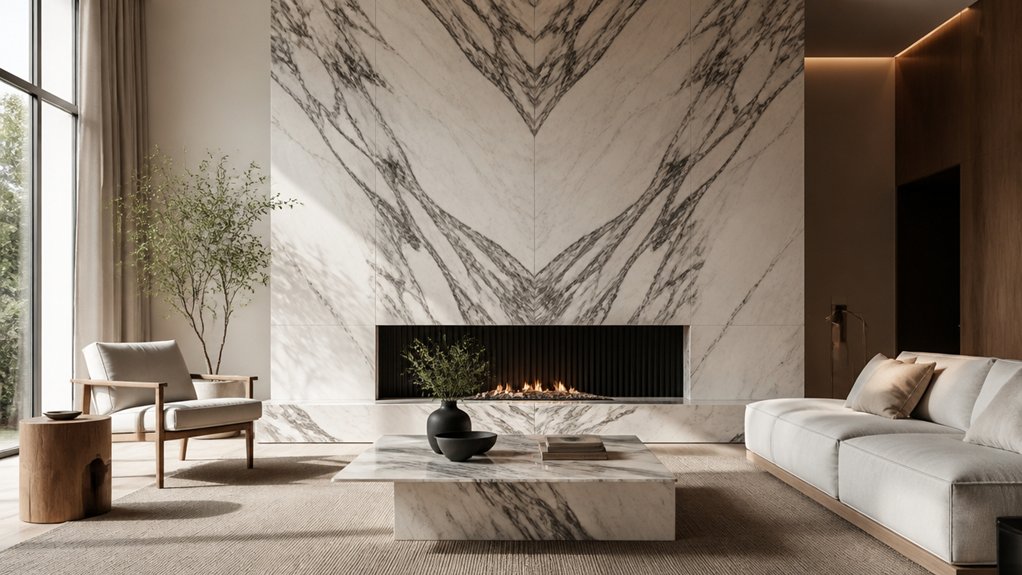
Marble works in modern interiors because its natural veining adds depth without ornate detailing. We use it for kitchen counters, bathroom walls, fireplace surrounds, and entryways, pairing the stone’s pattern with clean lines and simple finishes. As stone and marble masons based in Casper, Wyoming, we take projects from quarry to completion: sourcing and cutting stone, building, and finishing interiors across Wyoming, Montana, Colorado, Idaho, Utah, Nebraska, and South Dakota.
Marble is durable, but it can scratch, stain, and etch when exposed to acids such as lemon juice or vinegar. A honed finish reduces glare and can make small scratches less noticeable, though it may absorb stains more readily. A polished finish reflects more light and is generally easier to wipe clean, but etching can stand out. When comparing a honed and polished surface, consider how the room is used, how much maintenance you’re prepared to do, and whether the finish is suitable for floors where wet shoes or snow may create a slip hazard.
We inspect slabs for veining, color, and natural variation, then plan cuts and seams to suit the layout. Proper support, substrate preparation, and secure installation matter, especially for large-format stone and heavy countertops. In the Mountain West, indoor marble is less exposed to freeze-thaw than exterior stone, but cold, dry conditions and strong sunlight can still affect surrounding materials and finishes. We recommend sealing where appropriate and following the stone supplier’s care guidance. For structural work or installations subject to local requirements, permits, inspections, building codes, or a licensed professional such as a structural engineer may be required; requirements vary by state and county.
Choose Marble Colors and Veining
We start with the room’s fixed finishes and natural light. Warm marble tones often work well with wood and brass; cooler whites and grays tend to suit crisp cabinetry and steel. Compare full-size samples with your cabinet and flooring samples in the actual room. Daylight, altitude, window orientation, and warm LED lighting can all change how a marble’s undertones appear.
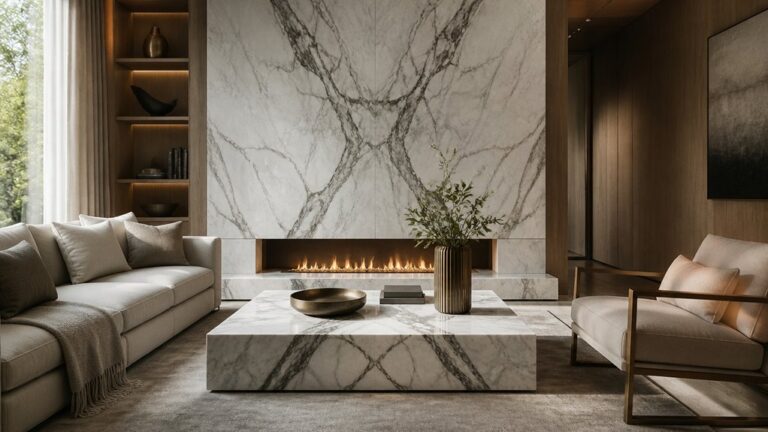
Next, review the veining at full-slab scale. Broad, directional veins can make an island or fireplace surround a focal point, while finer, quieter lines often keep a compact room feeling composed. For book-matched panels, we confirm how the veins will align across the seam before fabrication. We also mark the planned cuts on the slab so prominent veins can be positioned deliberately around sinks, islands, edges, and other visible features.
Marble is softer and more porous than many granites and quartzites, so it can scratch, etch from acids, and stain if spills are left on the surface. Sealing helps limit absorption but doesn’t prevent etching or eliminate routine care. We’ll discuss the stone’s expected use, finish, and maintenance needs before fabrication, then plan the installation around the slab’s weight, support, and seam locations. For exterior work in Wyoming and the Mountain West, freeze-thaw exposure, snow, wind, and strong UV can affect stone selection and installation details; the right choice depends on the application and local conditions.
Weigh Marble’s Cost and Upkeep
We price marble based on its grade, thickness, slab size, availability, and the work needed to cut, fabricate, and install it. Veining, edge details, layout, and site access can also affect the total. As stone and marble masons serving the Mountain West, we take projects from quarry to completion, including sourcing, cutting, building, and finishing.
Marble needs routine care: seal it as recommended for the specific stone, clean it with a pH-neutral product, and wipe up acidic spills promptly to help prevent etching. In cold, snowy areas, use marble only where its finish and installation suit the exposure; freeze-thaw cycles, moisture, and UV can affect exterior stone. Weigh those care and installation needs against marble’s durability and the value it brings to your space.
Initial Material Costs
Marble’s initial material cost depends on more than the stone. We consider the quarry, grade, thickness, finish, slab size, and how much selection and cutting the project requires. Rare veining and consistent color can cost more; standard grades may offer more flexibility. We source and cut stone as part of our work from quarry to completion, so we can help you compare options before you order.
Measure carefully and account for fabrication, transport, edge profiles, and installation—not just the slab. Ask for the slab dimensions and, when possible, inspect the full slabs. Small samples may not show the variation in color and veining across a larger piece. Before ordering, confirm substrate requirements, support, and installation details with your mason or builder. In the Mountain West, outdoor marble also needs careful consideration of freeze-thaw exposure, snow, and UV; the stone and finish must suit the location. These checks help you compare bids fairly and reduce the risk of shortages or mismatched pieces.
Sealing and Maintenance
Sealing can help reduce staining, but it doesn’t make marble maintenance-free. Marble’s porosity and finish affect how it absorbs sealer, so choose a product suited to the stone and test it in an inconspicuous spot first. Apply it evenly to a clean, dry surface, and allow the full cure time listed by the manufacturer before using the area.
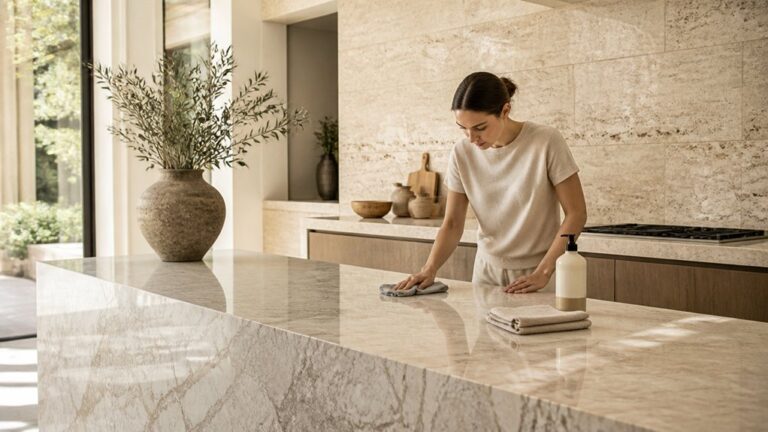
For routine care, wipe up spills promptly. Acidic liquids such as citrus juice can etch marble, especially polished surfaces. Clean with a pH-neutral product and a soft cloth; avoid acidic cleaners and abrasive pads, which can damage the finish. Check the surface periodically and reseal when water no longer beads on it, following the sealer manufacturer’s guidance. Deeper etching or scratches may require professional honing.
We work with marble and other stone from quarry to completion, including sourcing, cutting, installation, and interior finishing. In Mountain West homes, protect marble from tracked-in snow, grit, and deicing salts, and use entry mats to limit abrasion. For exterior stone, freeze-thaw exposure, wind, and strong UV can affect material selection and detailing; proper drainage and installation matter as much as sealing.
Long-Term Value
We look at long-term value as more than the purchase price. The right marble depends on how you use the space, the finish you prefer, and how much maintenance you’re prepared to do. Polished marble reflects light but shows etching and scratches more readily; honed marble has a softer look and can make everyday wear less noticeable. Neither finish is maintenance-free, and acidic spills can etch marble.
We help you account for the full installation: stone selection and cutting, substrate and support, fabrication, setting, sealing, and ongoing care. In Mountain West conditions, exterior stone also needs detailing suited to freeze-thaw cycles, snow, wind, and strong UV exposure. Marble’s suitability outdoors depends on the specific stone, finish, location, and installation—not just its appearance.
Before you commit, ask us about slab consistency, expected maintenance, repair options, and realistic service life. We take projects from quarry to completion across Wyoming, Montana, Colorado, Idaho, Utah, Nebraska, and South Dakota, and can help you weigh a classic stone against changing design preferences. Proper support and precise fabrication help reduce the risk of cracks and costly repairs. Depending on the project, permits, inspections, local codes, or a licensed structural engineer may be required; requirements vary by state and county.
Where Marble Works Best at Home
Marble works well for kitchen countertops and backsplashes, but it can stain or etch from spills and acidic foods. We recommend sealing it and wiping spills promptly; sealing slows absorption but doesn’t make marble stain-proof. For busy kitchens, compare marble with harder, less reactive stones such as granite or quartzite.
In bathrooms, marble suits vanities, shower walls and floors when the finish, waterproofing and installation are matched to the use. Choose a slip-resistant finish for floors, and make sure the substrate, waterproofing membrane, drainage and movement joints are handled correctly. We source, cut and install stone as part of our work from quarry to completion, and can help you weigh appearance against maintenance and exposure. In Mountain West homes, account for temperature swings and seasonal conditions where stone meets exterior walls or unheated spaces. Seal and care for each surface according to its stone type and finish.
Marble in Kitchens
Marble works well as a backsplash, island surround, or countertop in a lower-use area, where its veining can add character without constant abrasion. For a kitchen work surface, we often recommend a honed finish: it reduces glare and makes small scratches less noticeable, though it can absorb stains if it isn’t sealed and maintained properly. Polished marble brings out the stone’s color, but etching from acids such as lemon juice or vinegar is easier to see.
Before fabrication, we inspect the slabs and plan seam placement so the veining carries across the finished surface where possible. We also ease exposed edges to help limit chipping. The right stone thickness and cabinet support matter, especially for a large island or overhang; a structural engineer may be needed if the design places unusual loads on the cabinets or supports. We source, cut, build, and finish stone from quarry to completion, coordinating with your builder on dimensions and installation details.
Seal marble as recommended for the specific stone, wipe spills promptly, and use cutting boards and trivets. With regular care, marble can serve well in a kitchen, but it will develop wear over time. In Mountain West homes, indoor marble isn’t directly exposed to freeze-thaw, snow, or high-altitude UV in the way exterior stone is; exterior applications require stone and installation details suited to local weather and building codes. We’re stone and marble masons based in Casper, Wyoming, serving Wyoming, Montana, Colorado, Idaho, Utah, Nebraska, and South Dakota.
Marble in Bathrooms
Bathrooms are a practical place to use marble on vanity tops, shower walls, floors, thresholds, and ledges. We select each piece for its intended use: marble varies in porosity, hardness, and veining, and some varieties are more prone to etching from acidic cleaners and toiletries. A suitable sealer can help reduce staining, but it doesn’t make marble waterproof or prevent etching. Wipe up spills promptly, use pH-neutral stone cleaners, and follow the sealer manufacturer’s maintenance guidance.
In showers, we slope the floor toward the drain and choose a finish that provides suitable traction when wet. Smaller tiles can offer more grout joints for footing, but grout needs regular cleaning and maintenance. We plan the layout around slab dimensions, veining, corners, niches, and grout lines so the pattern reads cleanly. Thresholds and ledges need sound support, carefully finished edges, and details that direct water back into the shower.
Bathroom lighting affects how marble looks: polished stone reflects more light, while honed stone reduces glare and has a softer feel. We review samples in the room’s actual lighting before settling on a finish. From quarry to completion, we source and cut stone, build, and finish interiors for high-end projects across Wyoming, Montana, Colorado, Idaho, Utah, Nebraska, and South Dakota. Based in Casper, Wyoming, and founded in 2013, our Bluestone Masonry & Construction team accounts for local conditions such as hard water and seasonal temperature swings when advising on stone selection and care.
Pair Marble With Wood and Metal
Marble’s cool veining contrasts well with wood’s warmth and metal’s clean lines. We recommend balancing the patterns: pair strongly veined marble with a quieter wood grain, or let expressive timber complement more subtle stone. Oak and walnut are common choices for cabinetry; consider how their color and finish will look in the room’s natural and artificial light.
For metal accents, brushed steel offers a restrained finish, while aged brass adds warmth. You can mix metals, but repeat each finish deliberately and choose one as the dominant accent. Align edges, maintain consistent reveals, and plan clean transitions where stone, wood, and metal meet.
Marble is heavy and can be brittle at unsupported edges, so confirm cabinet support and use an experienced fabricator and installer.
In Mountain West homes, protect exterior stone and metal details from moisture and freeze-thaw exposure, and account for strong UV and temperature swings when selecting finishes. We take projects from quarry to completion, coordinating stone sourcing and cutting with construction and interior finishing across the region.
Protect Marble From Stains and Etching
Marble is porous, so it can absorb spills, and acids such as lemon juice and vinegar can etch its surface.
Blot spills promptly with a soft cloth rather than wiping them across the stone.
For routine cleaning, use warm water and a pH-neutral stone cleaner, then dry the surface to limit residue.
Protect marble with coasters, cutting boards, and trays under oils, cosmetics, and colored products.
Use nonabrasive pads to avoid scratches.
A compatible penetrating sealer can help reduce staining, but it won’t make marble stain-proof or protect it from acid etching.
Follow the sealer manufacturer’s instructions and test it in an inconspicuous spot first.
We recommend choosing cleaning and sealing products specifically labeled for marble; harsh or unsuitable products can damage the finish.
Frequently Asked Questions
How Is Marble Quarried and Processed Before Installation?
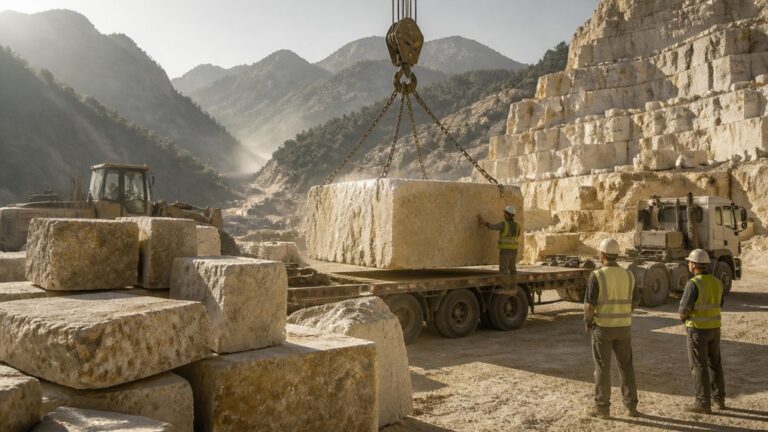
We begin by surveying the marble deposit and selecting sound stone with the color, veining, and structure suited to the project. At the quarry, we use wire saws or diamond tools to separate large blocks, then square them for transport. In the shop, we saw the blocks into slabs, polish or hone the surfaces, inspect for flaws, and cut each piece to the required dimensions.
Before installation, we check the stone’s thickness, finish, and intended use so the right support and setting method are in place. Marble can scratch, stain, and weather differently depending on its composition and finish, so exterior pieces also need detailing that manages water and freeze-thaw exposure. As the Bluestone Masonry & Construction team, based in Casper, Wyoming, we take projects from quarry to completion across Wyoming, Montana, Colorado, Idaho, Utah, Nebraska, and South Dakota—sourcing and cutting stone, building, and finishing interiors. We plan transport and installation carefully to protect the stone and account for site access, weather, and applicable local requirements.
Can Marble Flooring Be Installed Over Radiant Heating?
Yes. We install marble over radiant heating when the heating system and stone assembly are designed to work together. Marble conducts heat well, but it can crack if the substrate moves or the temperature changes too quickly.
Before installation, we check the heating manufacturer’s temperature limits, confirm the subfloor and underlayment are suitable, and use a mortar rated for radiant heat and natural stone. The stone should be acclimated to the room, and the heating system should be turned off during installation and brought back up gradually after the mortar and grout have cured, following their manufacturers’ instructions.
In Wyoming and the broader Mountain West, reliable heat control matters during cold weather: avoid sudden temperature swings, and use a thermostat with a floor sensor where the system calls for one. We also plan the layout carefully, since marble’s veining and texture can vary from piece to piece. Our team can assess the stone, heating system, and floor assembly before work begins.
How Can I Verify That Marble Is Ethically Sourced?
We verify ethical marble sourcing by asking suppliers for the quarry’s location, ownership and labor practices, then checking that documentation against the stone being delivered. We review current third-party certifications and audit records, environmental permits, and chain-of-custody documents from quarry to fabricator. We also confirm that records identify the specific source, not just the supplier’s general practices. If the origin is unclear, documents are missing or claims cannot be independently verified, we do not treat the marble as responsibly sourced.
Does Marble Improve a Home’s Resale Value?
Yes, marble can support a home’s resale value, but the result depends on the local market, the stone’s condition, and the quality of the installation. Buyers are more likely to value marble when it suits the home and is well maintained. Marble is softer and more prone to scratching, staining, and etching than many granites, so choose the finish and location with care. We recommend sealing it as appropriate for the stone and following the supplier’s maintenance guidance. In the Mountain West, indoor marble is generally less exposed to freeze-thaw and UV than exterior stone; outdoor installations need stone and details suited to local weather. At Bluestone Masonry & Construction, we take projects from quarry to completion, including stone sourcing, cutting, building, and interior finishing.
Can Damaged Marble Be Professionally Restored?
Yes. We restore damaged marble by first identifying whether the problem is staining, etching, cracking, or chipping, since each requires a different repair. Depending on the damage and the marble’s finish, we may clean and hone the surface, polish it, fill a chip, or repair a crack. We’ll explain what can be improved and whether the repair may remain visible. Ask about our experience with similar marble, the proposed finish, and whether sealing is appropriate; sealer can help resist some stains, but it won’t prevent etching or eliminate the need for care.