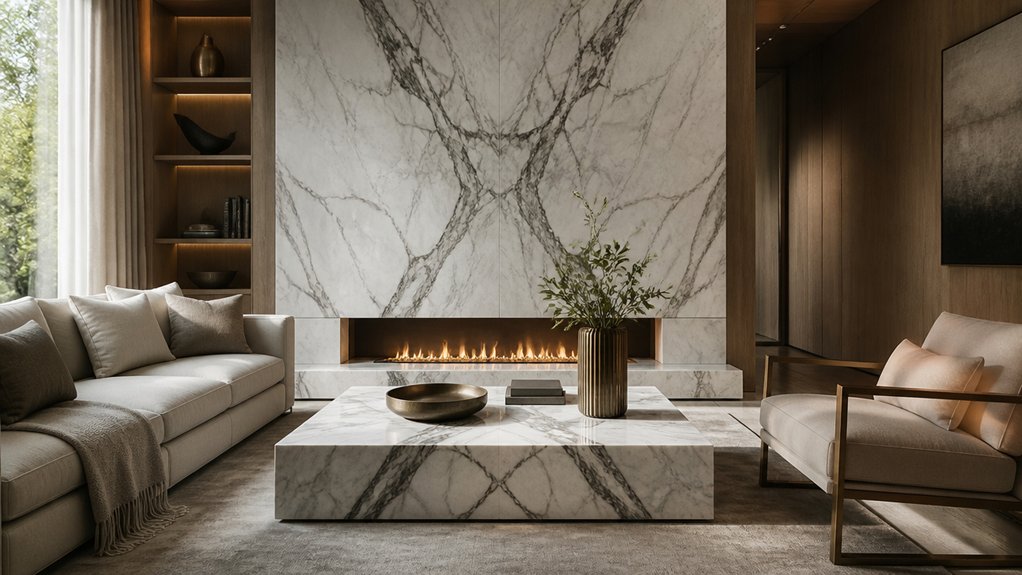
Marble can anchor an interior when its veining, weight, finish, and location are considered together. We dry-lay book-matched slabs before installation to check the pattern and plan seams, then confirm that the substrate and supports can carry the stone. Marble is softer and more prone to scratching and etching than many granites, so we recommend a honed finish where glare is a concern and protective mats in high-use areas. Use a compatible sealer, clean spills promptly, and avoid acidic cleaners. In bathrooms, we plan drainage and waterproofing carefully; in kitchens, we account for cutouts, edge details, and support around overhangs. Our Bluestone Masonry & Construction team takes stone projects from quarry to completion, sourcing and cutting material, building, and finishing interiors across the Mountain West.
Bring Marble Into the Kitchen
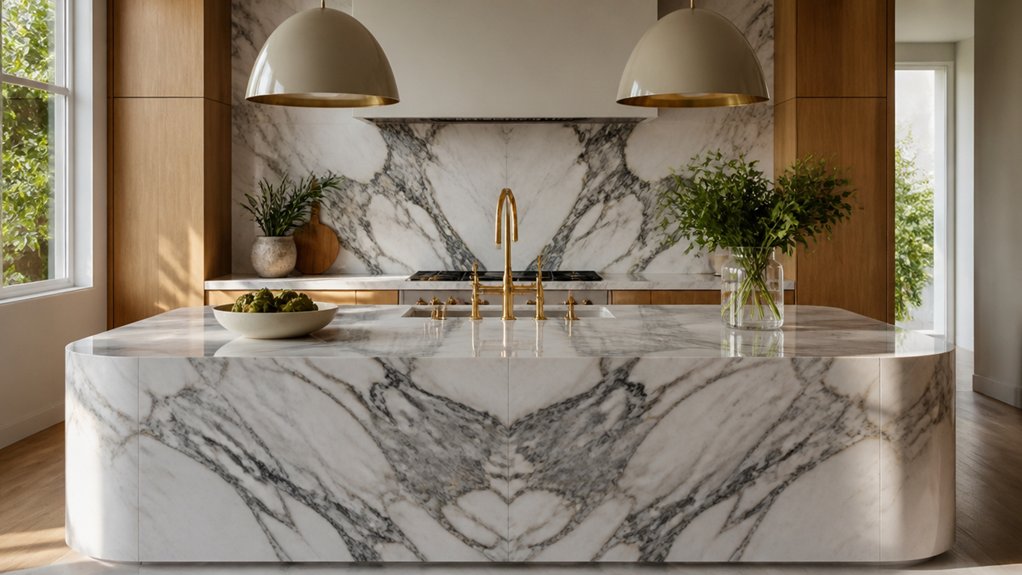
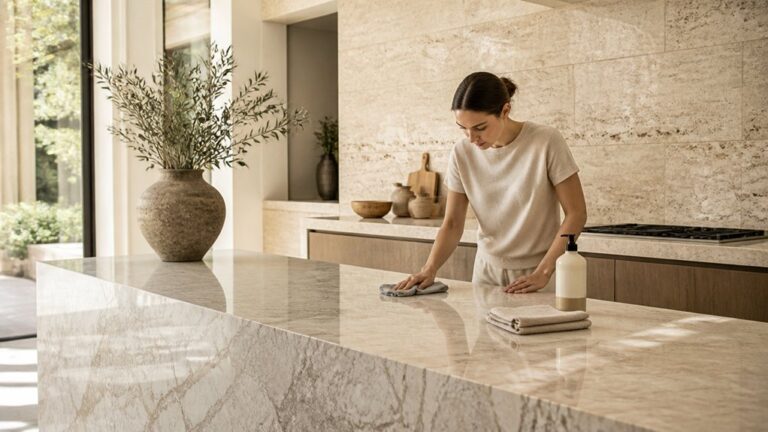
We plan marble kitchen counters around how you cook, where you prep, appliance clearances, and the size of the slabs. Careful layout can reduce seams, but marble’s natural veining and available slab dimensions also affect where joints will fall. We template the counters on site, check support around sinks and cooktops, reinforce cutouts as needed, and finish exposed edges to work with the cabinetry.
Marble offers a cool work surface and distinctive veining, but it’s softer and more prone to scratching and etching than many granites. A honed finish reduces glare and can make small scratches less noticeable; a polished finish brings out the stone’s color and pattern but makes etching easier to see. No marble is stain-proof, so choose the specific slab with its porosity and intended use in mind. We recommend sealing as directed for that stone, wiping spills promptly, and using cutting boards and trivets.
Marble’s beauty comes with care: choose a finish that suits your kitchen, seal as directed, and wipe spills promptly.
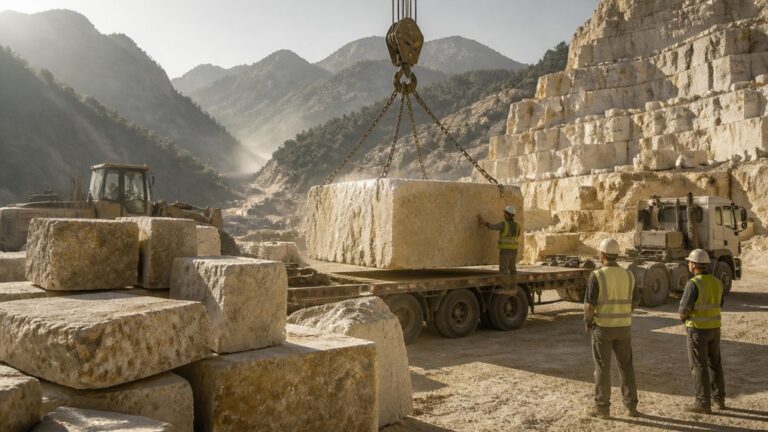
As stone and marble masons based in Casper, Wyoming, we take projects from quarry to completion: sourcing and cutting stone, building, and finishing interiors. For a kitchen, that means coordinating the slab, cabinet support, seams, sink and cooktop cutouts, and installation before fabrication begins. We work across Wyoming, Montana, Colorado, Idaho, Utah, Nebraska, and South Dakota, where dry conditions, altitude, and strong UV can affect materials and finishes. Marble counters are indoors, but exterior stonework and transitions around doors or windows must also account for wind, snow, and freeze-thaw exposure. Permit and inspection requirements vary by state and county; consult local officials and licensed professionals when the project requires them.
Add Marble Accents to Bathrooms
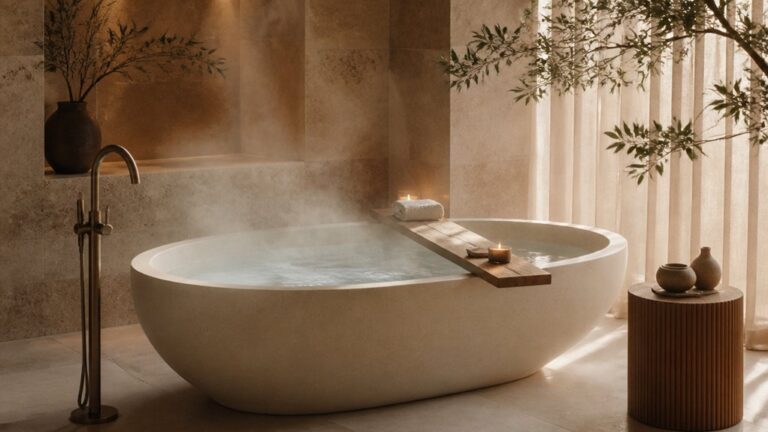
In bathrooms, we install marble vanity tops for a durable, easy-to-clean surface when they’re properly sealed and maintained. Marble can etch or stain from acidic products, so wipe spills promptly and use a pH-neutral cleaner.
For shower details, we can fit marble niches, thresholds, or wall panels, taking care to support the stone and align veining across joints. Because polished marble can be slippery when wet, choose a slip-resistant finish for shower floors and confirm the material is suitable for that use.
Good waterproofing beneath the stone is essential; follow the product requirements for sealing and maintenance.
Marble Vanity Tops
A marble vanity top gives a bathroom natural veining and a durable surface when the stone is selected and installed carefully. We help homeowners and builders choose a slab that works with the cabinetry, sink, and overall design, then template and cut the sink, faucet, and backsplash openings to fit.
Marble is softer and more porous than many granites, so it can etch when exposed to acidic products and may show water marks. A honed finish reduces glare and can make small etches less noticeable; a polished finish brings out the veining but makes marks easier to see. We recommend eased edges for a clean, practical profile and confirming that the cabinet and supports can carry the stone’s weight before installation.
We seal the surface as appropriate for the stone and finish, then advise cleaning with a pH-neutral product, avoiding abrasive pads, and wiping spills promptly. Resealing needs vary, so follow the sealer manufacturer’s guidance and the stone’s condition. As stone and marble masons based in Casper, Wyoming, we take projects from quarry to completion, sourcing, cutting, building, and finishing across Wyoming, Montana, Colorado, Idaho, Utah, Nebraska, and South Dakota.
Elegant Shower Details
Marble can add natural veining to a shower niche, bench, curb or feature wall. We select slabs for consistent color and vein direction, then dry-lay the pieces before installation to plan how the pattern will meet at seams. Marble varies in hardness and porosity, so we assess each slab and finish for the location. Honed marble is generally a better choice underfoot than polished stone, which can be slippery when wet; polished finishes can work well on vertical surfaces.
A sound installation starts with a properly prepared substrate and a continuous waterproofing system behind the stone. We slope benches and other horizontal surfaces toward the drain, and seal changes of plane with a compatible flexible sealant rather than grout. Grout joints should be narrow enough to suit the tile while allowing for installation tolerances and the stone’s natural variation.
For care, use a pH-neutral cleaner, wipe away standing water, and reseal when the stone or sealer manufacturer recommends it. These steps help limit etching and mineral deposits, though marble can still develop wear and patina over time. We take projects from quarry to completion, sourcing and cutting stone through building and interior finishing. Our team has worked across Wyoming and the Mountain West since 2013; for a shower, we coordinate the stone details with the waterproofing and plumbing trades before installation.
Make a Statement With Marble Walls
A marble wall can give a room a strong architectural focal point, but the stone, layout, and support all need to suit the space. We’re Bluestone Masonry & Construction, stone and marble masons based in Casper, Wyoming. Since 2013, we’ve taken projects from quarry to completion across Wyoming, Montana, Colorado, Idaho, Utah, Nebraska, and South Dakota—sourcing and cutting stone, building, and finishing interiors.
Marble varies in hardness, porosity, and veining. Dark or strongly veined slabs can show etching and surface wear more readily than some lighter, less active patterns. Before selecting slabs, review the actual pieces and plan how their veining will meet at seams. Dry-laying the slabs helps us confirm book-matched patterns, cuts, and edge details before installation.
Review the actual slabs and plan their veining, seams, cuts, and edges before installation.
A marble wall is heavy. The wall framing, substrate, anchors, and any concealed support must be appropriate for the stone and installation method. We coordinate with the fabricator and, when needed, a structural engineer. Permits, inspections, and code requirements vary by state and county, so confirm local requirements with the relevant building department and licensed professionals.
- Choose honed marble to reduce glare in bright rooms; polished marble reflects more light and may show fingerprints and surface marks.
- Use a stone-compatible setting system and seal the marble as recommended for that specific stone and finish. Sealer can reduce staining but won’t prevent etching.
- In Mountain West homes, account for strong UV at altitude, wind-driven moisture, and seasonal indoor humidity changes. For exterior stone, freeze-thaw exposure and snow loads also affect material choice, anchoring, drainage, and detailing.
A restrained furnishing palette lets the stone’s natural variation lead the design. Fine joints and grazing light can reveal the surface, but lighting should be positioned to avoid harsh glare on polished marble. We plan the slab layout, support, and finish together so the wall works as well in daily use as it does in the drawings.
Choose Marble Tables and Sculptural Accents
Where should marble make its mark beyond the walls? We recommend starting with a table sized for the room and its daily use. A honed marble coffee table has a softer, low-glare finish and can make light etching less noticeable than a polished surface. A veined marble dining top puts the stone’s pattern on display, but it also needs regular care: marble can etch from acids such as lemon juice and may stain if spills are left to soak in.
Before installation, check the slab thickness, edge profile, and support. Marble is heavy, so the base and floor must be able to carry its weight; large or unusually shaped pieces may need a qualified installer to plan safe handling and placement. In a cold Mountain West home, keep indoor stone furnishings protected from tracked-in snow and deicing salts, which can damage finishes or nearby flooring.
For sculptural accents, consider a carved stool, pedestal, or abstract form with a stable base and a clear silhouette. We source and cut stone, then build and finish interiors from quarry to completion. Let the marble’s veining guide its placement, and pair it with simpler materials so the stone remains the focus. Use coasters and felt pads, clean with a pH-neutral stone cleaner, and avoid acidic or abrasive products. We’re Bluestone Masonry & Construction, stone and marble masons based in Casper, Wyoming, serving projects across the Mountain West and surrounding states.
Add Marble to Shelves, Sills, and Small Details
We often recommend marble for shelves, window sills, and short ledges when you want natural veining without covering a large area. Marble is softer than many granites and can scratch, stain, or etch when exposed to acidic cleaners, so it works best where you can protect and maintain the surface.
Choose the thickness and edge profile to suit the shelf’s span and intended use. Longer shelves may need concealed reinforcement to limit deflection. We check that brackets, backing, and wall attachments can support the stone’s weight; in some cases, a structural professional may be needed. For window sills, confirm the depth and slope so water drains away from the window rather than collecting at the frame. In the Mountain West, account for snow, wind-driven moisture, and freeze-thaw exposure wherever a sill or ledge is near an exterior opening.
We source and cut stone, then build and finish the installation as part of our work from quarry to completion. Before fabrication, we use precise templates to help achieve a close, even fit. Sealing may reduce staining on exposed marble, but it won’t prevent etching or eliminate the need for care.
- Wipe spills promptly with a soft cloth and a pH-neutral cleaner.
- Avoid acidic products, which can etch calcite in marble.
- Ease exposed edges to help limit chipping.
- Confirm that supports and attachments are suitable for the stone’s weight.
For exterior work, check applicable permits, inspections, and local building codes. Requirements vary by state and county.
Style Marble in Interior Design With Warmth
We make marble feel warm by pairing its cool surface with tactile materials such as oak, wool, linen, or aged brass. A honed or leathered finish softens reflections and brings out the stone’s natural grain; polished marble is more reflective and can show scratches and etching more readily. Match undertones, too: cream marble works well with honey-toned timber, while gray veining pairs naturally with smoked oak and muted textiles.
Plan transitions before installation. Align a marble hearth or countertop with nearby wood edges, and use slim, well-detailed reveals instead of bulky joints. Marble is heavy and can be brittle at narrow edges, so the substrate, support, and cutouts need to be planned for the slab and the intended use. In a cold Mountain West home, protect exterior stonework from water that can freeze and thaw, and account for snow, wind, and strong UV exposure where relevant. Indoors, warm, adjustable lighting can bring out the veining without making the stone feel stark.
As Bluestone Masonry & Construction, we take projects from quarry to completion: sourcing and cutting stone, building, and finishing interiors. From our base in Casper, Wyoming, we work across Wyoming, Montana, Colorado, Idaho, Utah, Nebraska, and South Dakota. We can help select marble and finishes that suit the design, installation conditions, and maintenance needs. Sealers may reduce staining, but they don’t prevent etching from acids; follow the stone and sealer manufacturer’s care guidance. Exterior work may require permits, inspections, or engineering review, depending on local codes and conditions.
Frequently Asked Questions
How Do You Seal Marble to Protect It From Stains?
To seal marble, start with a clean, completely dry surface. Apply a penetrating sealer formulated for marble with a lint-free cloth, working evenly and following the product’s instructions for dwell time. Wipe away all excess before it dries, then allow the sealer to cure fully. Sealer can reduce staining, but it does not make marble stainproof or protect it from etching caused by acids. Test the product in an inconspicuous area first, and reseal when water no longer beads on the surface.
How Often Should Marble Surfaces Be Resealed?
We recommend resealing marble about every six to twelve months, but the right interval depends on the stone, sealer, and how heavily the surface is used. In kitchens and bathrooms, check more often. If water no longer beads on a clean, dry area, the sealer may need attention. Test in a discreet spot, and follow the sealer manufacturer’s instructions. Sealer helps slow staining; it does not make marble stainproof or prevent etching from acids. As we assess marble finishes and color-matching options, we also consider the stone’s use and maintenance needs.
What Cleaning Products Are Safe to Use on Marble?
For marble, we recommend a pH-neutral cleaner formulated for natural stone, or mild dish soap diluted in warm water. Clean with a soft cloth, rinse away any residue, and dry promptly to help prevent water spots. Avoid vinegar and other acids, abrasive pads or powders, bleach, and ammonia, which can dull or damage marble’s surface.
Can Marble Be Repaired if It Chips or Cracks?
Yes, we can often repair chipped or cracked marble. For a small chip, we clean the area, fill it with a color-matched stone epoxy, and shape and polish the repair to blend with the surrounding surface. The match may remain visible, especially in marble with strong veining.
Cracks need a closer assessment. We can sometimes stabilize a fracture, fill and blend the seam, then refinish the surface. If the marble is loose, the crack is spreading, or the damage affects a countertop support or other structural element, the underlying cause must be addressed before repair. In those cases, we may recommend replacement or evaluation by a qualified professional.
We’re the Bluestone Masonry & Construction team, stone and marble masons based in Casper, Wyoming. Since 2013, we’ve worked on high-end construction across Wyoming, Montana, Colorado, Idaho, Utah, Nebraska, and South Dakota, taking projects from quarry to completion—from sourcing and cutting stone to building and finishing interiors. Before repairing marble, we consider the stone’s pattern, location, finish, and exposure to help determine the most practical approach.
How Can You Tell Natural Marble From Engineered Alternatives?
We look for natural marble’s irregular veining, subtle color shifts, and occasional mineral deposits. Engineered alternatives often have more consistent patterns, though quality varies. Check several areas of the slab and its edge: natural veining may continue through the stone, while a printed or surface pattern may not. These clues are useful, but they are not conclusive—ask the supplier to confirm the material and its source.
Before choosing marble, consider where it will be installed. Marble can scratch, etch from acids, and absorb stains, so it needs appropriate sealing and regular care. For exterior work in Wyoming and the surrounding Mountain West, ask about the stone’s suitability for freeze-thaw exposure, snow, wind, and strong UV. We source, cut, build, and finish stone projects from quarry to completion, and can help you compare materials for the application.