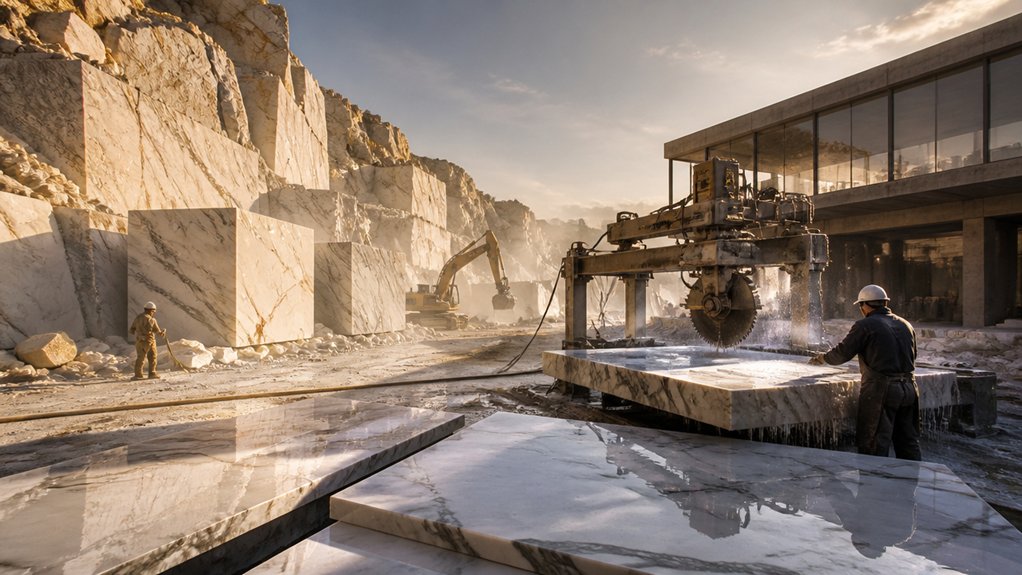
When we specify marble, we look beyond color and finish. We assess the block’s soundness and veining, then plan cuts to make the best use of the stone and achieve a consistent layout. Marble varies in hardness and porosity, so the right finish, setting materials, and sealing plan depend on the stone and where it will be installed.
Before installation, we check that the substrate is stable and that the mortar is compatible with the marble. In Wyoming and across the Mountain West, exterior work also needs to account for freeze-thaw cycles, snow, wind, strong UV exposure, and temperature swings. We take projects from quarry to completion—sourcing and cutting stone, building, and finishing interiors—so these decisions are coordinated before the stone reaches the job site. Exterior work may require permits, inspections, or review by a licensed professional; requirements vary by state and county.
How Marble Is Selected and Cut at the Quarry?
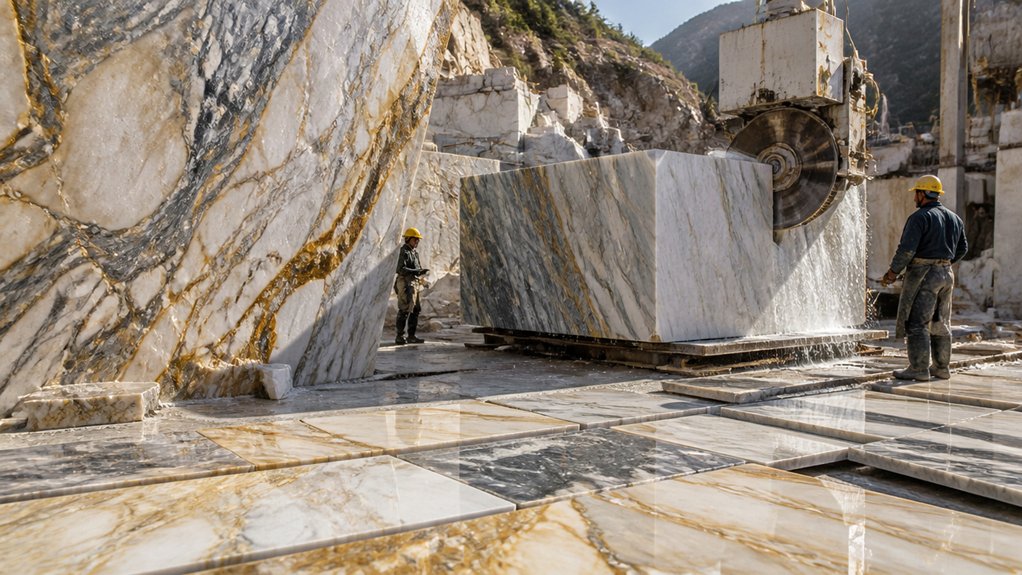
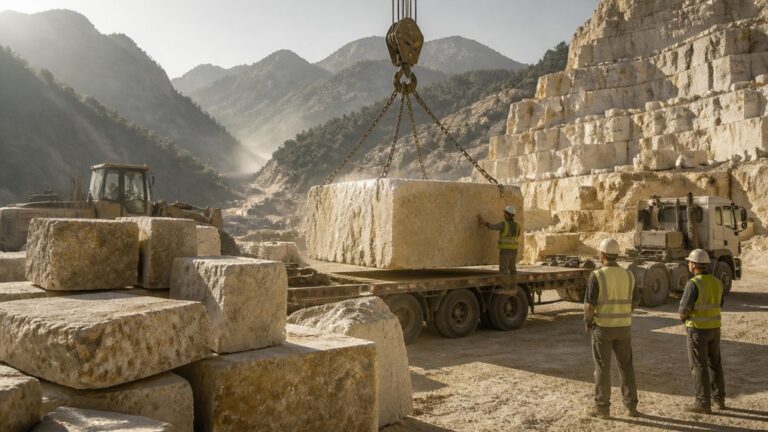
At the quarry, we assess each marble deposit for color, veining, soundness, and the size of blocks that can be safely recovered. We look for fractures, weak seams, and other flaws that could affect cutting, transport, or performance in the finished work. Marble varies from block to block, so we check whether its structure and appearance suit the intended application.
The project design helps determine how we cut the stone. Depending on the deposit and block size, we may use diamond wire or a chain saw to separate sound sections while limiting waste and damage. Before extraction, we review exposed faces and plan cuts to coordinate veining across adjacent pieces. That planning matters for both appearance and fit, especially when slabs will be book-matched or used in a continuous interior finish.
We also consider where the marble will be installed. In the Mountain West, freeze-thaw cycles, snow, wind, and strong UV exposure can affect exterior stone. Marble’s suitability depends on its specific characteristics, finish, detailing, and maintenance needs. We plan sourcing and cutting as part of our work from quarry to completion, so the stone arrives ready for fabrication, installation, and finishing.
How Quarry Blocks Become Marble Slabs?
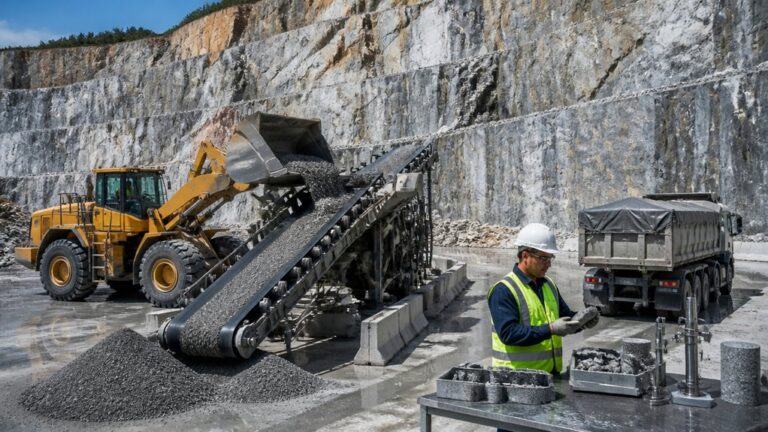
When quarry blocks reach our processing plant, we inspect them again before cutting. We check each block’s dimensions, visible cracks, and structural soundness, then record its origin and grade. That documentation helps us track stone from quarry to completion and make informed decisions about how to cut it.
We remove loose debris and set each block on a stable bed with lifting equipment rated for its weight. Then we align it with the cutting system and verify that the restraints are secure. Careful setup matters: natural stone can contain variations or hidden fractures that affect how it cuts and which parts are suitable for slabs. These checks help us convert the block safely and consistently for the next stage of fabrication and installation.
How Marble Slabs Are Cut and Finished?
After cutting, we calibrate each marble slab to a consistent thickness and finish its surface to suit the project. Milling removes high spots and brings the slab to the specified dimensions. We check thickness with gauges and correct variations before polishing, since uneven slabs can create problems during fabrication and installation.
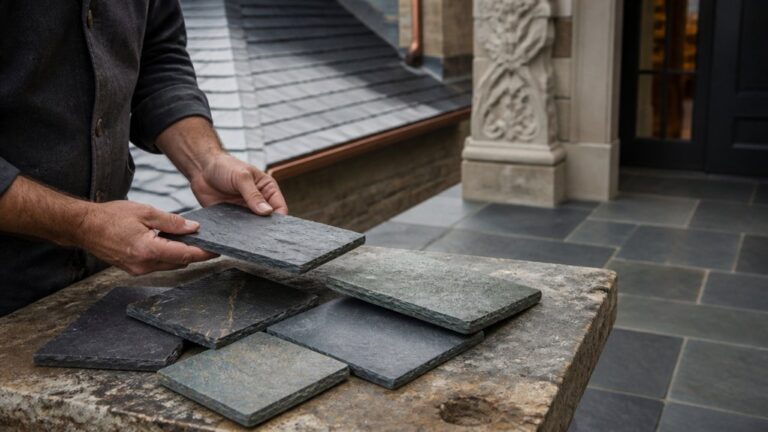
For a polished finish, we work through progressively finer abrasives to smooth the surface and bring out the marble’s natural veining. We can also produce honed, brushed, or textured finishes when a lower sheen or more surface character is preferred. Each finish affects how the stone looks and how readily it shows marks, so we help you choose based on where the marble will be used and how it will be maintained.
Before a slab leaves our shop, we inspect its faces, edges, and corners for chips, scratches, and inconsistencies. We then label and protect approved slabs for transport. As stone and marble masons based in Casper, Wyoming, we take projects from quarry to completion across Wyoming, Montana, Colorado, Idaho, Utah, Nebraska, and South Dakota. In the Mountain West, we also account for factors such as UV exposure and temperature changes when selecting stone and planning its installation.
How Marble Is Installed and Protected?
We install marble by starting with a stable, level substrate designed to support the stone and its expected loads. As stone and marble masons based in Casper, Wyoming, we take projects from quarry to completion, including sourcing and cutting stone, building, and finishing interiors across Wyoming, Montana, Colorado, Idaho, Utah, Nebraska, and South Dakota.
Before installation, we check the substrate for flatness, strength, and moisture, then dry-lay the slabs to confirm measurements, veining, and placement. Marble varies in hardness and porosity, so the mortar, setting method, and joint details must suit the specific stone and location. We apply the appropriate mortar evenly, set each slab carefully, and use spacers and leveling clips to keep the surface aligned.
Careful surface checks, dry-laying, and stone-specific setting methods help create a level, well-aligned marble installation.
After the mortar cures, we grout the joints and seal the marble when the product and application call for it. Sealer can help reduce staining, but it doesn’t make marble stain-proof or protect it from etching caused by acidic substances. We recommend using pH-neutral stone cleaners and wiping up spills promptly.
For exterior work in the Mountain West, installation details matter: freeze-thaw cycles, snow and ice, strong UV exposure, wind, and elevation-related conditions can affect stone, mortar, drainage, and sealers. We select materials and details for the exposure, provide appropriate drainage, and follow product curing instructions before allowing traffic or placing loads. Protect finished surfaces with breathable coverings, and avoid impact damage.
Accurate measuring and careful slab sequencing help limit waste; we cut on site only when needed. Depending on the project, permits, inspections, local building codes, or review by a licensed professional such as a structural engineer may be required. Requirements vary by state and county.
How to Match Marble to Floors, Counters, and Walls?
How to match marble across floors, counters, and walls
We start by selecting slabs from the same stone lot whenever possible. Marble varies naturally from block to block, so using one lot helps keep the color and veining more consistent across surfaces. It doesn’t guarantee an exact match: each slab has its own pattern, and the same marble can look different under different lighting and finishes.
Review full-size slabs in lighting similar to the finished space. Small samples rarely show the full range of a slab’s color and veining. We first compare undertones, then decide how the veins should relate. Repeating a vein direction can create visual continuity; changing the direction can make a deliberate contrast. Before fabrication, we mark slab locations and check the layout dry, especially at corners, seams, and book-matched features.
We also specify the finish and thickness for each use. A polished counter and a honed floor may appear different even when they come from the same marble. Floors need a finish suited to foot traffic and slip resistance; counters need appropriate edge details and regular care to protect against staining and etching. In Mountain West homes, exterior marble also needs careful consideration of freeze-thaw exposure, snow, wind, and strong UV. We assess the stone, setting materials, drainage, and installation details for the location rather than assuming an interior specification will work outdoors.
As stone and marble masons based in Casper, Wyoming, we take projects from quarry to completion: sourcing and cutting stone, building, and finishing interiors. For projects across Wyoming, Montana, Colorado, Idaho, Utah, Nebraska, and South Dakota, we coordinate the slab selection and layout with the fabricator and installer so the finished surfaces work together. Depending on the project, permits, inspections, local codes, or a licensed professional such as a structural engineer may be required; requirements vary by state and county.
Frequently Asked Questions
How Does Marble Form Naturally Over Geological Time?
Marble forms when heat and pressure transform limestone or dolostone deep underground. As the rock recrystallizes, calcite or dolomite grains grow and interlock. Mineral impurities and changes in pressure or temperature can create veins and patterns. The process takes place over geologic time; marble’s appearance and properties vary with its original rock and the conditions it experienced.
Which Countries Are the World’s Largest Marble Producers?
China, India, Turkey, Italy, and Iran are among the world’s largest marble producers, though their rankings vary by year and by how production is measured. Marble from these regions differs in color, veining, hardness, and consistency, so we assess each stone for its intended use rather than choosing by origin alone.
For projects across Wyoming and the Mountain West, we consider how marble will handle freeze-thaw cycles, snow, wind, altitude, and strong UV exposure. Marble can be a good fit for interior walls, floors, and other protected areas, but it is more vulnerable to scratching, staining, and weathering than many harder stones. Exterior use requires careful stone selection, detailing, installation, and maintenance. As stone and marble masons based in Casper since 2013, we take projects from quarry to completion, sourcing and cutting stone, building, and finishing interiors across Wyoming, Montana, Colorado, Idaho, Utah, Nebraska, and South Dakota.
What Environmental Impacts Are Associated With Marble Quarrying?
Marble quarrying can remove habitat, alter landforms, and create dust, noise, and heavy water use. Sediment in runoff may also affect nearby waterways. These impacts depend on the quarry’s location, operating practices, and site conditions.
We consider quarry impacts when sourcing stone for projects from quarry to completion. Effective water management, dust controls, careful site rehabilitation, and environmental remediation after extraction can help limit damage. In the Mountain West, local permitting and reclamation requirements vary by state and county.
How Can Marble Be Recycled or Reused After Demolition?
We salvage intact marble slabs for reuse as flooring, countertops, or landscape features, after checking for cracks, staining, and whether the pieces can be safely cut and installed. Broken marble can often be crushed for aggregate, terrazzo, or road base, but acceptance depends on local recycling requirements and whether the stone has coatings, adhesives, or other contaminants. In Wyoming and across the Mountain West, we also consider freeze-thaw exposure when choosing outdoor uses; porous or damaged marble may not hold up well to repeated freezing and thawing. We sort and assess the stone before recommending a reuse option.
How Does Marble Compare With Granite in Cost and Durability?
Marble typically costs more than granite, but the final price depends on the stone’s grade, availability, fabrication, finish, and installation. We recommend comparing the full project cost, including sealing and ongoing care. Granite generally resists scratches and heat better, while marble is more prone to scratching, staining, and etching from acidic substances. In the Mountain West, choose materials and installation details suited to local freeze-thaw conditions, snow, and UV exposure. We can help you weigh durability, maintenance, and sourcing impacts for your project.