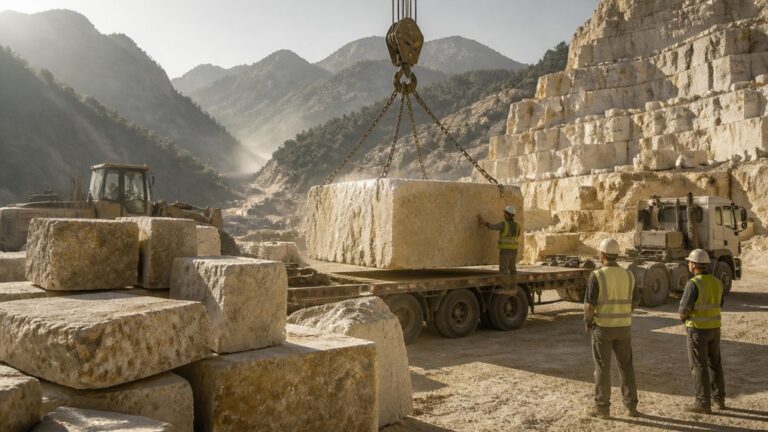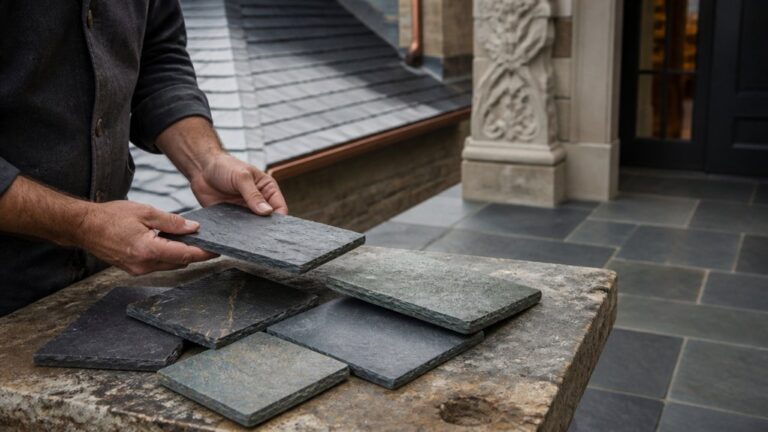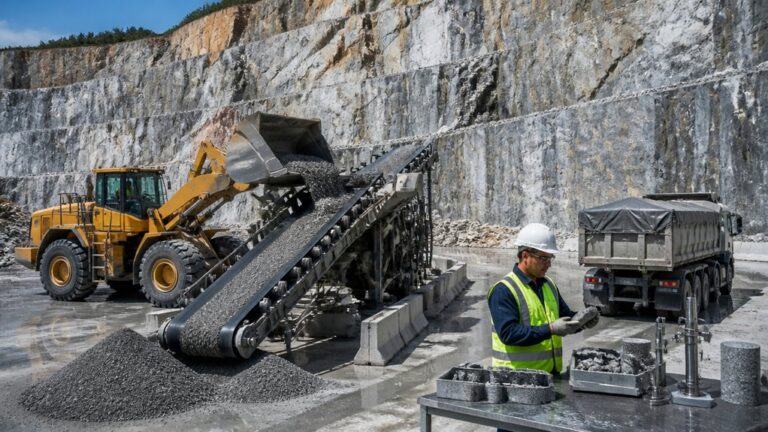

We plan each quarry cut around the stone’s natural shape, using accurate surveys and 3D models to reduce offcuts and select pieces suited to their intended use. We also track equipment, energy use and by-products so material can be reused where practical. As Bluestone Masonry & Construction, we take projects from quarry to completion—sourcing and cutting stone, then building and finishing interiors across the Mountain West. Careful planning matters from the first cut: stone type, installation conditions and local requirements all affect how well the finished work performs.
Survey the Quarry Before Extraction
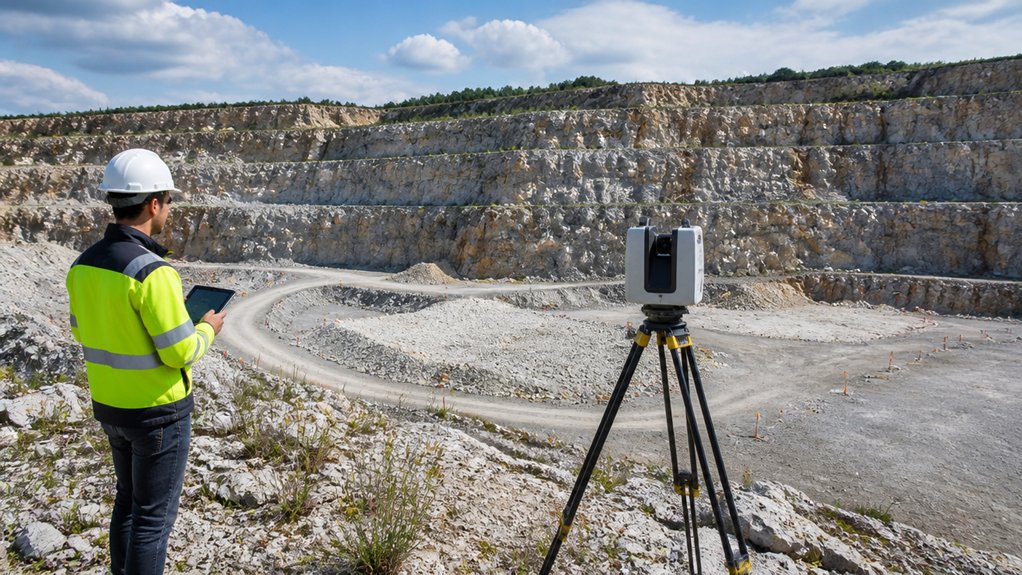
Before extraction begins, we survey the quarry to understand the deposit’s boundaries, stone quality, and geological risks. Our team combines field mapping, representative sampling, and geotechnical testing to identify usable material and locate faults, weak zones, or groundwater. The results help us plan what can be safely recovered, limit unnecessary disturbance, and organize extraction and stone cutting.
We also document drainage, nearby land uses, and sensitive habitats before work starts. This helps us plan for erosion control, water management, and biodiversity protection. We check access routes, slope stability, and other site hazards to protect workers and prepare stone for the conditions it will face in the Mountain West, including freeze-thaw cycles, snow, wind, and strong UV exposure.
We share relevant findings with residents and local authorities so concerns can be addressed early. Permits, inspections, and environmental requirements vary by state and county, so we confirm applicable rules before work begins. From quarry to completion, our Bluestone Masonry & Construction team uses careful planning to support responsible sourcing and dependable stonework. Our team is based in Casper, Wyoming, and has served the region since 2013.
Use 3D Models to Plan Precise Cuts
Turning survey data into a 3D quarry model helps us plan cuts around a deposit’s shape, fractures, and stone quality. We review benches, block dimensions, and geological boundaries before extraction, then adjust the layout to protect sound, usable material. Because stone can vary across a deposit, we compare proposed cut locations and orientations with its natural structure and avoid weak zones where possible. This helps us produce more consistent blocks and limit unusable remnants.
We share the model and measurements with the quarry crew so everyone is working from the same plan. Accurate survey data and regular updates matter: new exposures can reveal fractures or changes in quality that affect the next cut. As a team that takes projects from quarry to completion, we use careful planning to support the stone’s performance through fabrication, construction, and interior finishing.
Automate Stone Cutting to Reduce Waste
We turn each stone block into a cut plan that accounts for its dimensions, usable material, and the finished pieces the project requires. Automated saws and CNC equipment can follow those plans accurately, while we set feed rates, blade depth, and cutting order to suit the stone. This matters because granite, marble, and other stones vary in hardness, veining, and natural flaws; an unsuitable cut can cause chipping or leave unusable offcuts.
We monitor sensors for block movement and blade wear, then adjust the setup before either affects the cut. We also plan around slab thickness and installation requirements, including the weight and support needed for stone in a building. In Wyoming and the wider Mountain West, outdoor stone must also be selected and detailed for freeze-thaw cycles, snow, wind, and strong UV exposure. Automated cutting helps us reduce waste and rework, but careful material selection, skilled finishing, and proper installation remain essential. We take projects from quarry to completion, coordinating stone sourcing and cutting with building and interior finishing across the region.
Reuse Quarry By-Products as Materials
We sort quarry by-products at the source so usable stone doesn’t become waste. Fines, fragments, and pieces that are unsuitable for finished work can often serve as road base, drainage aggregate, landscaping material, or feedstock for manufactured products. The right use depends on the stone’s composition, particle size, strength, and drainage behavior. For example, a well-graded, durable aggregate may work for a base course, while finer material may suit a different application but can be less reliable where drainage is critical.
Before use, we test materials for contaminants and confirm that they meet the project’s engineering and performance requirements. In the Mountain West, freeze-thaw cycles, snowmelt, wind, and site drainage all matter: material that holds water or breaks down under repeated freezing can compromise a base or other assembly. Suitable quarry material can also be blended with recycled concrete, provided the mix meets the project specifications.
Our stone and marble masons at Bluestone Masonry & Construction handle work from quarry to completion, including sourcing, cutting, building, and interior finishing. We organize by-products into clearly identified streams, set practical handling and quality procedures, and coordinate with the project team to limit unnecessary transport and maintain consistent material. Permits, inspections, local building codes, and review by a licensed professional, such as a structural engineer, may be required; requirements vary by state and county across our service area.
Track Quarry Equipment and Waste in Real Time
We track quarry equipment and material movement so we can manage stone from quarry to completion. Our team monitors machine locations, operating hours, fuel use, and loads to spot idle equipment, unusual hauling patterns, or delays that could affect cutting and construction schedules. Pairing equipment data with energy use can also help us identify inefficient operating cycles and plan maintenance around production needs.
We track waste by source and destination to distinguish overburden from usable stone, rejected material, and material that may be suitable for reuse. This matters because stone varies in strength, density, and behavior during cutting; not every offcut is appropriate for structural or exterior use. Clear alerts help us adjust routes and workloads, reduce unnecessary hauling, and keep suitable material in circulation. Reviewing trends each shift supports better equipment use and more reliable planning for our Wyoming projects and work across the Mountain West.
Frequently Asked Questions
What Environmental Permits Are Required to Operate a Quarry?
Quarry permits depend on the site, the stone being extracted and the planned operation. Requirements may include air-emissions, stormwater, wastewater, wetlands, wildlife habitat and reclamation approvals. State and county rules vary, so we recommend confirming requirements with the relevant agencies and licensed environmental professionals before construction or extraction begins. Plan for permit reviews and inspections early; approvals can affect quarry design, operations and the stone supply for a project.
How Does Quarrying Affect Nearby Communities?
Quarrying can affect nearby communities through noise, truck traffic, dust, vibration, and changes to the landscape. These effects may also influence the stone available for a project, including its color, texture, and consistency.
We take projects from quarry to completion, so we consider both the material and the practical conditions around its source. Quarry operators can reduce disruption by setting clear operating hours, controlling dust, planning truck routes, monitoring vibration, and communicating with neighbors. For construction near a quarry, we also recommend checking local permits, inspections, and building-code requirements, which vary by state and county.
What Safety Training Should Quarry Workers Receive?
We train quarry workers to recognize hazards before they become injuries. Training should cover safe operation of quarry equipment, lockout procedures before maintenance, blasting protocols, traffic control, dust exposure, and emergency response, including first aid. Workers also need hands-on practice with the equipment and procedures they use on site, plus regular refresher training and drills.
As stone and marble masons working from quarry to completion, we know that safe stone production depends on clear procedures at every step—from extraction and cutting to transport and installation. Training should match the quarry’s equipment, materials, and site conditions, and follow applicable regulations. Requirements vary by state and county, so employers should confirm current rules with the appropriate authorities.
How Are Quarry Sites Restored After Extraction Ends?
After quarrying ends, restoration begins with reshaping the land to reduce unstable slopes and direct runoff safely. We replace suitable topsoil, manage drainage, and replant native species selected for the site’s elevation, soil, and climate. In the Mountain West, planning for snowmelt, wind, and freeze-thaw conditions helps limit erosion and supports long-term recovery.
We set restoration goals and timelines early, then monitor vegetation, water movement, and biodiversity after extraction. Maintenance may include repairing erosion, controlling invasive plants, and adjusting drainage. Permits, inspections, and reclamation requirements vary by state and county, so we coordinate with the relevant authorities and qualified environmental professionals.
What Factors Influence the Market Price of Quarried Stone?
Market price depends on the stone’s type, grade, soundness, availability and distance from the quarry. Granite, limestone, sandstone and marble each differ in strength, porosity, appearance and how they respond to cutting and finishing. We look for consistent color and texture, sound stone without troublesome fractures, and a finish suited to the intended use.
The delivered cost also reflects quarry access, extraction and processing, block or slab size, waste, equipment, labor and freight. Remote sites, difficult terrain and long hauling distances can add cost. In the Mountain West, we also consider whether the stone and installation can handle freeze-thaw cycles, snow loads, strong UV exposure, wind and elevation-related conditions. For exterior work, proper drainage, flashing, mortar selection and installation details matter as much as the stone itself.
Demand, seasonal availability and competing suppliers can affect pricing, too. As the Bluestone Masonry & Construction team, based in Casper, Wyoming, we take projects from quarry to completion across Wyoming, Montana, Colorado, Idaho, Utah, Nebraska and South Dakota. We compare material and delivery options, then account for cutting, building and interior finishing so the estimate reflects the full scope—not just the quarry price. Permits, inspections, local codes and licensed professionals, including structural engineers, may be required; requirements vary by state and county.