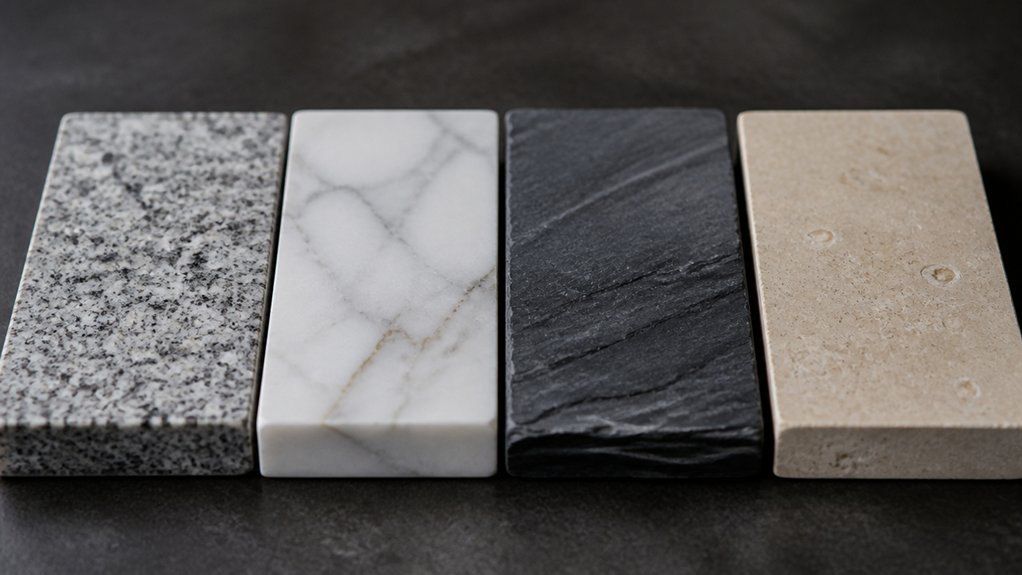
When we help you choose natural stone, appearance is only part of the decision. Hardness, porosity, maintenance, and installation all affect how a surface performs. Granite, marble, slate, and limestone respond differently to heat, moisture, wear, and cleaning, so we compare those properties with how you plan to use the stone.
In Wyoming and across the Mountain West, we also consider freeze-thaw cycles, snow, wind, altitude, and strong UV exposure—especially for exterior work. The stone itself matters, but so do its thickness, finish, setting materials, drainage, and support. As stone and marble masons based in Casper, we take projects from quarry to completion, sourcing and cutting stone, building, and finishing interiors across Wyoming, Montana, Colorado, Idaho, Utah, Nebraska, and South Dakota. We’ll help you weigh the practical trade-offs before you select a surface.
How Do Granite, Marble, Slate, and Limestone Compare?
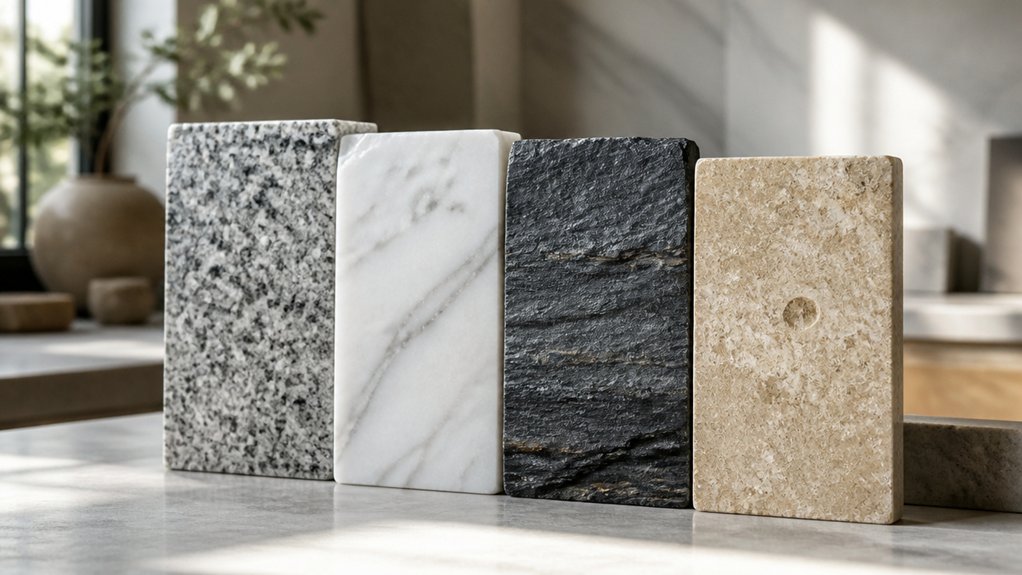
Granite, marble, slate, and limestone each respond differently to wear, moisture, and temperature changes. We help clients across Wyoming and the Mountain West choose stone based on where it will be installed, how it will be used, and how much maintenance it needs.
Granite’s dense, crystalline structure generally resists abrasion and heat, making it a practical option for busy counters and floors. Marble has a softer surface that can scratch and etch from acids, so it needs more careful use and prompt cleanup. Slate resists water when properly selected and installed, but its natural layers can split or delaminate if the stone is poor quality or exposed to repeated moisture and freezing. Limestone is softer and more porous; it can absorb water and often needs sealing, especially in wet or exposed locations.
In Wyoming, Montana, Colorado, Idaho, Utah, Nebraska, and South Dakota, freeze-thaw cycles, snow, wind, altitude, and strong UV exposure can affect stone and its installation. For exterior work, we consider the stone’s absorption, thickness, finish, drainage, setting materials, and joint design. On floors and counters, we look at traffic, spills, heat, and the care routine the owner can maintain.
As stone and marble masons based in Casper, we take projects from quarry to completion—from sourcing and cutting stone to building and finishing interiors. We can help match the material and installation details to your project. Exterior work or structural changes may require permits, inspections, code review, or a licensed professional such as a structural engineer; requirements vary by state and county.
How Do These Four Stones Look Different?
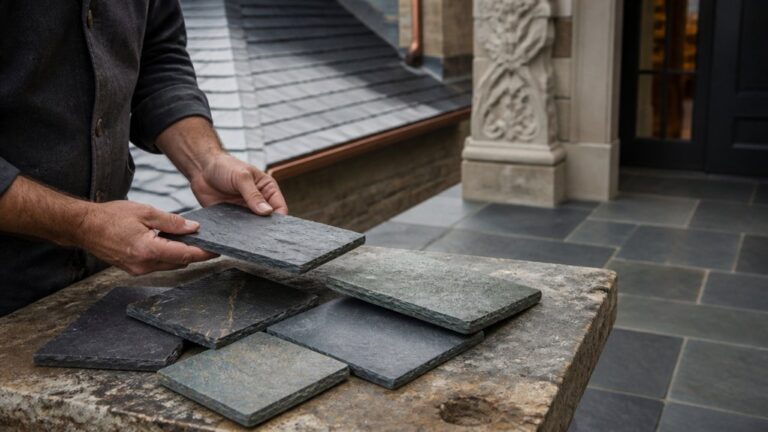
When we compare four stone slabs, we look at more than color. We check the veining, grain, texture, and natural variation, since these affect the finished surface and how well the stone suits its location.
For exterior work in the Mountain West, we also consider freeze-thaw exposure, snow, wind, and UV, along with the stone’s finish and installation details.
These factors help us recommend a stone that fits your design and performs well in your space.
Color and Pattern
Color and pattern can help identify a stone, but natural variation means no two slabs are exactly alike. Granite usually has a speckled mix of minerals. Its color and pattern can vary between quarries and even between batches, so we recommend reviewing the actual slabs selected for your project. Granite is generally durable, but the right finish and installation details still matter, especially outdoors, where moisture and freeze-thaw cycles can affect stone and surrounding materials.
Marble often has a more uniform base crossed by contrasting veins or cloudy bands. Those patterns can make slab matching important at seams and around openings. Marble is also more susceptible to scratching and staining than many granites, so consider how the surface will be used and maintained.
Slate commonly comes in muted gray, green, black, or purple, with subtle variation from piece to piece. Its cleft surface can provide texture, but thickness and surface irregularities need to be accounted for during layout and installation. Limestone tends toward soft beige, cream, or gray and may contain visible fossils or color shifts. Because limestone can be more porous, the stone selection, sealing plan, drainage, and exposure to snow and moisture deserve careful attention.
When choosing slabs, compare full-size pieces under lighting similar to your room’s. Small samples may not show the overall color distribution or how veins will align across a finished surface. We source and cut stone as part of our work from quarry to completion, and we help clients assess how a stone’s appearance, finish, and maintenance needs fit the project. For exterior work in the Mountain West, we also consider UV exposure, wind, drainage, and freeze-thaw conditions; the appropriate stone and installation details depend on the application and local requirements.
Texture and Veining
We look at texture and veining alongside color because they affect a stone’s appearance, feel, and performance in use. Granite has a crystalline, granular surface with mineral flecks that add visual variation. Its hardness makes it a durable choice for counters and other high-use surfaces, though the finish and stone’s porosity influence cleaning and sealing needs.
Marble is usually smoother, with veins that may appear as fine lines or broad bands. It can be polished or honed, but it’s softer than granite and more susceptible to scratching and etching from acids. Slate often has a naturally cleft, layered face that adds grip but can feel uneven underfoot; check the sample for loose layers and variation in thickness before specifying it. Limestone tends to have a more uniform, softly textured appearance, though pores and fossils create natural variation. It’s relatively soft and porous, so the finish, sealing plan, and intended use matter.
Compare samples in the finish you plan to use. Polishing, honing, and splitting change how a stone feels and how its veining and color read. For exterior work in Wyoming and the wider Mountain West, we also check the stone’s suitability for freeze-thaw exposure, snow and ice, strong UV, and wind-driven moisture. Confirm the product and installation details with your mason; exterior requirements and applicable codes vary by state and county.
Which Stone Fits Each Room and Style?
Which stone fits each room and style?
We match stone to the room’s conditions as well as its appearance. In kitchens and bathrooms, consider moisture, staining, cleaning products, and how much maintenance you’re willing to do. Granite is generally durable and handles everyday use well, while marble can etch or stain if spills and acidic cleaners are left on the surface. Porous stones may need sealing, but sealer doesn’t make them stain-proof.
For living areas and entryways, think about foot traffic, abrasion, and slip resistance. A textured finish can provide more traction than a polished one, especially where snow and grit get tracked inside. For exterior steps, patios, or walkways, we also check whether the stone is suitable for local freeze-thaw conditions and how water will drain. In the Mountain West, snow, wind, strong UV exposure, and changes in elevation can all affect material selection and installation details.
Color and texture should work with the room’s lighting and overall style, but the finish matters for upkeep too. Polished surfaces are easy to wipe clean but can show scratches and may be slippery when wet. Honed or textured finishes can offer a softer look or more grip, though some may need more frequent cleaning. We help clients choose and prepare stone from quarry to completion, including sourcing, cutting, building, and finishing interiors. Based in Casper, Wyoming, our team works across Wyoming, Montana, Colorado, Idaho, Utah, Nebraska, and South Dakota. For structural or exterior work, permits, inspections, local codes, and licensed professionals such as structural engineers may be required; requirements vary by state and county.
Kitchens and Bathrooms
Choosing stone for kitchens and bathrooms
We help homeowners, architects, and builders choose stone based on where it will be used, how it will be maintained, and the finish they want. As stone and marble masons based in Casper, Wyoming, we take projects from quarry to completion—sourcing and cutting stone, building, and finishing interiors across Wyoming, Montana, Colorado, Idaho, Utah, Nebraska, and South Dakota.
Granite is generally a practical choice for kitchen counters because it resists scratches and household acids better than marble. It isn’t indestructible: use cutting boards, wipe spills promptly, and seal the surface when needed. Sealing frequency depends on the stone and its finish, so follow the supplier’s guidance.
Marble brings natural variation to a bathroom vanity, but it can etch when exposed to acidic products and may stain if spills sit on the surface. Keep cosmetics and cleaners off the stone when possible, wipe up spills promptly, and use a stone-safe cleaner. Sealing can reduce staining but won’t prevent etching.
Slate can work well on a shower floor, where its texture may improve grip. Choose the finish carefully: rough or cleft surfaces can be harder to clean, and grout lines need regular care. Before installation, confirm that the selected stone and setting materials are suitable for wet areas.
Limestone has a softer, more muted appearance, but it stains and etches more readily than granite. Consider it for a low-splash vanity rather than a heavily used kitchen counter. Seal it as recommended, clean gently, and avoid acidic cleaners.
For any stone installation, the substrate, waterproofing, setting materials, and detailing matter as much as the stone itself. In Mountain West homes, exterior stone and transitions near entrances also need to account for freeze-thaw cycles, snow, wind, and strong UV exposure. Permits, inspections, local building codes, and licensed professionals such as structural engineers may be required; requirements vary by state and county.
Living Areas and Entryways
For living areas and entryways, we choose stone based on foot traffic, exposure, and the finish you want. Granite is a practical choice for busy thresholds: it resists abrasion and stands up well to grit. Its range of colors and patterns can make everyday dust less noticeable, but the stone and grout still need appropriate sealing and routine cleaning.
Slate provides a naturally textured surface that can improve traction, especially where snow and moisture are tracked indoors. Cleft slate can be uneven, so dirt may collect in its surface and require more careful cleaning. Marble gives low-traffic living spaces a polished look, but it can scratch and react with acidic spills. Limestone has a softer, quieter appearance underfoot; clean spills promptly and seal it as recommended.
In Wyoming and across the Mountain West, entry floors also need to handle freeze-thaw conditions, tracked-in snow, and abrasive grit. We recommend suitable walk-off mats and an installation system designed for the stone, substrate, and expected moisture. Sealing helps protect some surfaces, but it doesn’t replace prompt cleanup or proper drainage at exterior entrances. We source and cut stone, then build and finish interiors from quarry to completion.
Matching Stone to Style
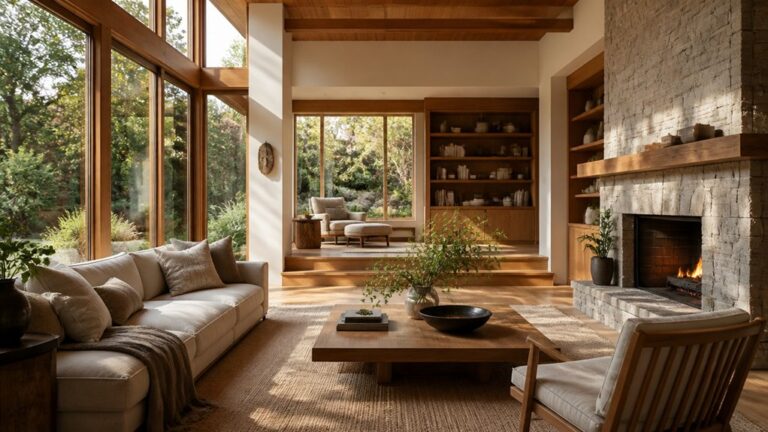
We match stone to a room by looking at its appearance, how it will be used, and the care it will need. Color is only part of the decision: texture, veining, porosity, finish, and the room’s lighting all matter. We source and cut stone as part of our work from quarry to completion, so we can help you compare full slabs and plan how their natural variation will appear across the finished surface.
- Polished marble suits a formal bathroom vanity and reflects light, but it can etch from acidic products and stain if spills are left to soak in. We recommend sealing it and wiping up spills promptly.
- Honed limestone brings a quieter, matte look to a living room. It’s relatively porous, so choose the right sealer and account for routine care. For exterior use in the Mountain West, check the specific stone’s suitability for freeze-thaw exposure.
- Slate works well in a rustic entryway. Its cleft surface adds texture and can improve traction, though uneven pieces may need careful selection and installation to create a comfortable, stable walking surface. Snow, grit, and moisture also make a suitable entry mat and regular cleaning worthwhile.
- Granite is a practical option for a busy kitchen. It’s generally hard and handles frequent use well, but performance and maintenance vary by stone and finish. We assess the slab and recommend care based on its characteristics.
Compare full slabs in the room’s lighting when possible; small samples may not show the full range of color and veining. Coordinate the stone with grout, cabinetry, and hardware, and consider how strong sunlight at higher elevations may affect the room’s appearance. For exterior stonework, we also account for freeze-thaw cycles, snow and wind exposure, and the details needed for proper drainage and installation. Building requirements vary by state and county, so permits, inspections, or input from a licensed professional may be necessary.
How Durable Is Each Natural Stone?
We find that each stone handles everyday wear differently. Granite is hard and generally resists scratches and impact, making it a practical choice for busy kitchens and other high-use surfaces. Marble is softer, so it can scratch, chip, and etch when exposed to acidic spills; expect wear to show sooner in heavily used areas. Slate resists scratches and heat, but its natural layers can chip under a sharp impact. Limestone is softer and more porous, so it needs careful sealing and prompt cleanup to limit staining and surface wear.
In Wyoming and across the Mountain West, outdoor stone also faces freeze-thaw cycles, snow, strong UV exposure, and wind. Stone selection, thickness, installation, drainage, and joint details all affect how well a surface holds up. We help clients weigh those factors from quarry to completion, including sourcing, cutting, construction, and interior finishing. Choose a stone based on how you’ll use it, the maintenance you’re willing to do, and the conditions it will face.
What Care and Sealing Does Each Stone Need?
Care and sealing depend on each stone’s porosity, finish and location. We recommend regular cleaning with a pH-neutral stone cleaner, prompt blotting of spills, and coasters on interior surfaces. Avoid acidic cleaners, which can etch marble and limestone, and abrasive products, which can scratch or dull finishes.
- Granite: Seal when absorption tests show it needs protection. Place a few drops of water on a clean, dry area; if the stone darkens, it may be time to reseal. Granite varies, so follow the sealer manufacturer’s instructions rather than relying on a fixed schedule.
- Marble: Seal as needed, but remember that sealer helps resist staining—it doesn’t prevent acid etching. Wipe up acidic spills promptly and use a cleaner made for natural stone.
- Slate: Test for absorption and seal if water darkens the surface. For cleft or textured slate, use a soft brush to clear dirt from low spots without wearing down the finish.
- Limestone: Because limestone is often more porous, seal it as recommended for the specific stone and finish. Blot spills quickly, especially oils and acidic liquids, which can stain or etch the surface.
In Mountain West settings, exterior stone faces snow, wind, strong UV and repeated freeze-thaw cycles. Keep water from pooling on or behind the stone, and make sure exterior installations have appropriate drainage and detailing; sealer can’t correct a moisture or installation problem. At Bluestone Masonry & Construction, we match care recommendations to the stone, finish and exposure. Follow the product manufacturer’s directions, and base maintenance timing on actual use and absorption tests.
How Much Do Granite, Marble, Slate, and Limestone Cost?
How much do granite, marble, slate, and limestone cost?
The cost of granite, marble, slate, or limestone depends on the stone’s source, grade, thickness, finish, fabrication, and installation requirements. As stone and marble masons based in Casper, Wyoming, we take projects from quarry to completion—sourcing and cutting stone, building, and finishing interiors across Wyoming, Montana, Colorado, Idaho, Utah, Nebraska, and South Dakota. We’ve worked in high-end construction since 2013, and we recommend comparing detailed local quotes rather than judging by the stone name alone.
Granite is generally hard and durable, but its price can rise with rare colors, thicker slabs, or intricate edge work. Marble offers distinctive veining but is softer and more prone to scratches, etching, and staining, so the finish and maintenance plan matter. Slate varies in color, texture, and consistency; some varieties can flake, so ask how the material performs in the intended application. Limestone has a softer, more porous surface than granite and may need careful sealing and protection from acids and staining.
For each quote, check whether it includes the material, finish, edge profiles, cutouts, delivery, installation, demolition, waste removal, and any substrate repairs. Confirm measurements and quantities before approving the final scope. Installation costs can also depend on slab weight, access, support requirements, and preparation of the surface beneath the stone.
In the Mountain West, exterior stone must be suited to local conditions. Freeze-thaw cycles, snow load, strong UV exposure, wind, and altitude can affect material selection, detailing, and installation. Ask about water management, anchoring, joint design, and sealing where appropriate. Permits, inspections, local building codes, or a licensed professional such as a structural engineer may be required; requirements vary by state and county.
Frequently Asked Questions
Are Granite, Marble, Slate, and Limestone Environmentally Sustainable?
Are granite, marble, slate, and limestone environmentally sustainable?
They can be, but sustainability depends on where the stone comes from, how it is quarried and processed, how far it travels, and how long it performs in place. Natural stone is durable, but quarrying, cutting, transportation, installation, and ongoing maintenance all have environmental impacts.
We’re the Bluestone Masonry & Construction team, stone and marble masons based in Casper, Wyoming. Since 2013, we’ve taken projects from quarry to completion across Wyoming, Montana, Colorado, Idaho, Utah, Nebraska, and South Dakota. When comparing stone options, we look at quarry practices, local availability, recycled content, cutting waste, maintenance requirements, and expected service life—not just the material itself.
Stone behavior matters, too. Granite is generally hard-wearing and often needs less frequent sealing than more porous stones. Marble can scratch, etch, or stain, so it may require more careful cleaning and maintenance. Slate varies by source and quality; some types perform well outdoors, while others can split or weather. Limestone is often more porous and may need sealing and careful detailing to limit water absorption.
In the Mountain West, consider freeze-thaw exposure, snow and ice, wind-driven moisture, strong UV, and elevation-related weather changes. For exterior work, choose stone suited to the application, use compatible mortar and installation details, and provide proper drainage so water does not collect behind or beneath the stone. A lifecycle assessment can help compare options over their expected service life. Building permits, inspections, local codes, and licensed professionals such as structural engineers may be required; requirements vary by state and county.
Where Are These Natural Stones Typically Quarried?
Where these natural stones are typically quarried
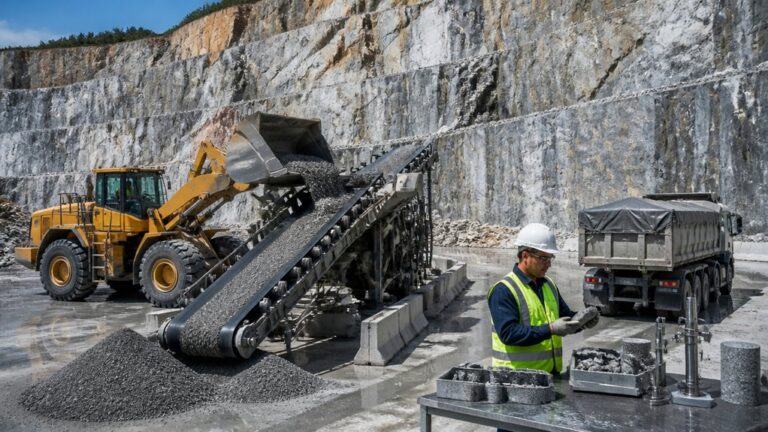
Granite, marble, slate, and limestone are quarried in many parts of the world, but the best source depends on the stone’s geology, quality, color, and intended use. Major producing countries include India, China, Brazil, Italy, Spain, and Turkey, as well as the United States. Each region offers different varieties, so we assess the stone itself—not just its country of origin—when sourcing material for a project.
For work across Wyoming and the surrounding Mountain West, we consider how a stone will perform in local conditions. Freeze-thaw cycles, snow, wind, strong UV exposure, and high-altitude weather can affect exterior stone and its installation. We source and cut stone, then build and finish interiors as part of our work from quarry to completion. We also account for the project’s design, exposure, and maintenance needs when recommending a material.
Can These Stones Be Used for Exterior Landscaping?
Yes. We work with granite, marble, slate, and limestone for exterior landscaping, choosing each stone for the application, finish, and local conditions. In Wyoming and across the Mountain West, freeze-thaw cycles, snow, wind, strong UV exposure, and high-altitude conditions can all affect how stone performs.
Granite is generally the most weather-resistant of these options and works well for steps, paving, and retaining-wall features when properly installed. Slate can provide good traction with a textured finish, but some types may split or delaminate after repeated freeze-thaw exposure. Marble offers distinctive color and veining, though it can weather, stain, or become slippery depending on its finish. Limestone is workable and attractive, but its porosity and softness make stone selection and placement especially important.
For any stone, we assess the material’s durability, surface texture, drainage, base preparation, and joint details. A stable, well-drained base helps limit movement and water damage; sealing may help with staining, but it does not make a stone immune to weather. We source and cut stone, build, and finish projects from quarry to completion. Bluestone Masonry & Construction is a stone and marble masonry team based in Casper, Wyoming, serving Wyoming, Montana, Colorado, Idaho, Utah, Nebraska, and South Dakota. Depending on the project, permits, inspections, local codes, or a licensed professional such as a structural engineer may be required; requirements vary by state and county.
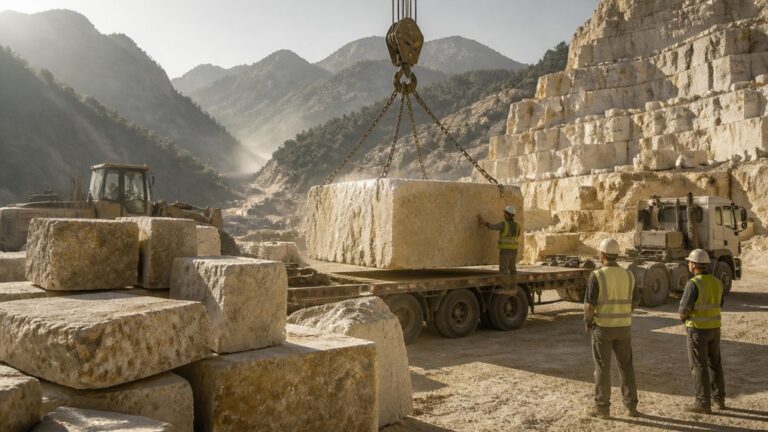
How Are Natural Stone Slabs Cut and Transported?
We choose the cutting method based on the stone’s hardness, grain, and intended slab size. Diamond-wire saws work well for large blocks and can reduce waste; gang saws cut multiple slabs at once but require careful setup; waterjets can make precise shapes, though they’re not the right choice for every stone or thickness. We inspect each slab for natural fractures and secure it in a protective frame before moving it. Cranes and forklifts handle loading, while specialized trucks carry the stone with support and restraint suited to its size and weight. In Wyoming and the surrounding Mountain West, we also plan for route conditions, wind, and winter weather. As a team working from quarry to completion, we coordinate cutting and delivery so slabs arrive ready for fabrication and installation.
What Should I Check When Choosing a Stone Supplier?
When choosing a stone supplier, we check the slabs for consistent color, sound edges, cracks, and other defects, then confirm that enough matching material is available for the full project. Ask how the stone behaves in your application: granite is generally hard-wearing, while marble can scratch or stain more readily; porous stone may need sealing. For exterior work in Wyoming and the surrounding Mountain West, confirm that the selected stone and installation system are suited to freeze-thaw cycles, snow, wind, altitude, and strong UV exposure.
We also review the supplier’s cutting and fabrication capabilities, delivery schedule, warranty terms, and references. Ask where the stone was quarried and what documentation is available about sourcing and labor practices. Compare written quotes carefully, including material, fabrication, freight, waste, and any finishing work.
As stone and marble masons based in Casper, we take projects from quarry to completion: sourcing and cutting stone, building, and finishing interiors across Wyoming, Montana, Colorado, Idaho, Utah, Nebraska, and South Dakota. For structural or exterior work, permits, inspections, local codes, and input from licensed professionals such as structural engineers may be required; requirements vary by state and county.